Colombian Presidential Election Heads to Runoff Amidst Political Realignment
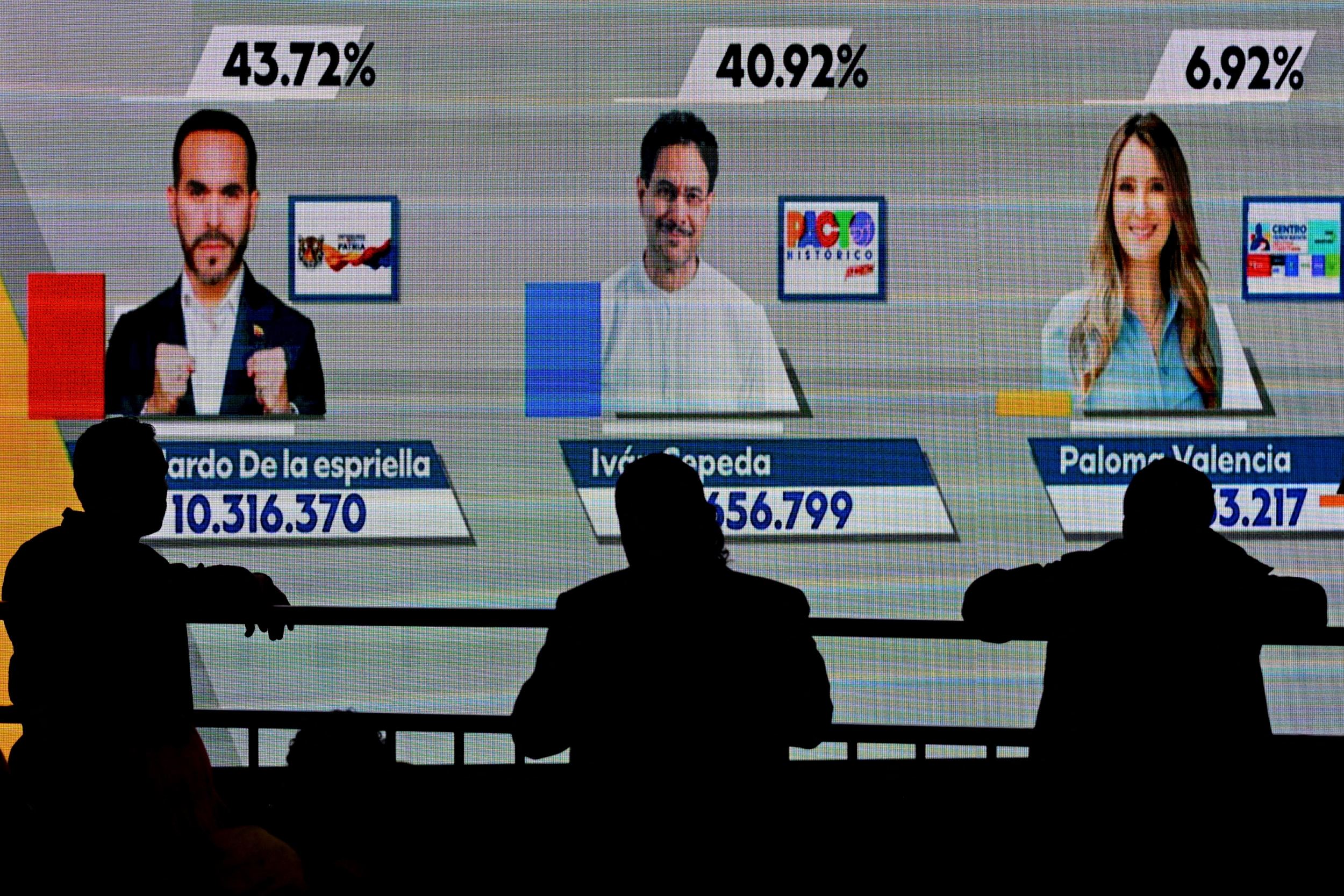
Colombia’s presidential election night delivered a significant electoral surprise, with far-right outsider Abelardo de la Espriella emerging as the frontrunner in the first round. While pollsters largely anticipated a different outcome, de la Espriella secured a commanding 43.73% of the vote, a substantial lead that, however, did not grant him the outright majority needed to win the presidency without a second round.
The runoff election, scheduled for June 21, will pit de la Espriella against leftist senator Iván Cepeda, the candidate representing the Pacto Histórico coalition of outgoing President Gustavo Petro. Cepeda garnered 40.93% of the vote, solidifying his place in the decisive contest. Analysts are already characterizing this upcoming runoff as one of the most ideologically charged and polarized elections in Colombia’s modern democratic history, reflecting deep divisions within the nation.
A Night of Shifting Alliances and Unexpected Declines
Beyond the leading contenders, the most striking development of the election night was the significant underperformance of several established center-right and liberal candidates. Senator Paloma Valencia, a prominent figure supported by former president Álvaro Uribe, received a disappointing share of the vote, falling below 7%. Similarly, liberal candidates Sergio Fajardo and Claudia López saw their electoral prospects diminish, securing only 4% and 1% of the vote, respectively.
This dramatic shift suggests a substantial, last-minute realignment of right-wing votes towards de la Espriella. His campaign successfully cultivated an image as the sole viable option capable of challenging and defeating the incumbent government’s political agenda. This narrative resonated with a segment of the electorate seeking a decisive break from the current administration.
Election Day Operations and Voter Participation
More than 23 million Colombians participated in the first round of the presidential election, translating to a turnout of approximately 56%. This figure aligns with pre-election projections and indicates a consistent level of civic engagement. A small percentage of voters, around 400,000 or 1.7%, cast blank ballots.
Electoral authorities, alongside the Electoral Observation Mission, which deployed 1,207 international observers from 22 different countries, reported that the election day proceeded smoothly and securely. Despite concerns regarding the safety of 386 municipalities identified as “at risk” due to the presence of armed groups, no major security incidents disrupted the electoral process, underscoring the efforts made to ensure a safe and orderly election.
De la Espriella’s Rise and Campaign Messaging
Abelardo de la Espriella, a 47-year-old lawyer and political newcomer, celebrated his electoral success, exceeding 10 million votes. He described the achievement as “historic” and a clear mandate to combat “tyranny and absolutism.” His campaign has frequently drawn parallels to the political style of Argentina’s Javier Milei and has expressed admiration for the security and governance approaches of former U.S. President Donald Trump. De la Espriella’s platform emphasizes strong security measures, significant reductions in state intervention in the economy, and a preference for military force over negotiation, starkly contrasting with the outgoing president’s policies.
The Path to the Runoff: Challenges and Strategies
Iván Cepeda now faces the considerable challenge of bridging the roughly 650,000-vote deficit heading into the runoff. The governing coalition will need to mobilize its base and appeal to centrist voters, as well as attempt to win over segments of Paloma Valencia’s former supporters, to overcome de la Espriella’s current momentum.
The June 21 runoff presents a stark choice for Colombia’s future, pitting two fundamentally divergent visions against each other. De la Espriella champions a hardline security agenda and a significantly reduced role for the state, a direct rejection of President Petro’s “Total Peace” initiative, which aimed to engage armed groups and criminal organizations through dialogue. Conversely, Cepeda has pledged to continue and expand upon the social reforms initiated during the Petro administration.
This election is widely viewed as a critical referendum on Gustavo Petro’s four-year term in office. On June 21, Colombian voters will cast their final verdict, determining the nation’s direction for the next presidential term.