AI as a Creative Lifeline: How One Musician Navigates Parkinson’s with Artificial Intelligence
For London-based singer-songwriter Samuel Smith, the progressive neurological disorder Parkinson’s disease presented a formidable challenge to his passion and livelihood. Diagnosed in 2020, the condition has profoundly impacted his ability to perform, particularly his guitar playing, which has long been central to his identity as a musician. Yet, rather than abandon his craft, Smith has embraced artificial intelligence, finding in it a crucial tool to continue creating and sharing his music. His latest album, “The Art of Letting Go,” stands as a testament to this innovative approach.
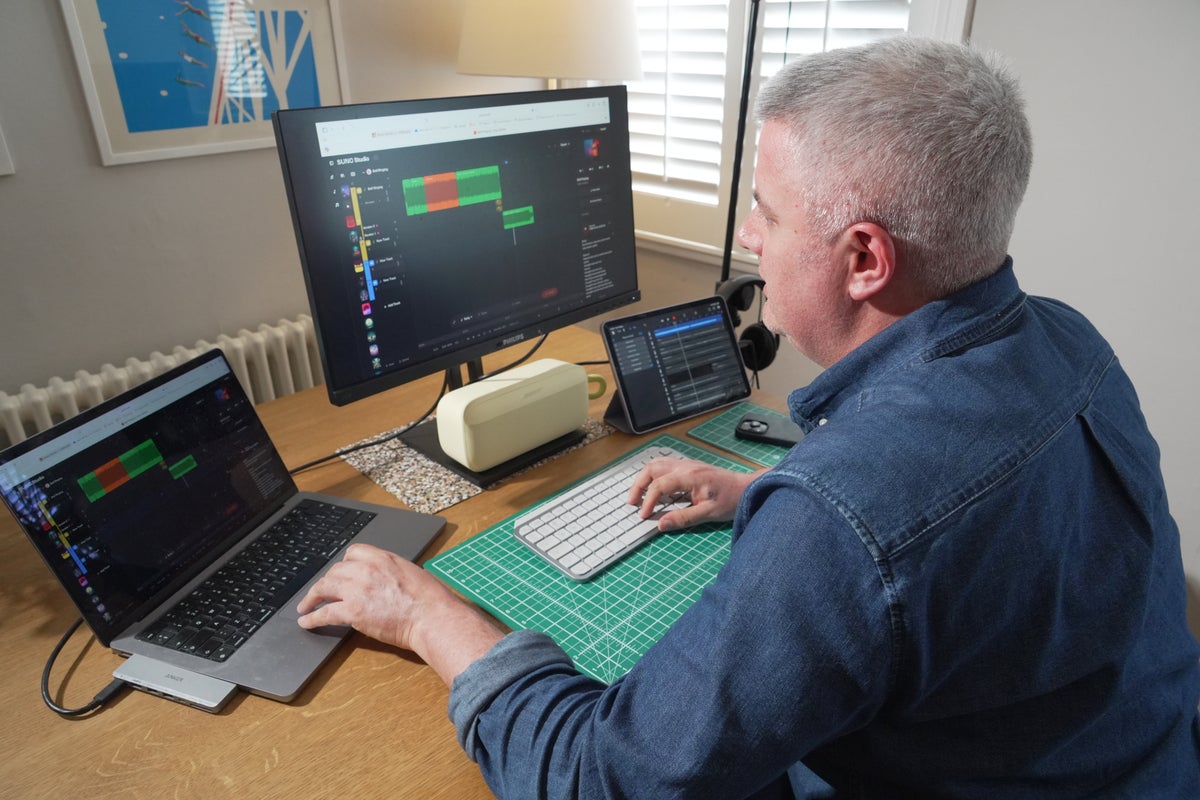
On the instrumental track “Horizon,” a poignant piece from the new album, Smith turned to AI music generation platforms. These advanced tools allowed him to create detailed demo arrangements, effectively translating his artistic vision into a format that session musicians could readily understand and execute. This was a significant departure from his previous methods, born out of necessity as the symptoms of Parkinson’s – tremors, stiffness, and fatigue – steadily eroded his dexterity on the guitar over the more than a year he dedicated to the album’s creation.
“So then I’m faced with a question,” Smith, 49, reflected. “‘Don’t play, don’t be creative, or find a way out, find a route.’ And for me, this was the route.”
The integration of AI into the music industry is a complex and often contentious issue. While many established artists and record labels have voiced concerns about their copyrighted material being used to train AI models – leading to lawsuits against prominent platforms like Suno and Udio, with some later reaching settlements and partnerships – the story of musicians like Smith offers a less-discussed perspective. It highlights how these technologies can serve as powerful enablers for individuals facing physical limitations that directly impede their creative processes.
Smith’s debut album, “In the Springtime,” released in 2023, was partly motivated by a desire to leave a lasting musical legacy for his two sons, a tangible record of his ability to perform and record music. “I’d always written, I’d also played, I always sung,” he explained. “And immediately it became clear to me that I was in trouble, that my music was going to be seriously compromised.”
From Whispered Melodies to Compelling Demos
AI music generators operate by analysing vast datasets of existing music and audio. They identify patterns in melody, harmony, and rhythm, enabling them to generate new audio based on user prompts or uploaded recordings. This technology has the potential to produce surprisingly polished results, even for individuals without formal musical training.
Smith’s process involved a deeply personal method of capturing his initial musical ideas. He would hum rough melodies into his phone, then upload these voice recordings to AI platforms like Suno and Udio. He stressed that these AI-generated demos were strictly for illustrative purposes, acting as a blueprint for the final recording and not intended for inclusion in the finished track.
Transforming the raw output of these AI tools into convincing demos that accurately reflected his musical style often required significant effort. Smith described it as a rigorous process, involving “50, 100, 150 attempts” and extensive editing. “To get something that sounds close to my music,” he elaborated, the AI-generated tracks needed refinement. After uploading his hummed melodies, he would provide specific prompts detailing the desired instrumentation, mood, and genre.
“AI is not replacing anything for me,” Smith asserted. “It’s unlocking, it’s enabling. It’s allowing me to keep writing. I upload my lyrics; AI doesn’t create my lyrics. I upload my music; AI does not create my music.” He further explained that the AI’s role was to “bring it to life in a way that I can play to session players and say, ‘Here, that’s what I’m thinking, that is what I’m hearing.’”
A Bittersweet Duet and a Star-Studded Album
The production of “The Art of Letting Go” was overseen by Grammy-winning pianist and producer Matt Rollings. He assembled a formidable ensemble of acclaimed roots and bluegrass musicians for the project, including dobro player Jerry Douglas, banjo virtuoso Alison Brown, fiddler Stuart Duncan, guitarist Bryan Sutton, bassist Viktor Krauss, and vocalists Jonatha Brooke and Glen Phillips.
For Smith, the experience of recording in a Nashville studio alongside musicians he had long admired was an “extraordinary moment.”
Grammy-nominated guitarist Julian Lage, renowned for his jazz and acoustic work, contributed to the album’s title track and the evocative “Horizon.” The recording of “Horizon” proved to be a particularly poignant, albeit bittersweet, highlight. Despite the ongoing progression of his Parkinson’s, Smith managed to perform a guitar duet with Lage.
“I hadn’t been able to play for months, but I kept telling myself that if I wrote something to take to the studio, perhaps the clouds would part for a few minutes,” Smith recalled. “That’s what happened. I had a window of about 10 minutes in the studio when my arm freed up. … So in the end, I was able to capture the last breath of my guitar playing.”
New Possibilities and Emerging Perils
Experts suggest that AI-assisted music tools hold significant potential for individuals with disabilities or chronic illnesses. Ruaidhri Mannion, a composer and music producer teaching at Brunel University of London, noted that the increasing accessibility of digital recording software has already “effectively democratized the making of music.” He believes that AI tools capable of generating polished audio from simple voice or text prompts could further democratise the creative process by facilitating easier communication and collaboration.
“If these tools are able to enable people to be able to participate with other creative groups and encourage more people to feel confident to be able to reach out to an ensemble or an orchestra or something, then I think that is all for the better,” Mannion commented.
However, he also cautioned against an overreliance on technology, warning that it could potentially hinder the crucial elements of trial and error, frustration, and synergy that are integral to a musician’s artistic development. “What makes a lot of music-making meaningful is the collaborative element,” Mannion stated. “There’s a lot of experimentation and development and failure that’s part of musical discovery.”
While platforms like Udio and Suno maintain they are not infringing on copyright and aim to collaborate with the music industry, some artists remain sceptical. A coalition of musicians and activists, including Tift Merritt and David Lowery, publicly expressed their reservations in an open letter titled “So no to Suno.” The letter acknowledged the potential of “responsible AI” as a creative tool but drew a sharp distinction between its use and the mass distribution of AI-generated works derived from existing music, which they argue could devalue royalties and reward fraudulent practices.
A Call for Responsible Development
Samuel Smith believes his personal journey demonstrates the positive societal impact and expanded creative access that AI can offer, provided it is developed responsibly. “My message would be that if these companies want to show they’ve got a place, a role in society, then step up,” Smith urged. “Engage with health professionals, engage with music therapists, engage with society and show us what you can do.”
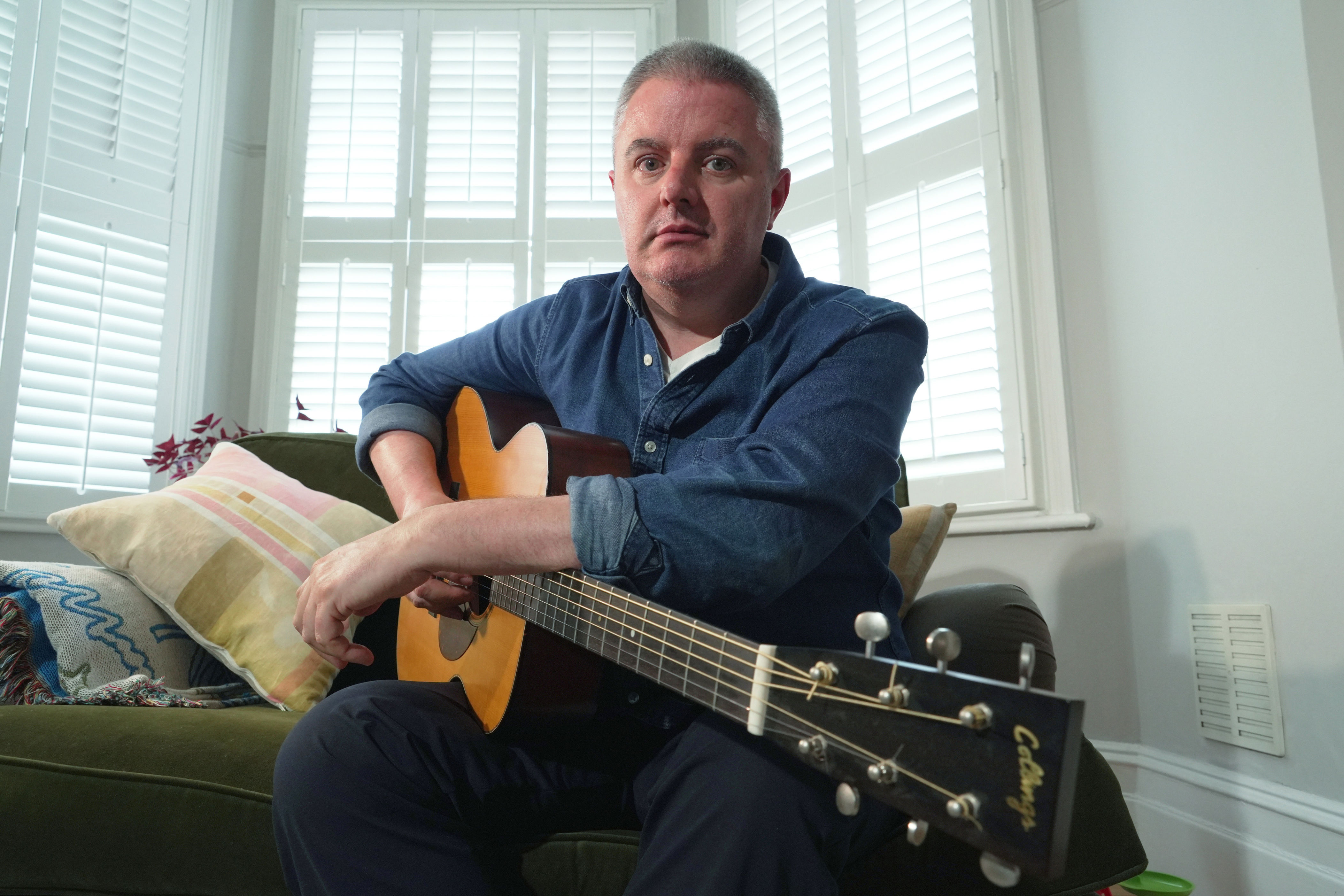
In May, Smith participated in an event organised by the Berklee Music and Health Institute in New York. The gathering brought together music industry leaders, researchers, and clinicians to explore the role of music in supporting individuals with neurological conditions. Smith shared his experiences living with Parkinson’s and performed alongside musicians who had contributed to “The Art of Letting Go.”
The act of creating music remains profoundly important to the legacy Smith hopes to leave for his children, aged 4 and 17. “My 4-year-old is probably never going to remember me playing, and it’s heartbreaking,” he admitted. “But I’ve been able to pull this into something and refuse to be defined by this disease.”