Undersea Cables: The New Battlefield and the Rise of the Shadow Fleet
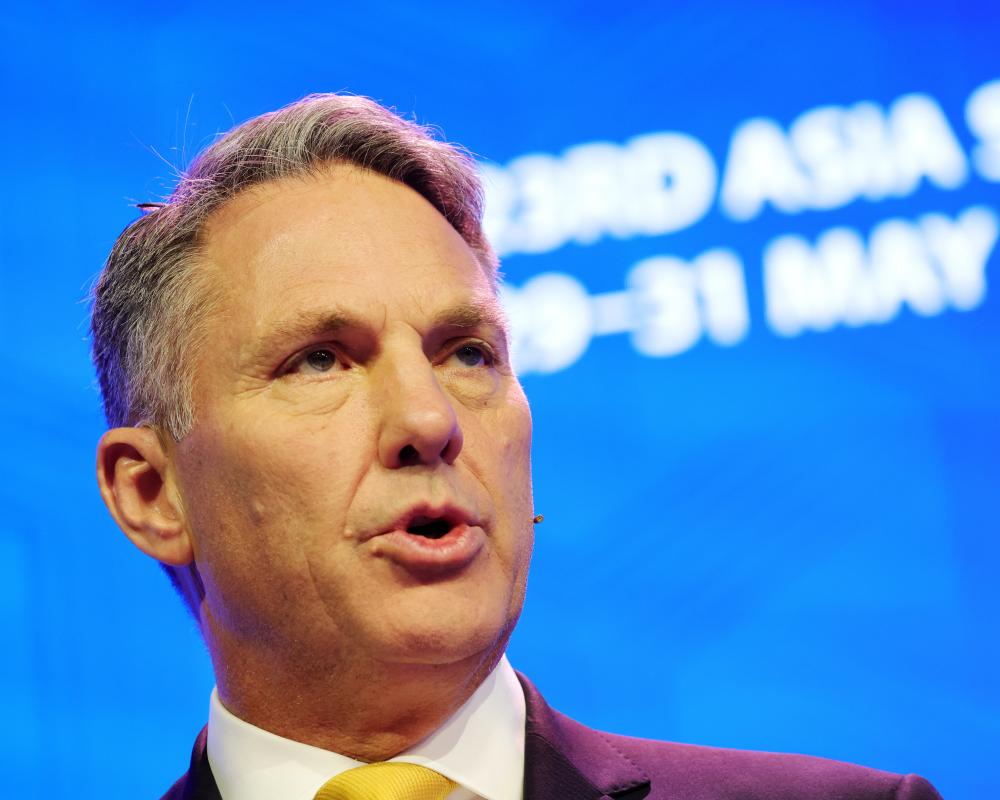
Australia’s Defence Minister, Richard Marles, has issued a stark warning, declaring the “seabed is a battlefield” in a powerful address that called for greater transparency from Beijing regarding its maritime activities and highlighted the alarming inadequacy of international controls over “shadow fleet” vessels. This urgent declaration comes on the heels of a significant trilateral announcement between the United States, the United Kingdom, and Australia, revealing a new AUKUS project dedicated to developing advanced underwater drone technology to safeguard vital undersea cables.
Furthermore, the same announcement detailed a pivotal shift in Australia’s submarine procurement strategy under AUKUS. The nation will now acquire three second-hand Virginia-class submarines from the US. This decision, a departure from the initial plan for a mix of new and used vessels, is intended to streamline supply chain management, simplify operational and maintenance requirements, and ultimately maximise cost efficiencies.
The Vulnerability of Undersea Infrastructure
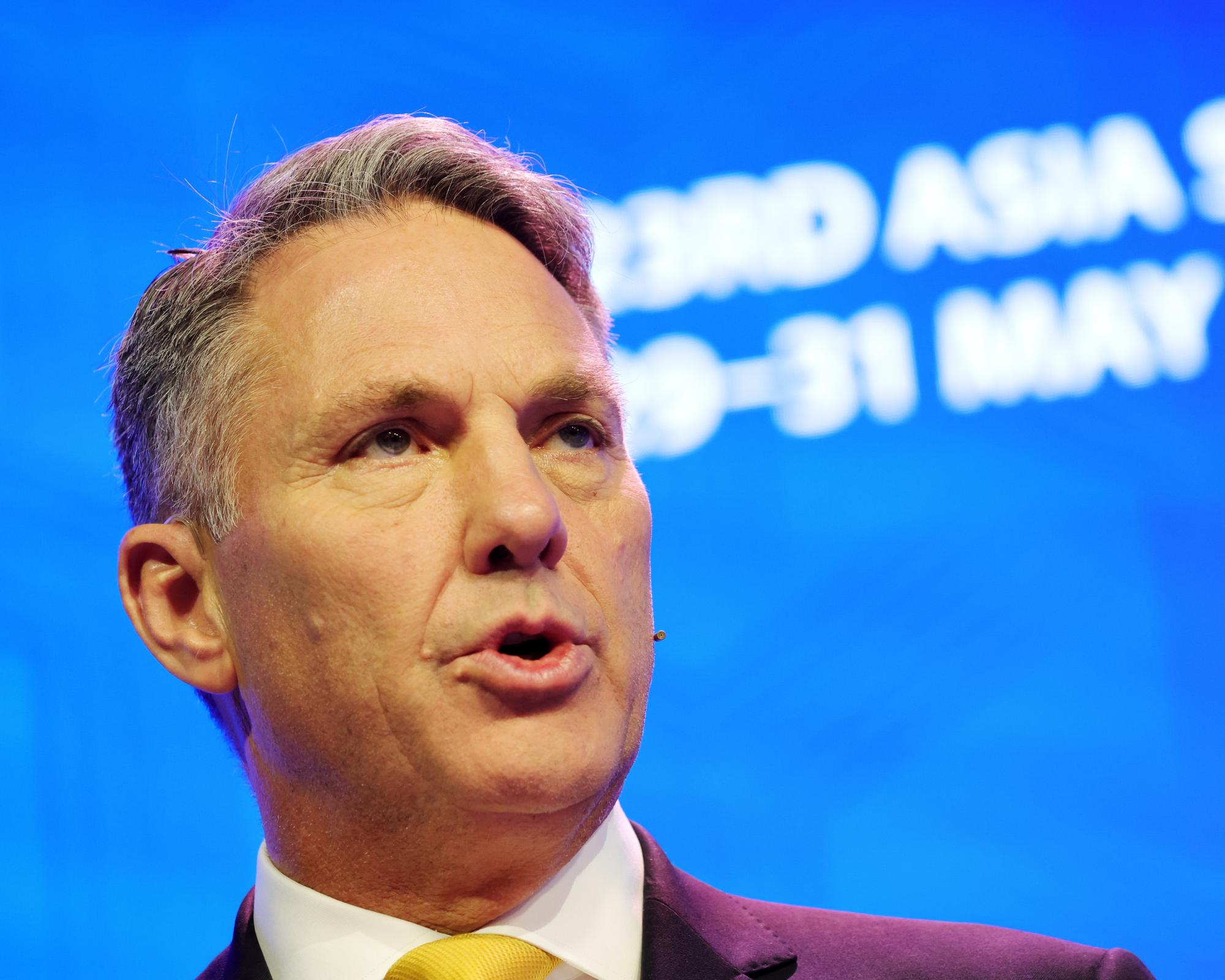
Speaking at the prestigious Shangri-La Dialogue in Singapore, Asia’s premier defence summit, Minister Marles underscored the critical importance of undersea internet cables, referring to them as “the arteries of modern civilisation.” He emphasised that these essential conduits are being severed at an unprecedented rate, leaving island nations like Australia particularly exposed.
“The seabed is becoming a battlefield. The shadow fleet is becoming a weapon,” Marles declared to delegates. He elaborated on the alarming trend: “Over the past 18 months, we have witnessed a series of attacks against subsea critical infrastructure at a scale and frequency that is historically unprecedented. This is not speculation. This is a documented pattern of behaviour. And we must reckon with it honestly.”
Minister Marles pointed to specific incidents, citing five instances of cable cuts in the Taiwan Strait within the last 18 months, which have been attributed to China. Additionally, he noted three similar incidents in the Baltic Sea, alleged to have been perpetrated by Russia.
“Now, maybe these were accidents. But even if they were, it highlights the vulnerability of this crucial part of the globe’s infrastructure,” Marles stated. He posed a critical question to the defence leaders present: “If they were intentional, we are left to wonder: are countries testing our response times, testing our attribution thresholds and testing our political will to respond?”
AUKUS Pillar II: Advancing Underwater Capabilities
The US Secretary of Defense, Pete Hegseth, used the occasion to unveil the inaugural “signature project” for the second pillar of the AUKUS treaty. This pillar is distinct from the first, which focuses on the nuclear-powered submarine program.
“This signature project will deliver a suite of highly adaptable multi-mission UUV payloads designed to support undersea operations and maintain our collective advantage in the maritime domain,” Secretary Hegseth informed reporters during a briefing in Singapore.
His UK counterpart, Defence Secretary John Healey, added that the planned technology, encompassing “a range of cutting edge sensors and weapons systems” for underseas drones, “will rapidly give our forces the very most advanced battlefield technologies.” These advanced systems, Healey confirmed, will be deployed on uncrewed underwater vessels.
Australia’s Dependence on Subsea Cables
The strategic importance of these undersea cables for Australia cannot be overstated. Minister Marles revealed that approximately 99% of Australia’s internet traffic traverses just 15 subsea cables.
“Our financial systems, our health systems, our communications, our intelligence partnerships, our ability to operate as a modern economy and a functioning state: all of it is critically dependent on infrastructure that is exposed, that cannot move and … can be cut with an anchor in the middle of the night,” he explained.
China’s Role and the Shadow Fleet Menace
Marles extended an olive branch to China, suggesting it has “a real opportunity” to contribute positively to a more stable Asia-Pacific region. “A commitment to transparency around its maritime operations would be a meaningful contribution to the regional stability upon which China’s own prosperity depends,” he urged. He cautioned that “Existing patterns of grey zone activity are not consistent with a peaceful and stable regional order.”
The threat posed by “shadow-fleet” vessels – ships operating in a nebulous space between legitimate commercial shipping and instruments of state coercion – extends far beyond the vulnerability of subsea cables, according to Marles.
“These same networks of unregistered, flag-of-convenience vessels are vectors for sanctions evasion, for the transport of energy that sustains Russia’s war in Europe, for illegal fishing, for human and drug trafficking,” he outlined.
US Defence Posture and Regional Stability
Secretary Hegseth also articulated the US defence strategy, stating that the Trump administration would not permit China to dominate the Pacific, though he did not directly reference Taiwan. Hegseth applied pressure on allies in Europe and Asia to increase their defence spending, asserting that the US seeks “partners not protectorates.” He invoked Theodore Roosevelt’s philosophy, declaring America would “speak softly, but carry a big stick.”
The US, Hegseth explained, is committed to collaborating with allies to foster a “stable equilibrium” in the Asia-Pacific. “A Pacific dominated by any hegemon would unravel the regional balance of power and undermine the equilibrium we all seek to preserve,” he stated. “The Department of War [an informal designation for the US Department of Defense] is working with the utmost focus to prevent any such unravelling.”
He highlighted the US Department of Defense’s record defence budget request of US$1.5 trillion (approximately A$2.085 trillion), which he believes will “unleash America’s arsenal of freedom and expand America’s military dominance for decades to come.”
The Taiwan Question
Despite the broader discussions on regional security, Secretary Hegseth did not directly address Taiwan, an issue of paramount concern for many officials and ministers present, particularly in the wake of recent diplomatic interactions and ongoing arms sales deliberations. There are palpable concerns in Taiwan regarding the robustness of the current US administration’s commitment to the autonomous island compared to previous administrations.
Last year, Hegseth was notably vocal about the “real” and potentially “imminent” threat of a Chinese invasion of Taiwan, stating that China’s military was “rehearsing for the real deal.” Beijing maintains its “One China” principle, viewing Taiwan as an integral part of its territory and asserting its right to “reunification,” by force if necessary. The Taiwanese government, however, rejects these claims, asserting the right of its people to determine their own future.