
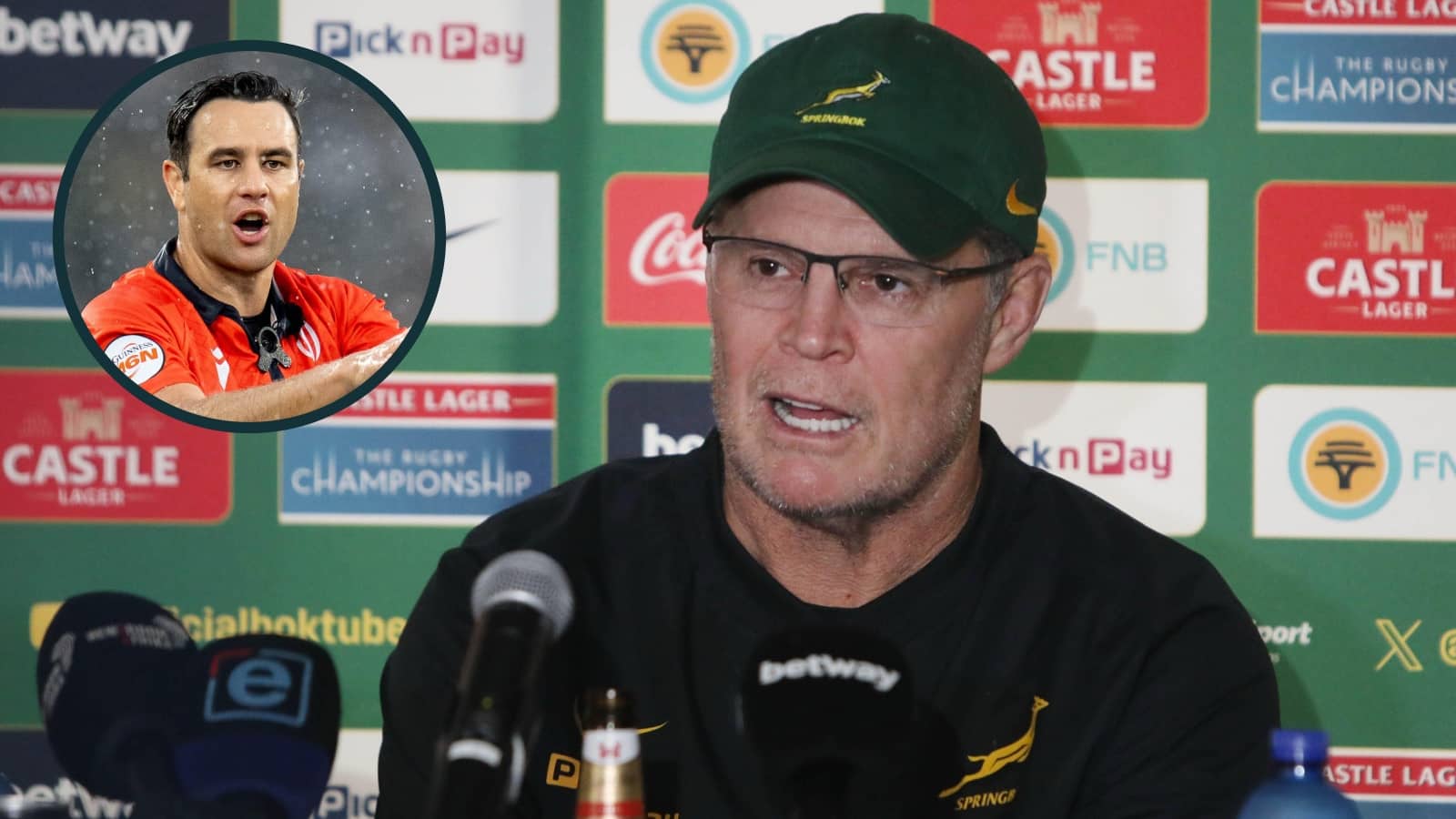
Top Rugby Referee Advocates for Greater Transparency and Innovation in Off-Field Communication
New Zealand’s Ben O’Keeffe, a highly regarded international rugby referee, has voiced his openness to engaging with the media post-match, a practice currently reserved for coaches and players. He believes World Rugby should embrace innovation in this area, allowing match officials a platform to discuss their decisions and performances, thereby fostering greater understanding and education among fans.
O’Keeffe, who has faced his share of scrutiny, particularly during the 2023 Rugby World Cup for his officiating of South Africa’s crucial knockout matches against France and England, sees value in a more open approach. While he acknowledges the existence of initiatives like World Rugby’s ‘Whistle Watch’, hosted by former referee Nigel Owens, which aims to clarify contentious incidents, O’Keeffe feels a more direct engagement would be beneficial.
“The game of rugby is always trying to innovate on the field, and I think we should be trying to innovate off the field as well,” O’Keeffe stated on the DSPN Podcast with Martin Devlin. “The referee’s feedback afterwards is a really important avenue that we haven’t explored enough.”
He is quick to qualify this, admitting that immediate post-match interviews might not be the most conducive environment for thoughtful reflection. Instead, O’Keeffe proposes a more considered approach, suggesting that referees could provide commentary after a thorough review of the game and their decision-making process.
“Coaches get to say what they want to straight after a game,” he observed. “I know that I would have liked to say a few things as well, straight after, but that is probably not the best time for referees to be giving feedback. It’s not until I guess the day after, when I’ve actually gone through the decisions, apart from knowing what happened live in my head, that I need to go through in detail what those decisions I made were. So, to be well informed, I reckon that’s really important. Then, like on Monday or maybe even Tuesday, after we’ve done our full review with the rest of the coaches.”
The proposed process would involve O’Keeffe and his team of referee coaches meticulously reviewing the game. “The process will be my management staff, and my coaches, in terms of the referee coaches, will get together and try to be aligned. Once we’re aligned, then you know this is the decision that it should have been.”

This structured review, O’Keeffe suggests, could lead to valuable public engagement. “On a Tuesday, potentially we could do that, and to stop, I guess a lot of the controversy or the continued discussion that happens throughout the week, what if on Tuesday we could say ‘Yup, hand up, we got that decision wrong, or actually this is the law and this is the reason why we made the decision, this is why the decision is correct. Here are other examples of when it has been correct.’”
He believes this level of transparency would be well-received by the rugby community. “So, potentially, what was said in the media or what was said over the weekend is wrong, and I reckon people would love that because people just want to be educated on the game.”
The Unseen Influence of the Crowd on Match Officials
Beyond the dialogue surrounding decision-making, O’Keeffe also shed light on the subtle yet significant impact of crowd atmosphere on referees. While the roar of the crowd or the collective groan of disappointment from spectators might seem like a direct influence, O’Keeffe asserts that it largely fades into “white noise” and doesn’t overtly sway officiating.
However, he revealed a crucial insight gained from an unusual experience: officiating the second British and Irish Lions Series Test against the Springboks in 2021, a match played behind closed doors due to pandemic restrictions. This absence of a live audience, he explained, highlighted the positive role the crowd plays in keeping referees sharp and alert.
“They never really get inside your head, but it’s an interesting feeling that I bring up because I refereed the second Lions test in South Africa a few years ago, when there was no crowd,” O’Keeffe recalled. “That’s when I realised how important it actually is; you do feed off a little bit of the atmosphere, it makes you sharp in the warm-up, during the game. So, it actually helps you as a referee.”
He elaborated on this point: “You feel like when there’s a big tackle, everyone goes, ‘Ooph’ and you make sure that you make sure there’s no foul play in that. So that’s sort of how the crowd does impact, I guess, the sharpness of your decision-making, rather than actually getting into your head because they’re screaming, they’re yelling at every decision – that’s all white noise in the long run for us when it’s happening throughout the whole game.”
This perspective underscores O’Keeffe’s call for innovation, suggesting that a more open and communicative approach from match officials, coupled with an understanding of the subtle environmental factors at play, could significantly enhance the overall spectator experience and appreciation for the complexities of rugby officiating.




Leave a Reply