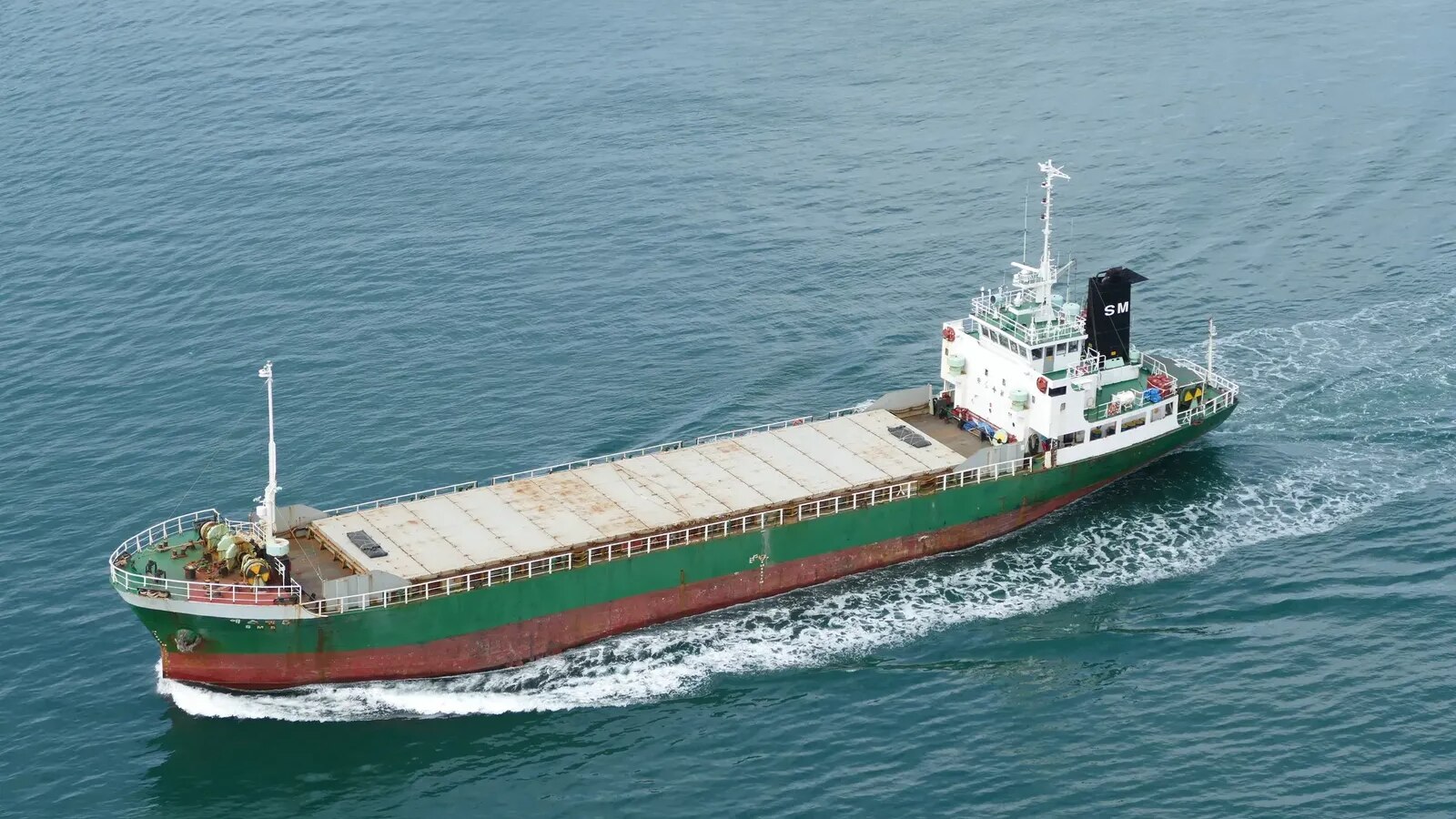
In a significant escalation of maritime tensions, United States military forces have intercepted a merchant vessel attempting to breach a naval blockade of Iranian ports. The US Central Command confirmed that a missile was fired into the engine room of the cargo ship, identified as the Gambia-flagged Lian Star, effectively halting its progress.
The incident occurred as the Lian Star reportedly ignored over 20 warnings from US forces during its attempt to enter an Iranian port. According to reports, the vessel remained adrift in the Gulf of Oman, and US forces had not yet boarded it at the time of the official statement.
This latest action marks a substantial increase in the US military’s efforts to enforce the blockade. The US has now stopped six vessels attempting to circumvent the restrictions. While one ship was permitted to continue its journey, a total of 116 vessels have been redirected by naval patrols.
The US initiated the blockade on April 17th. This measure was implemented in response to Iran’s actions, which effectively closed the Strait of Hormuz following the commencement of hostilities in the Middle East. The conflict began with strikes by US and Israeli forces on February 28th.
A fragile ceasefire has been in place since April 7th, and the region is currently awaiting news on whether a deal can be struck to extend this truce for an additional 60 days. Concurrent with these discussions, negotiations are expected to address Iran’s controversial nuclear program.
The Strait of Hormuz: A Vital Artery Under Strain
The events unfolding in the Strait of Hormuz, a critical maritime passage situated between Iran and Oman, have sent ripples through the global economy. This vital waterway serves as a crucial route for the transit of significant quantities of oil, natural gas, and related commodities such as fertiliser. The disruption to these shipments has led to substantial delays, exacerbating the financial pressure on consumers and food producers worldwide.
The US blockade is strategically designed to curtail Iran’s own maritime exports and further restrict its access to financial resources. This approach aims to intensify the economic hardship on Iran’s already strained economy.
Diplomatic Maneuvers and Navigational Rights
US President Donald Trump has been engaged in discussions with his advisors regarding a potential deal to extend the ceasefire and reopen the Strait of Hormuz. However, no definitive decision has yet been announced. Iran has indicated that any such agreement has not been finalised.
Despite Iran’s assertions that it must approve all transits through the Strait, commercial traffic has, in fact, continued to flow, albeit at a significantly reduced volume compared to pre-conflict levels.
Iran’s joint military command issued a statement through state television, warning that any attempts to violate the established regulations would pose a severe risk to passage security. The statement further cautioned that any military vessels interfering with these regulations would be targeted.
Adding to the complexities, Iran has reportedly imposed transit fees as high as US$2 million (approximately AUD $2.8 million). Experts have condemned these charges, deeming them a violation of the fundamental principle of freedom of peaceful navigation in international maritime trade.
Qatar’s Deputy Prime Minister, Sheikh Saoud bin Abdulrahman bin Hassan bin Ali Al Thani, has publicly stated the Gulf nation’s opposition to charging transit fees. However, he acknowledged that the possibility of negotiating temporary fees for specific purposes, such as mine clearance operations, could be a point of discussion. Such arrangements, he suggested, might help restore normal transit operations through the Strait of Hormuz.
It is worth noting that a US official, speaking on condition of anonymity, previously informed The Associated Press that the US forces had not encountered or destroyed any mines within the Strait.