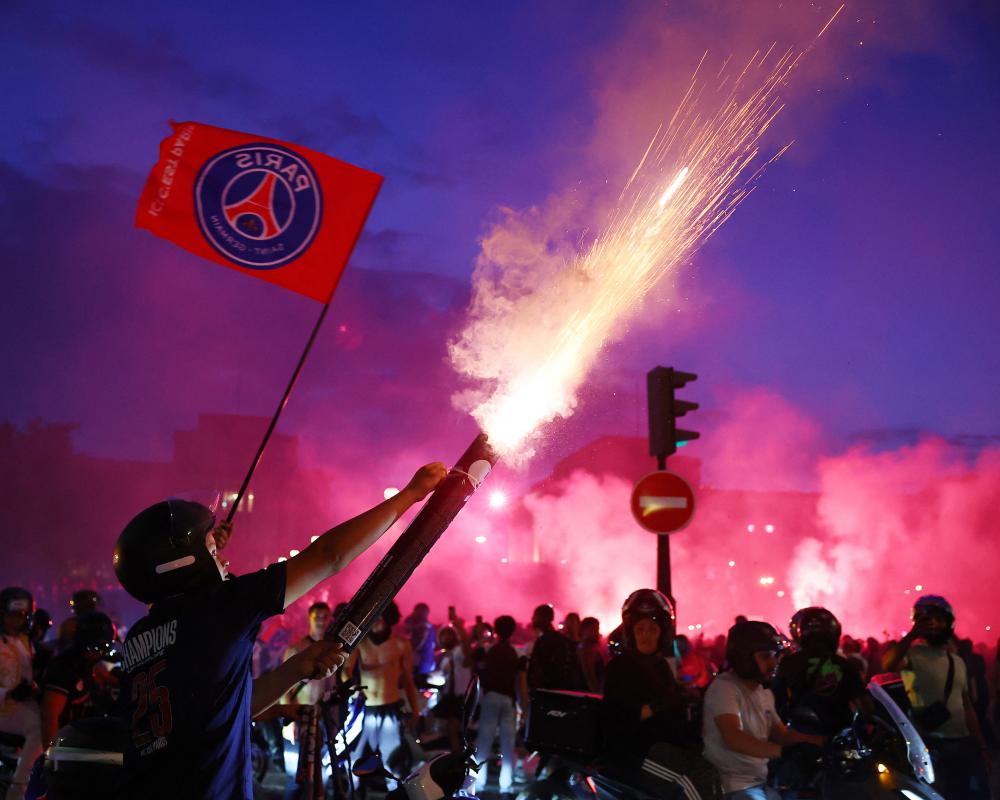
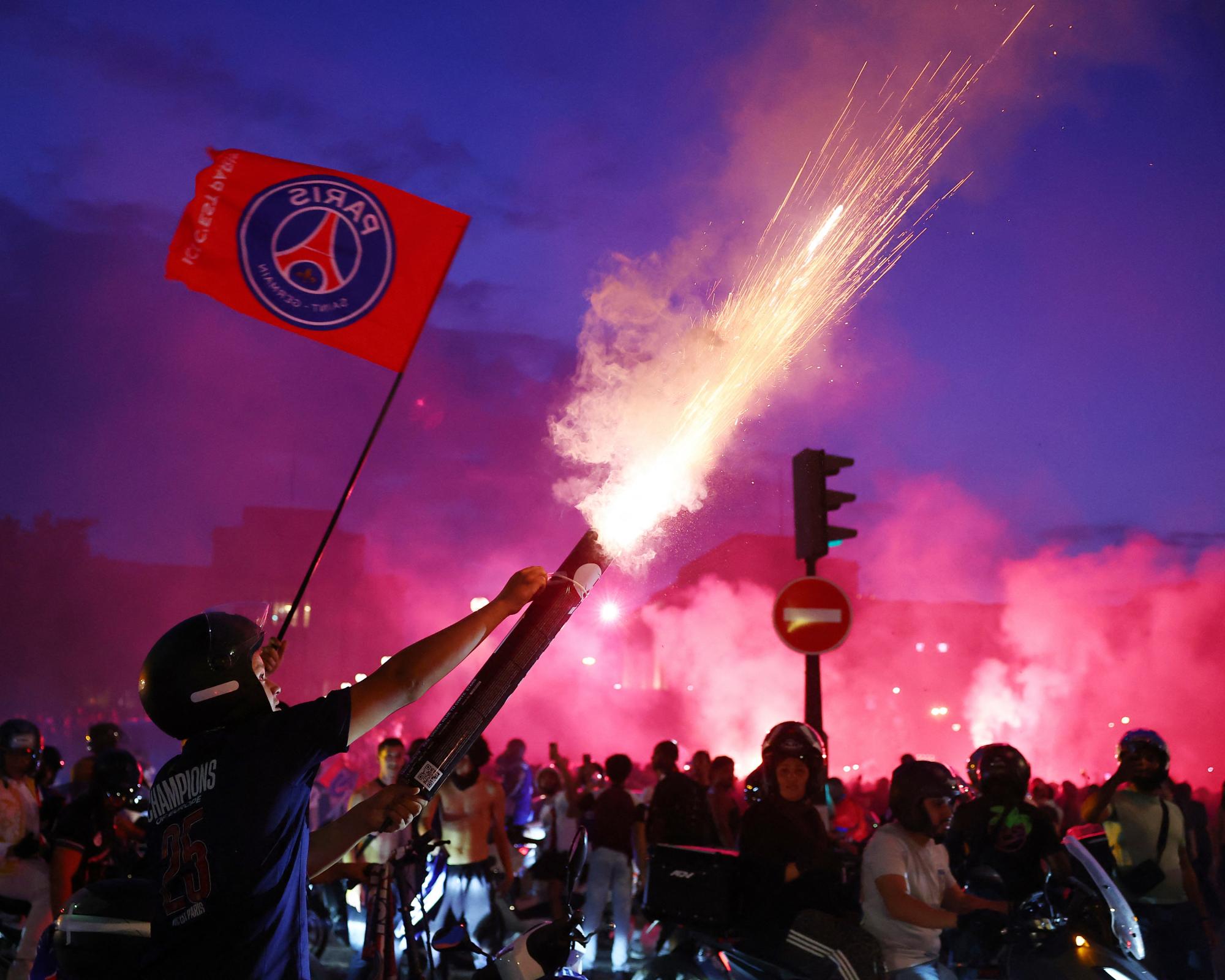
Paris experienced significant crowd control measures and sporadic unrest following Paris Saint-Germain’s (PSG) triumphant victory over Arsenal in the Champions League final. Thousands of officers were mobilised across the city’s key locations, deploying tear gas and making over 130 arrests as jubilant, and in some cases unruly, fans celebrated the club securing its second consecutive title.
Scenes of tension and brief clashes were captured on camera around PSG’s home ground, the Parc des Princes. This iconic stadium served as a focal point for many of the 40,000-plus supporters who gathered to watch the nail-biting final on giant screens. The ultimate decider, a penalty shootout at the Puskas Arena in Budapest, saw PSG emerge victorious against Arsenal, dashing the Gunners’ hopes of European glory.
Post-Match Mayhem and Police Response
By 11pm Paris time, the official police count indicated that more than 130 individuals had been apprehended. A spokesperson for the Paris police confirmed that the unrest resulted in damage to six vehicles and two shopfronts. Reports emerging from France painted a picture of intense celebrations that spilled into confrontation. Some zealous PSG fans directed fireworks towards law enforcement officers, prompting a response of tear gas to disperse the crowds. The fervent, and at times aggressive, nature of some fan behaviour was evident, with some individuals seen sporting T-shirts bearing provocative messages directed at Arsenal, even as discarded Lime Bikes burned on city streets.
The visual evidence of the disorder included plumes of smoke rising from various locations across the city, a stark contrast to the expected atmosphere of pure sporting celebration. Riot police were observed actively pursuing groups of fans, their presence a clear indication of the challenges authorities faced in maintaining order. Flares, discarded on roadways, were also a common sight, adding to the chaotic scenes.
Government Assurances and Past Incidents
In response to the disturbances, the French Interior Minister, Laurent Nuñez, asserted that a “very robust, very solid system” had been implemented to curb violence. He emphasised the police’s commitment to ensuring a “festive celebration that is calm and fully secure” for all attendees. To manage the situation, France had deployed a substantial contingent of 22,000 police officers across the capital.
This year’s events serve as a stark reminder of the potential for disorder following major sporting triumphs. Last year, PSG’s maiden Champions League win, achieved against Inter Milan, resulted in a tragic outcome with two fatalities and nearly 200 injuries. This history undoubtedly informed the precautionary measures taken this time around.
Champs-Élysées: A Mixed Scene
The famed Champs-Élysées boulevard, which had been partially cordoned off by authorities, became a gathering point for a significant number of PSG supporters. While television footage indicated that the majority of fans present were engaging in peaceful celebrations, the atmosphere was still charged. Police estimated the crowd size on the boulevard to be around 20,000. Despite the generally calmer mood compared to other areas, the use of fireworks and flares by some supporters was still observed, contributing to the overall spectacle and the challenges faced by law enforcement. The ongoing need for vigilance and robust crowd management strategies remains a critical consideration for major sporting events in urban centres.