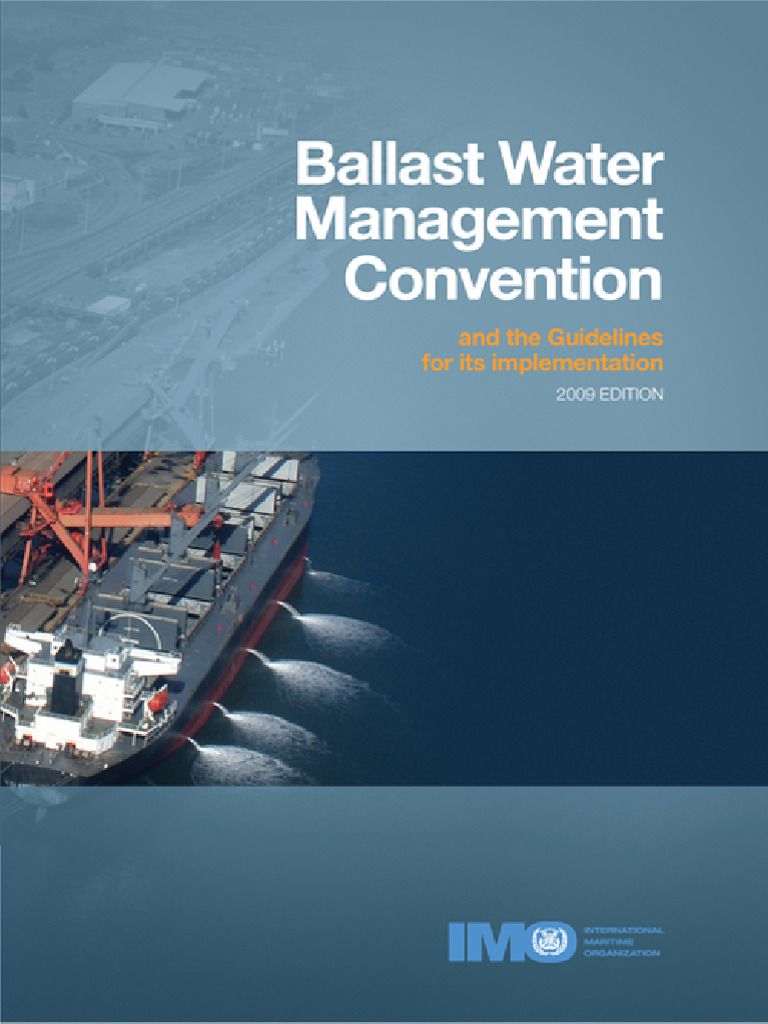
The Invisible Cargo: Nigeria’s Fight Against Ballast Water Threats
Every day, international cargo vessels dock at Nigeria’s strategic ports such as Onne, Apapa, Tin Can Island, Calabar, Lekki, and Warri. These vessels carry not only goods but also billions of litres of ballast water drawn from ports across the globe. Within this water are microbial communities, pathogenic bacteria, invasive fungi, and toxic phytoplankton that no customs officer can see, no cargo manifest declares, and no immigration officer can intercept.
For decades, this invisible cargo entered Nigerian coastal waters largely unchecked, posing significant risks to ecosystems, human health, and critical port infrastructure. One scientist has dedicated his life’s work to changing this situation.
With a PhD in Applied Microbiology and as a Fellow of the Nigerian Environmental Society, I have spent nearly 20 years at the intersection of marine microbiology, environmental risk management, and industrial compliance. My doctoral research, completed in 2017, produced the most comprehensive and molecularly rigorous scientific assessment ever conducted of microbial species composition in ballast water discharged at the Onne Port Complex in Port Harcourt. The findings of this research have influenced government policy consultations, peer-reviewed scientific journals, and even the International Maritime Organisation (IMO), as Nigeria reclaims its place in global maritime leadership.
Nigeria’s maritime governance landscape shifted decisively on November 28, 2025, when it was elected to Category C of the IMO Council for the 2026–2027 biennium, marking its return to the global maritime governing body after a 14-year absence. This seat carries with it an explicit responsibility: Nigeria now has a voice in negotiations over international conventions, technical standards, and environmental guidelines that will shape global shipping for the next decade. Whether it can speak with scientific authority depends on the quality of its domestic research.
In January 2026, the Nigerian Maritime Administration (NIMASA) launched “Operation Zero Tolerance for Non-Compliance,” a nationwide enforcement drive aimed at ensuring full compliance with statutory requirements. This initiative places all stakeholders in the Nigerian maritime domain on notice, making compliance non-negotiable.
However, the full potential of Operation Zero Tolerance depends critically on whether the compliance requirements being enforced are scientifically adequate. This is where my research plays a crucial role. Random vessel inspections and documentation verification are necessary but insufficient without molecular-level analysis of what is actually being discharged into Nigerian coastal waters.
The IMO’s Ballast Water Management Convention, adopted in 2004 and entering into force in September 2017, requires all vessels to meet either the D-1 or D-2 standard. Under D-2, vessels must discharge no more than 10 viable organisms per cubic metre for organisms larger than 50 micrometres, and undetectable concentrations of specified indicator microbes. By September 2024, global D-2 compliance became mandatory for all vessels worldwide.
The Marine Environment Protection Committee (MEPC) continued strengthening the framework through 2023 and 2024. Resolutions such as MEPC.369(80) and MEPC.383(81) introduced amendments to the Ballast Water Record Book, enabling the use of electronic record books that allow real-time data analysis and cross-port pattern detection. These digital tools provide the pre-arrival risk intelligence that modern port biosecurity demands.
Nigeria’s membership of the IMO Council places it in an immediate position to engage with the 2026 review process. NIMASA has stated its intention to accede to additional IMO instruments addressing greenhouse gas emissions, biofouling, and maritime labour rights. The biofouling instrument, which addresses the accumulation of marine organisms on ship hulls, is directly complementary to ballast water management.
Nigeria was among the first nations to formally domesticate the IMO’s Ballast Water Management Convention, ratifying it on October 5, 2005. Building on that commitment, NIMASA developed the Merchant Shipping (Ballast Water Management) Regulations 2012, which established the legal framework requiring vessels to maintain Ballast Water Management Plans and comply with ballast water exchange or treatment standards consistent with IMO requirements.
Despite these efforts, the 2012 Regulations were designed for a pre-D-2 world and depend primarily on declaration-based compliance. My research fills this gap by demonstrating, with molecular precision, that vessels are discharging biologically complex, toxicologically significant ballast water containing alien microbial species documented in international databases.
The international significance of my research extends beyond Nigeria’s borders. The peer-reviewed scientific literature on ballast water invasions is dominated by studies from North America, Europe, Australia, Japan, and China. West African ports, despite their strategic position in global shipping networks, are almost entirely absent from the published research landscape. My work begins to correct this imbalance, filling a geographical gap in the global literature that has long compromised the ability of international standard-setters to calibrate IMO requirements for tropical developing-country port conditions.
Several species detected by my research represent novel findings for West African port environments with implications extending into frontier areas of marine science. These findings open research questions that the global marine science community has not yet systematically addressed in the context of West African port ecology.
Drawing on my doctoral research and nearly 20 years of professional practice, I have identified six specific innovations that would transform Nigeria’s ballast water governance from a declaration-based compliance system into a world-class, scientifically anchored biosecurity framework. These proposals are evidence-based and grounded in data already collected and validated.
Key Innovations for Ballast Water Governance
- Amending the 2012 Regulations to require qPCR-based microbial screening of ballast water from vessels in high-risk categories, tankers and bulk carriers, and vessels from designated high-risk source ports as a condition of port clearance.
- Mandating NIMASA to establish and maintain a living Ballast Water Alien Species Risk Register: an annotated, annually updated database of organisms detected in Nigerian port ballast water.
- Introducing mandatory Microtox acute toxicity screening as a rapid-assessment tool for incoming ballast water, tiered by vessel class and port of origin.
- Explicitly aligning the 2012 Regulations with IMO MEPC.383(81) by mandating Electronic Ballast Water Record Books for all vessels calling at Nigerian ports.
- Expanding Nigeria’s marine biosecurity framework to address biofouling as a complementary invasive species vector alongside ballast water.
- Finalising the long-planned designation of Ballast Water Exchange Areas in Nigerian waters and operationalising the nationally integrated BWM testing laboratory identified in NIMASA’s roadmap.
These innovations would ensure that Nigeria’s compliance verification system is grounded in the same molecular science that identifies the threat, providing a robust foundation for protecting the nation’s marine environment.