The Rise of a New Civilian Regime in Myanmar
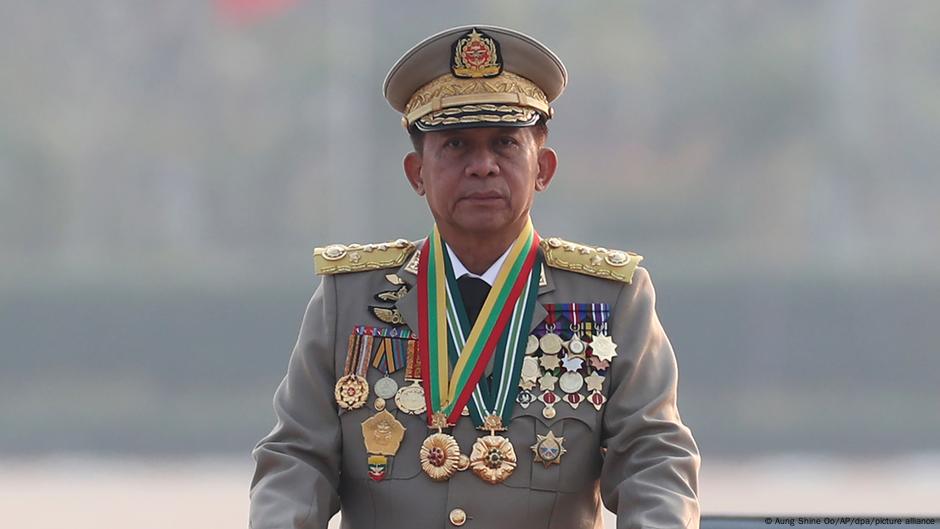
Myanmar’s political landscape has undergone a dramatic transformation, with the head of the military junta, Min Aung Hlaing, transitioning from a uniformed general to the role of president. However, this shift does not signal a move toward democracy or peace. Instead, it represents an effort to maintain the military’s grip on power under the guise of civilian governance.
On April 3, Myanmar’s new parliament elected Min Aung Hlaing as president, marking a formal consolidation of his authority. The 69-year-old general secured 429 out of 584 votes in a parliament dominated by the military-backed Union Solidarity and Development Party (USDP) and other pro-military factions. This election was part of a carefully orchestrated process designed to ensure that the military remains at the heart of power.
Min Aung Hlaing led the 2021 coup that overthrew Aung San Suu Kyi’s democratically elected government, plunging the country into a brutal civil war. Despite the NLD’s landslide victories in 2015 and 2020, the military alleged fraud and staged a coup, claiming the legitimacy of its actions.
A Nation Still in Conflict
Five years after the coup, Myanmar remains mired in conflict. While the military controls major cities and key institutions, it only holds less than half of the country’s territory. Resistance forces control large areas of the borderlands and countryside, creating a fragmented and unstable situation.
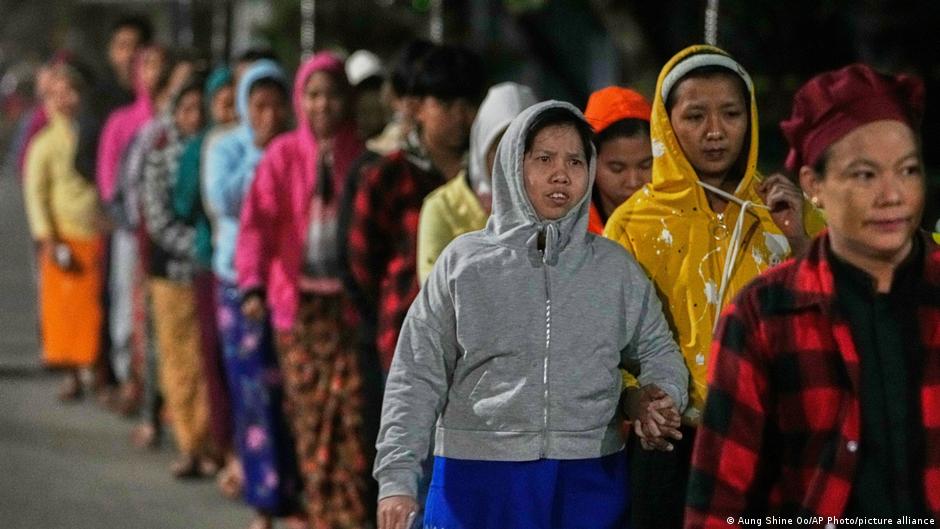
The United Nations reported that around 6,800 civilians have been killed and 3.6 million displaced since 2021, though some estimates suggest much higher numbers. Recent elections, which paved the way for Min Aung Hlaing’s presidency, were widely criticized as neither free nor fair. Anti-junta parties were excluded, and criticism of the electoral process was effectively criminalized.
Aung San Suu Kyi, now 80, is serving a 27-year sentence on charges including corruption. The USDP won 81% of the elected seats, while the military retains a quarter of the assembly’s seats under the current constitution.
Consolidating Power Under a Civilian Facade
Min Aung Hlaing has taken steps to ensure that even this so-called civilian government does not challenge military authority. One such mechanism is the new five-member Union Consultative Council, which operates above the executive, legislative, and judicial branches. Analysts describe this body as a “super-body” that reinforces military dominance.
This transition is far from democratization, according to Yoshihiro Nakanishi, a professor at Kyoto University. “Rather, it is an attempt to formalize the military regime and treat the 2021 coup as a fait accompli,” he said.
Economic Challenges and Energy Crises
Myanmar’s economy has been severely damaged by war, sanctions, and capital flight. The country also faces a growing fuel crisis due to rising oil prices and shipping costs. With heavy reliance on refined fuel imports from Singapore and Malaysia, these factors are likely to increase transport costs, inflation, and daily hardship in cities already struggling with blackouts.
Fuel rationing for private vehicles has already been introduced. Moe Thuzar, a senior fellow at ISEAS–Yusof Ishak Institute, noted that the energy crisis poses a serious challenge for any administration trying to revive the economy while facing ongoing resistance.
Escalation of Conflict
Recent battlefield trends indicate no immediate breakthrough for either side. After suffering setbacks in 2023 and 2024, the junta has increased conscription, drone use, and air power. Airstrikes have intensified, causing heavy civilian casualties in regions like Sagaing and Rakhine.
Before assuming the presidency, Min Aung Hlaing stepped down as military chief, replaced by General Ye Win Oo, a close ally. Analysts suggest that his appointment reflects continuity rather than change.
Resistance forces remain resilient, forming a new umbrella organization ahead of Min Aung Hlaing’s presidential vote. Sabe Soe of the Burma Center Prague warned that the civil war is likely to continue and may intensify.
International Scrutiny and Diplomatic Moves
Min Aung Hlaing remains under international scrutiny for alleged atrocities, including the persecution of the Rohingya. In 2024, the International Criminal Court sought an arrest warrant against him.
China has already congratulated the new administration, and some neighboring countries may find it easier to engage with a nominally civilian government. However, diplomatic gestures do not alter the underlying power dynamics.
Nakanishi emphasized that the military’s accountability system is not functioning. “The new government is likely to become an even more personal dictatorship,” he said.
The Path Forward
Analysts remain skeptical about meaningful reforms. Hunter Marston of CSIS noted that while parliament may introduce modest changes, it is unlikely to challenge the military’s dominance.
As Myanmar moves forward, the question remains: will this be a step toward greater democracy or a deeper entrenchment of authoritarian rule? For now, the answer seems clear.