A Landmark Birthday and Political Shifts
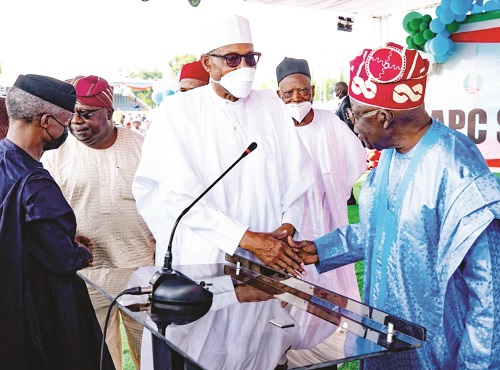
President Bola Ahmed Tinubu, at 74, might not have typically drawn attention, but his birthday this year was an exception. It came just 48 hours after he was unanimously endorsed as the presidential candidate of the ruling All Progressives Congress (APC). This endorsement marked a significant moment in his political career, especially since it occurred shortly before the 2027 General Elections. The timing made his birthday more than just a personal milestone—it became a symbolic event for the APC.
With the APC having set its presidential candidate for the next election, the responsibility now lies with the opposition to follow suit. However, instead of preparing for the upcoming race, the opposition has been focused on complaints about various issues they believe are detrimental to democracy. One such concern is the recent wave of governors defecting to the APC. This trend has raised eyebrows, as the number of APC governors increased from 21 in 2023 to 31 out of 36 currently.
The current state of governors seems to be better than ever, with many benefiting significantly from subsidy removal. Some now receive more than double their previous monthly income. While the question of how they spend this money remains open, the fact that these defections appear voluntary adds another layer to the situation.
This raises the question: what exactly does the opposition want? Instead of organizing themselves effectively, they often focus on trivial complaints. For instance, some have suggested that it’s acceptable for political contenders to belong to two different parties simultaneously—a notion that seems contradictory to democratic principles.
A Changing Political Landscape
The opposition, whether from the People’s Democratic Party (PDP) or the African Democratic Congress (ADC), has struggled to present a unified front. Their tendency to criticize rather than act is reminiscent of past political behaviors. Even during the Second Republic, which ended in 1983, prominent politicians were easily identifiable by their party affiliations. Today, however, political loyalty seems more fluid, with individuals changing parties like children switching lines during storytelling sessions.
Alhaji Atiku Abubakar stands out in this context, exemplifying the trend of political shifting. The same opposition once supported e-voting in a country where electricity and internet access are inconsistent. They argued against combining manual and electronic voting, despite advanced countries doing so. This inconsistency highlights a broader issue within the opposition.
Government and Public Perception
When evaluating government performance, it’s essential to consider the conditions under which a government takes office. Just as a landlord makes repairs before a new tenant moves in, governments must address the challenges left by their predecessors. However, there is a limit to how long an incumbent can blame past administrations for current issues.
Nigerians are experiencing hardships due to the current economic situation. Many feel that successive governments have failed to provide stability. Yet, enduring some pain could lead to a better future. Governments should not shy away from difficult decisions simply to gain popularity.
A Yoruba blogger once highlighted the contrast between past leaders and Tinubu regarding fuel subsidy removal. While previous leaders avoided the issue, Tinubu took a bold stance. This move, though controversial, reflects a commitment to addressing long-standing problems.
Media and Political Dynamics
The role of media in shaping public opinion cannot be overlooked. Advertisements play a crucial role in sustaining newspapers, and the relationship between media outlets and political figures is complex. During the Muhammadu Buhari administration, there was a noticeable decline in government advertisements in certain newspapers, which affected their revenue.
This dynamic is not unique to Buhari’s era. During the military regime, newspapers faced similar challenges when they took a hardline stance on political issues. In one instance, the Nigerian National Petroleum Corporation (NNPC) continued advertising despite government orders to avoid supporting critical publications. This suggests that self-censorship by public institutions may have played a role in the lack of advertisements.
Conclusion
Tinubu’s endorsement for a second term represents a shift from the challenges he faced in 2022. His current position offers a chance for the APC to build on its successes. Meanwhile, the disorganized opposition needs to focus on improving its structure rather than making superficial complaints. As the political landscape continues to evolve, the need for unity and effective leadership becomes increasingly apparent.