Companion animals, such as dogs and cats, have significantly shorter lifespans compared to humans. While human medical advancements are bringing the possibility of a “centenarian era” closer, most dogs typically live no longer than 20 years. For example, large breeds like Labrador Retrievers usually live around 10 years, with some reaching up to 14 years if fortunate. Basset Hounds, often referred to as “long-lived dogs,” may live up to 9 years. Even small breeds like Chihuahuas, which can reach 17–18 years, still fall far short of human life expectancy.
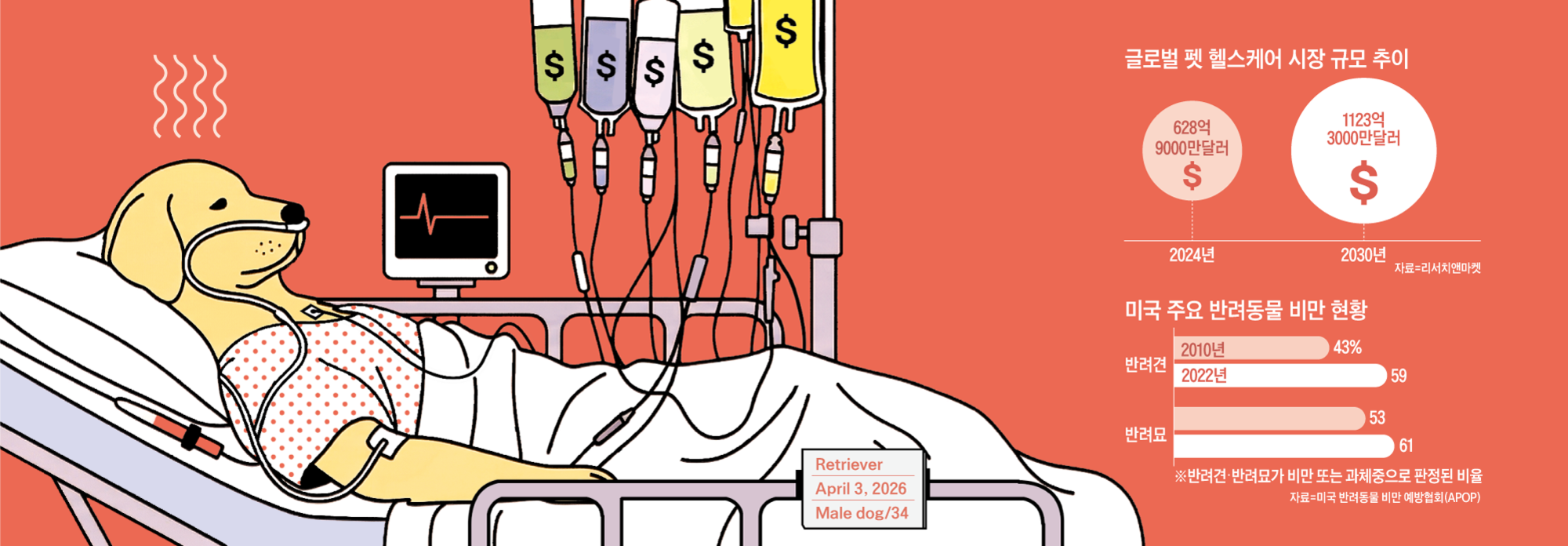
As more people treat their pets as family members—known as “pet humanization”—interest in extending the lifespan of these animals is growing. Startups focused on pet longevity are emerging globally, and there are signs that drugs aimed at extending animal lifespans may soon receive conditional approval from the U.S. Food and Drug Administration (FDA). This trend is reflected in the rapid growth of the global pet healthcare market. According to Research and Markets, the market was valued at $62.89 billion in 2024 and is expected to grow to $112.33 billion by 2030.

Human Longevity Aspirations Drive Companion Animal Longevity Research
A San Francisco-based bio startup called Royal is working on drugs that slow aging in dogs by addressing metabolic and hormonal imbalances before diseases develop. The company’s first product, a beef-flavored anti-aging pill, is expected to launch this year if it receives FDA approval. In fact, the FDA has indicated that the pill meets reasonable expectations for extending the lifespan of senior dogs. Royal is also developing injectables and pills that suppress growth hormones, which are more prevalent in large dog breeds, to help extend their shorter lifespans.
The founder of Royal, Céline Halio, stated in an interview with Forbes that while extending human lifespan requires significant investment and research, extending the lifespan of companion animals is a more realistic goal. This focus on companion animals is not just about improving their quality of life—it is also part of a broader strategy to develop anti-aging technologies that could eventually benefit humans.
In the U.S. tech industry, anti-aging research for companion animals is progressing faster than research into human longevity. This is because the development barriers for animal-related technologies are lower, allowing companies to accumulate knowledge and experience before expanding to human applications. As a result, investments in the longevity industry have surged. PitchBook reported that approximately $900 million (about 1.36 trillion won) has been invested in startups focused on anti-aging and longevity.
The increasing number of households raising companion animals is also accelerating the development of lifespan-extending technologies. A 2023 Pew Research Center survey found that 62% of Americans own companion animals, with 97% considering them family members. Household spending on pets has also risen significantly. According to the U.S. Department of Labor’s Bureau of Labor Statistics, U.S. households spent an average of $876 annually on pets in 2023—an increase of about 90% since 2013.
‘Weight Loss Drugs’ Key to Longevity, Now for Companion Animals Too
While “chubby cats” and “chubby dogs” may be cute, obesity poses serious health risks for companion animals. Michael Klotzman, CEO of Ocava Pharmaceuticals, told The Washington Post that obesity can lead to diabetes and heart disease in cats, ultimately shortening their lives. He emphasized that obesity is one of the most pressing issues in veterinary medicine.
In the U.S., the development of weight loss drugs for pets is gaining momentum. Companies are focusing on GLP-1 class medications, such as Wegovy and Mounjaro, which are known to suppress appetite and enhance satiety. Ocava is collaborating with Vivani Medical to develop a subcutaneous implant for dogs and cats that delivers exenatide over six months without requiring injections. This device has shown success in reducing cat weight by at least 5% over 112 days.
Pet food manufacturer Better Choice is also exploring GLP-1 class treatments, planning to develop snack-based delivery methods. Biotech company ProLynx is conducting clinical trials on a monthly injectable for diabetic cats. According to the U.S. Association for Pet Obesity Prevention (APOP), 59% of dogs and 61% of cats were classified as obese or overweight in 2022—an increase of 16 percentage points for dogs and 8 percentage points for cats since 2010.
Michael Young, CEO of Better Choice, noted that pet owners are willing to spend money on their animals, suggesting that they would not hesitate to give them the same weight loss drugs they take themselves.
Experts Say “Not So Fast”… Cautionary Views Also Exist
Despite the growing interest in longevity treatments, some experts urge caution. Dr. Deborah Caro, co-director of the Stanford Longevity Center, emphasized that healthy eating, exercise, and socialization are more important than relying on pharmaceuticals. She also warned that efforts to artificially extend the lifespan of animals should be approached carefully, especially given the challenges faced by stray animals.
Concerns about dedicated pet obesity treatments include small sample sizes and the lack of control groups in studies. Many experts argue that basic weight management principles should be prioritized before turning to drugs. Jan Picchiello, a veterinarian at VCA, recommended trying dietary adjustments, exercise, and checking for endocrine diseases before considering GLP-1 prescriptions.
Some critics also point out that companies may be shifting responsibility onto animals rather than addressing the root cause: owner behavior. George Feyh Jr., a professor at the University of Illinois at Urbana-Champaign, stated that companion animals do not open food cans on their own, and the problem lies with overfeeding by owners.
월 5900원 멤버십, 신문 독자에게는 2900원, 조선멤버십
55000원 상당의 신문-잡지 8종 마음껏 보기, 조선멤버십
현금처럼 쓸 7000포인트 받아 알뜰한 쇼핑, 조선멤버십