
ASX Stocks Facing Downgrades: A Closer Look at Banking and Energy Sectors
Following the latest round of company reporting season, a clear divergence is emerging in the Australian stock market. While some defensive giants are weathering the storm and attracting investor confidence, others are facing increased scrutiny from market analysts, leading to downgrades. This analysis delves into three prominent ASX 200 stocks within the banking and energy sectors that have recently received “Sell” equivalent ratings from leading brokers, signalling potential headwinds for their share prices.
The financial results season often reveals a “prince and pauper” scenario, where established, defensive companies like major banks and resource companies tend to receive the benefit of the doubt from the broader investment community. However, stockbrokers, with their detailed analysis and forward-looking perspectives, frequently hold differing opinions. This has led to a series of downgrades for some well-known names, suggesting that even solid results may not be enough to escape the attention of analysts concerned about valuation and future prospects.
Westpac Banking Corporation (ASX: WBC): Underweight Rating from JPMorgan
Westpac Banking Corporation, one of Australia’s “Big Four” banks, has experienced a shift in analyst sentiment, with JPMorgan revising its rating to “Underweight” from “Neutral.” Despite all four major banks beating expectations in their recent reporting seasons, Westpac delivered the relatively weakest performance among them. Nevertheless, the bank managed to achieve a 5% reduction in costs and saw an increase in earnings estimates.
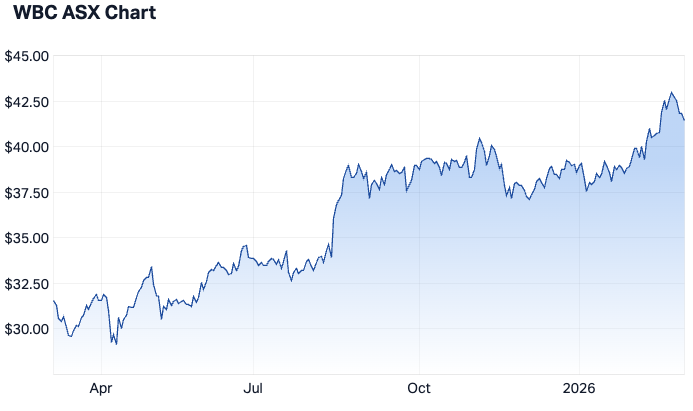
While the inherent defensive nature of Australian banks continues to draw investor interest, analysts are becoming more discerning due to stretched valuations. JPMorgan’s downgrade on Westpac stems from concerns surrounding the bank’s technological transition and its aggressive push to regain mortgage market share. These strategic moves, according to JPMorgan, leave limited room for positive surprises in terms of profit margins.
Although JPMorgan has slightly increased its price target for Westpac from $37.10 to $37.50, the downgrade to “Underweight” still implies a potential downside of approximately 10%. This puts JPMorgan in agreement with other prominent brokers like Macquarie and Morgan Stanley, who also recommend an underweight or equivalent rating for Westpac. Further underscoring this cautious outlook, Market Index’s Broker Consensus tool currently classifies Westpac as a “Strong Sell,” with a consensus price target suggesting a 9% downside.
Woodside Energy Group (ASX: WDS): “Lighten” Recommendation from Ord Minnett
Woodside Energy Group, a major player in the energy sector, has also seen its analyst rating revised downwards. Ord Minnett has moved its rating from “Hold” to “Lighten” (a rating often considered equivalent to a Sell), citing uncertainties surrounding the company’s leadership transition and scepticism about its ability to bolster its dividend yield through its balance sheet.
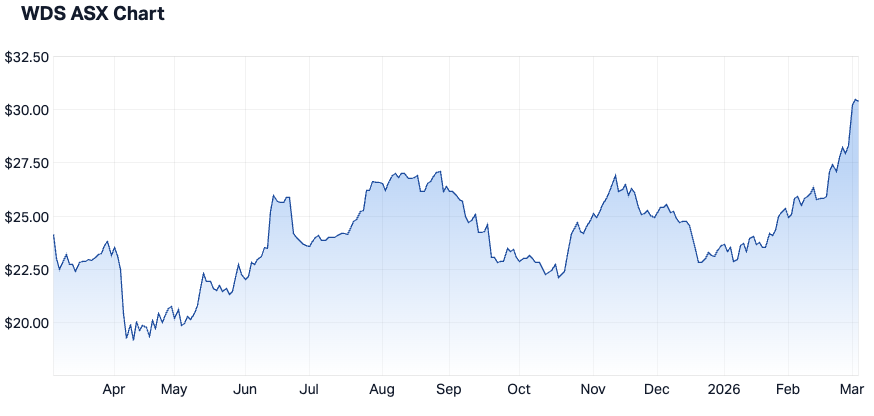
The highlights of Woodside’s recent results included a beat on net profit and an increased dividend payout. However, Ord Minnett’s downgrade suggests that these positive aspects are overshadowed by other concerns. The ongoing search for a new Chief Executive Officer (CEO) introduces a layer of uncertainty for the company’s future direction. Furthermore, Ord Minnett expresses doubts about Woodside’s capacity to supplement its dividend income with its existing financial resources.
Despite acknowledging that Woodside remains an “operationally sound business with quality management,” Ord Minnett points to the CEO question, a softening outlook for the Liquefied Natural Gas (LNG) market, and a strategic focus on free cash flow over immediate dividend payouts as key reasons for their revised assessment. Adding to this cautious sentiment, Woodside has also received downgrades from Morgans and Jarden, both of whom have shifted their previous “Buy” equivalent ratings to “Neutral.” Market Index’s Broker Consensus tool indicates a consensus price target for Woodside that suggests an 11% downside.
AGL Energy Limited (ASX: AGL): Underweight Rating from Morgan Stanley
AGL Energy Limited, another significant entity in the energy landscape, has been downgraded by Morgan Stanley to “Underweight” from “Equal-weight.” This move comes despite AGL’s shares having rallied by 10% following a solid first-half financial result. During this period, the company reported a 5% decrease in profit, though this figure still came in 9% ahead of analyst estimates.
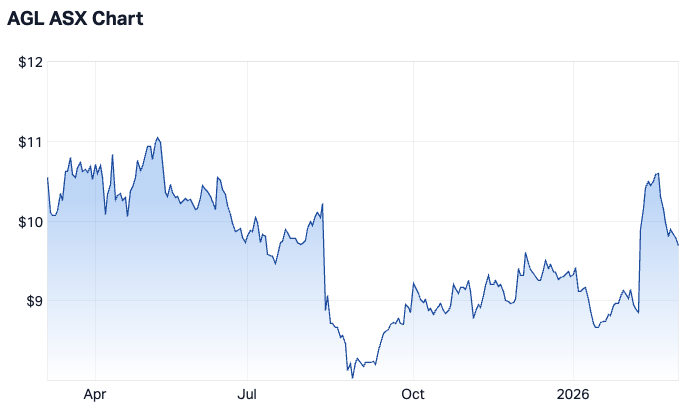
Morgan Stanley now views AGL as overvalued, assigning it an “Underweight” rating and setting a price target of $9.66, which suggests a slight downside potential. In their analysis, Morgan Stanley highlights potentially lower and less volatile electricity prices as a notable headwind for AGL. This assessment was made prior to the recent escalation of conflict in the Middle East, which could introduce further volatility into energy markets.
Interestingly, this downgrade contrasts with the broader market consensus. AGL currently holds a “Buy” rating on Market Index’s Broker Consensus tool, with a consensus price target that implies a 13% upside potential from its current share price. Analysts at Citi and UBS, for instance, maintain “Buy” ratings on AGL, citing strong forward earnings growth and net profit after tax (NPAT) respectively. Macquarie also holds a “Buy” rating on the company.
However, diverging opinions are evident. In a recent special episode of Livewire’s “Buy Hold Sell” program, Dushko Bajic of First Sentier Investors rated AGL a “Sell,” preferring Origin Energy instead. David Lloyd of Ausbil, while rating AGL a “Hold,” indicated that he saw better investment opportunities elsewhere. This mixed analyst sentiment underscores the complex factors influencing the outlook for AGL Energy.