Super Bowl Halftime Show: A Moment of Misinterpretation and Deeper Meanings
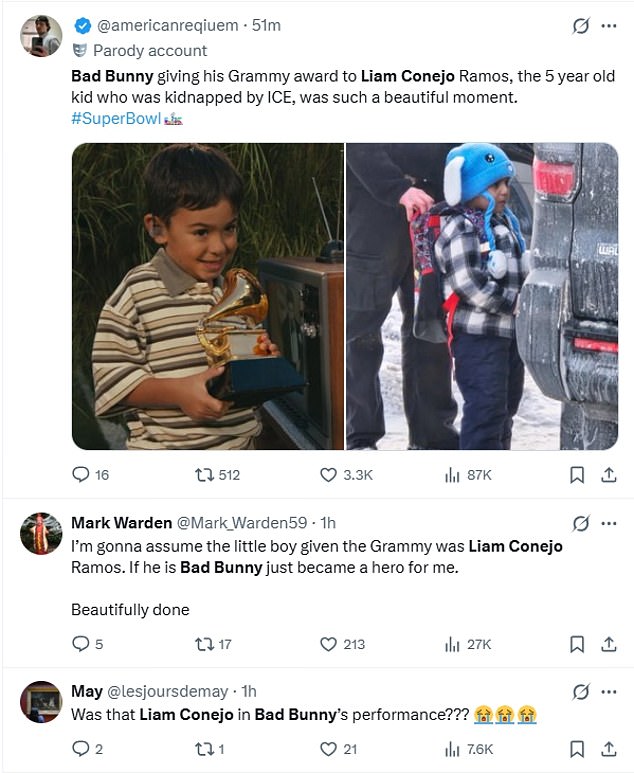
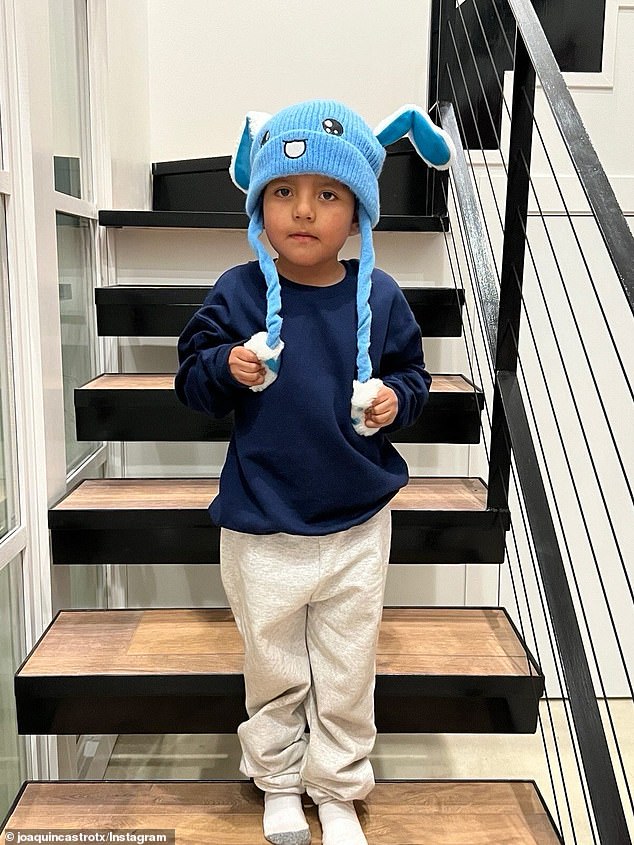
The recent Super Bowl halftime show, headlined by Puerto Rican superstar Bad Bunny, sparked a flurry of fan speculation and emotional reactions. A touching moment during the performance, where the artist placed his hand on a young boy’s head and presented him with a trophy, led many to believe the child was Liam Conejo Ramos. Liam, a five-year-old who had been detained by U.S. Immigration and Customs Enforcement (ICE) agents the previous month, had garnered significant public sympathy.
Eagle-eyed fans, convinced the child on stage was Liam, interpreted Bad Bunny’s gesture as a powerful and subtle protest against Donald Trump’s stringent deportation policies. The narrative quickly spread across social media, with viewers expressing admiration for what they saw as a brave political statement.
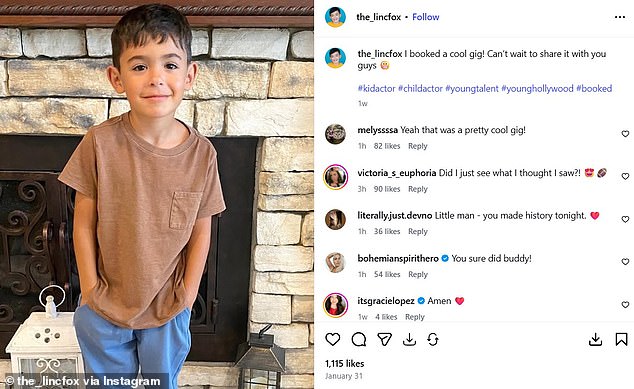
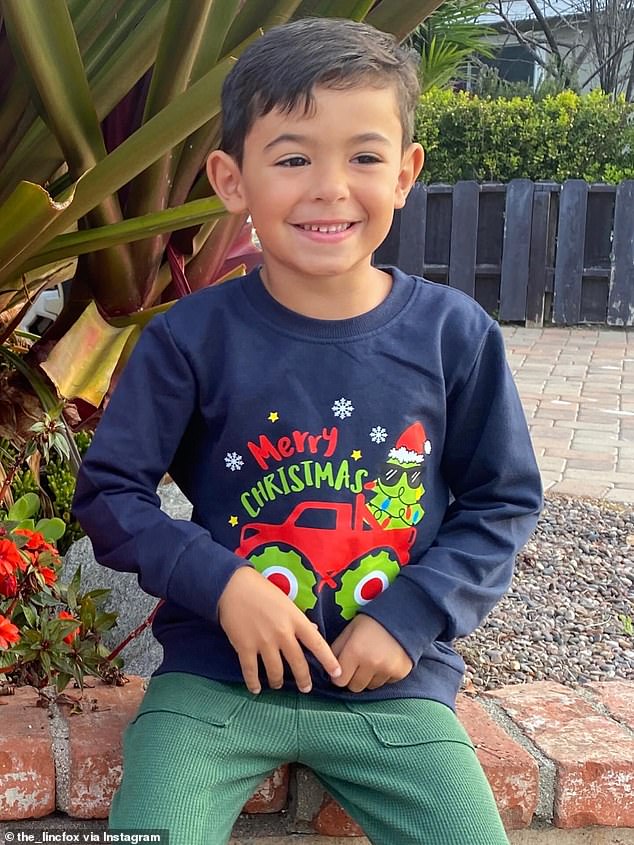
However, the identity of the child was later clarified. Huffington Post reporter Philip Lewis identified the young boy as Lincoln Fox, a child actor from Costa Mesa, California.
The Case of Liam Conejo Ramos
The story of Liam Conejo Ramos and his father, Adrian Conejo Ramos, had captured national attention. They were detained by ICE agents in Minneapolis on January 20th and initially held at an ICE facility in Texas. Their case drew widespread public outcry, with many Americans demanding their release. Fortunately, a judge ordered their return to Minnesota, and they were released this week, bringing a measure of relief to those who had followed their plight.
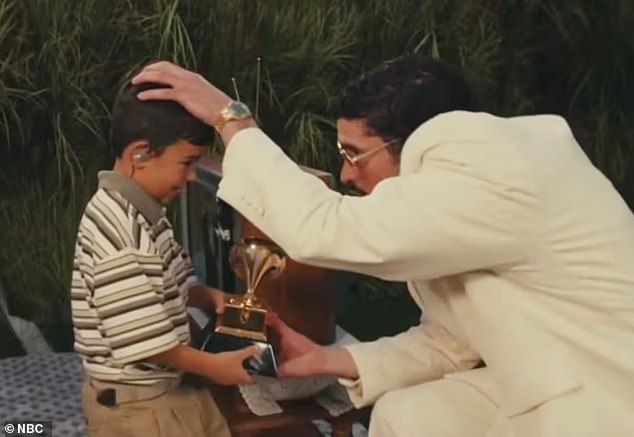
The images of Liam and his father being led away by agents had deeply resonated with the public, fueling the belief that Bad Bunny’s halftime show appearance was a deliberate continuation of his public stance against ICE. This sentiment was amplified by Bad Bunny’s own words, “ICE Out,” delivered during his Grammy acceptance speech just a week prior. Fans saw the Super Bowl gesture as a second, highly visible political statement against the agency.
Social Media Buzz and Fan Reactions
Online platforms buzzed with the perceived connection. One viewer on X (formerly Twitter) wrote, “Wait hold up… Did Bad Bunny just give his Grammy to Liam Conejo Ramos the poor kid who was kidnapped by ICE? If so, amazing.” Another user shared, “I’m gonna assume the little boy given the Grammy was Liam Conejo Ramos. If he is, Bad Bunny just became a hero for me.” The moment was widely described as “beautiful” and “adorable.”
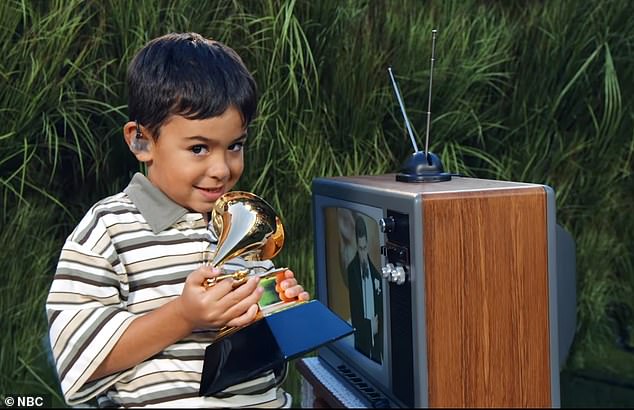
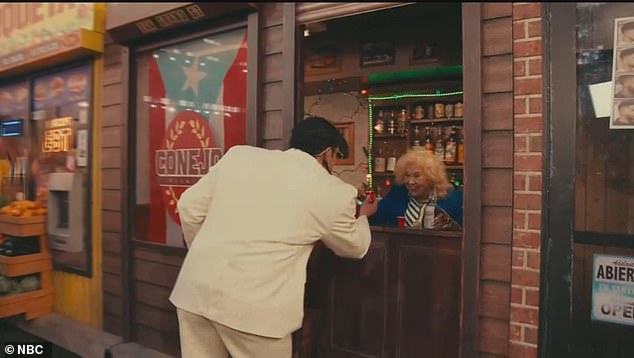
Adding to the speculation, some fans pointed to a sign displaying the word “Conejo” visible just before the child appeared. While “Conejo” translates to “bunny rabbit” in Spanish, further fueling the association with Bad Bunny’s stage name, it also served as a perceived nod to Liam Conejo Ramos.
Alternative Interpretations and the Actor’s Confirmation
Beyond the political interpretation, other fans proposed that the child in the performance was meant to represent a younger Bad Bunny. This theory was supported by the child’s attire, which bore a resemblance to the artist’s own youthful style.
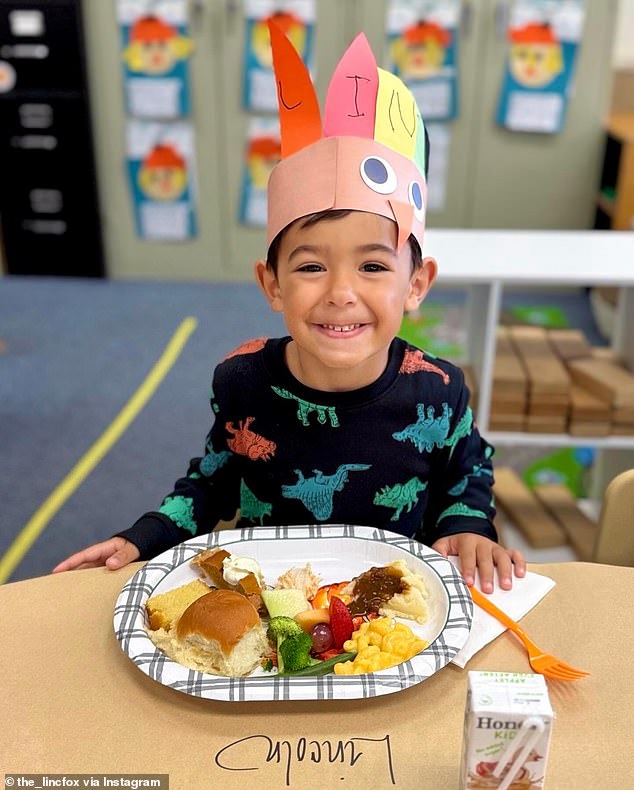
Lincoln Fox, the child actor, resides in Southern California with his parents, who are of Argentinian and Egyptian descent, and his baby sister. When viewers directly questioned him on his Instagram page about his appearance, Lincoln himself clarified the situation.
“So it wasn’t Liam Ramos like a lot of social media were claiming?” one user asked.
“Nope, it’s me!”, five-year-old Lincoln replied.

When pressed further about the role he played, with questions ranging from “Were you playing the role of little Bad Bunny? Liam Ramos? A random child?” Lincoln’s parents, or someone managing his account, offered a more nuanced perspective.
One insightful comment read, “The imagery made the point. It’s all of it. Children having hope seeing representation, and symbolic of Liam. That environment would be too overwhelming for a 5yo just severely traumatized. This was the safer and ethical choice. It made the point too.”
This response suggested that while Liam’s situation was undoubtedly on the minds of many, the use of Lincoln was a conscious decision to convey a broader message of hope and representation for all Latino children, while also ensuring the safety and well-being of the child actor.
Broader Meanings and Artistic Intent
The gesture resonated deeply with many, extending beyond the specifics of Liam’s case. Another user shared, “When I saw that scene, I took it mean any Latino child sitting at home watching & knowing it could be them.” This highlights how Bad Bunny’s performance tapped into a larger sense of identity and aspiration for a diverse audience.
The halftime show itself was a star-studded affair, delighting viewers with surprise appearances from fellow entertainers Lady Gaga and Pedro Pascal. The performance took place at Levi’s Stadium in Santa Clara, California, during the NFL championship final between the Seattle Seahawks and the New England Patriots.
Political Backlash and Bad Bunny’s Response
However, not all reactions to Bad Bunny’s headline performance were positive. Former President Donald Trump publicly stated he would be skipping the Super Bowl that year, citing the decision to feature Bad Bunny at halftime. When asked about this, White House press secretary Leavitt commented that Trump would “much prefer a Kid Rock performance over Bad Bunny.”
The artist’s political statements, including his stance against ICE, had also inspired protesters to demonstrate outside the Super Bowl venue prior to his performance. Despite the controversy and backlash, Bad Bunny remained steadfast in his message. At a Super Bowl press conference in San Francisco, he expressed confidence that his performance would be well-received, stating, “The world is going to be happy this Sunday, (as well as) the whole country. There’s a lot of people that love me around the world, not just the Latino people.”
He elaborated on the significance of performing on such a grand stage, emphasizing the importance of self-pride and embracing one’s heritage. “To be on the biggest stage in the world is something that I never thought (possible),” he said. “You always have to be proud of who you are and feel comfortable being yourself, being proud about your history and where you are from and don’t let that limit yourself.”
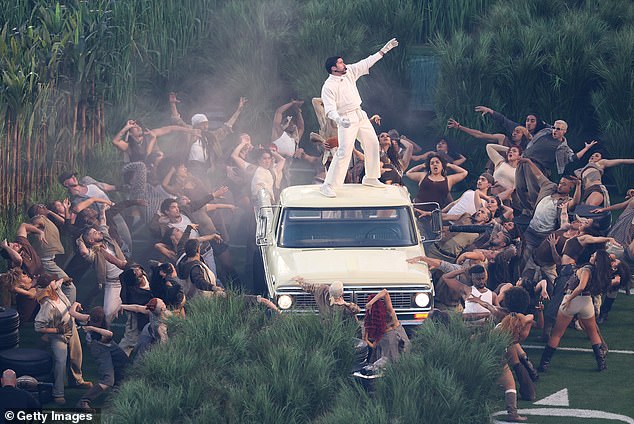
Bad Bunny’s performance was part of a lineup that also included Green Day, another band known for their anti-establishment sentiments. The Super Bowl halftime show, as always, proved to be a platform for cultural commentary and entertainment, leaving a lasting impression on viewers for a multitude of reasons.