Call for Traffic Lights to Prioritise Cyclists Sparks Fierce Debate
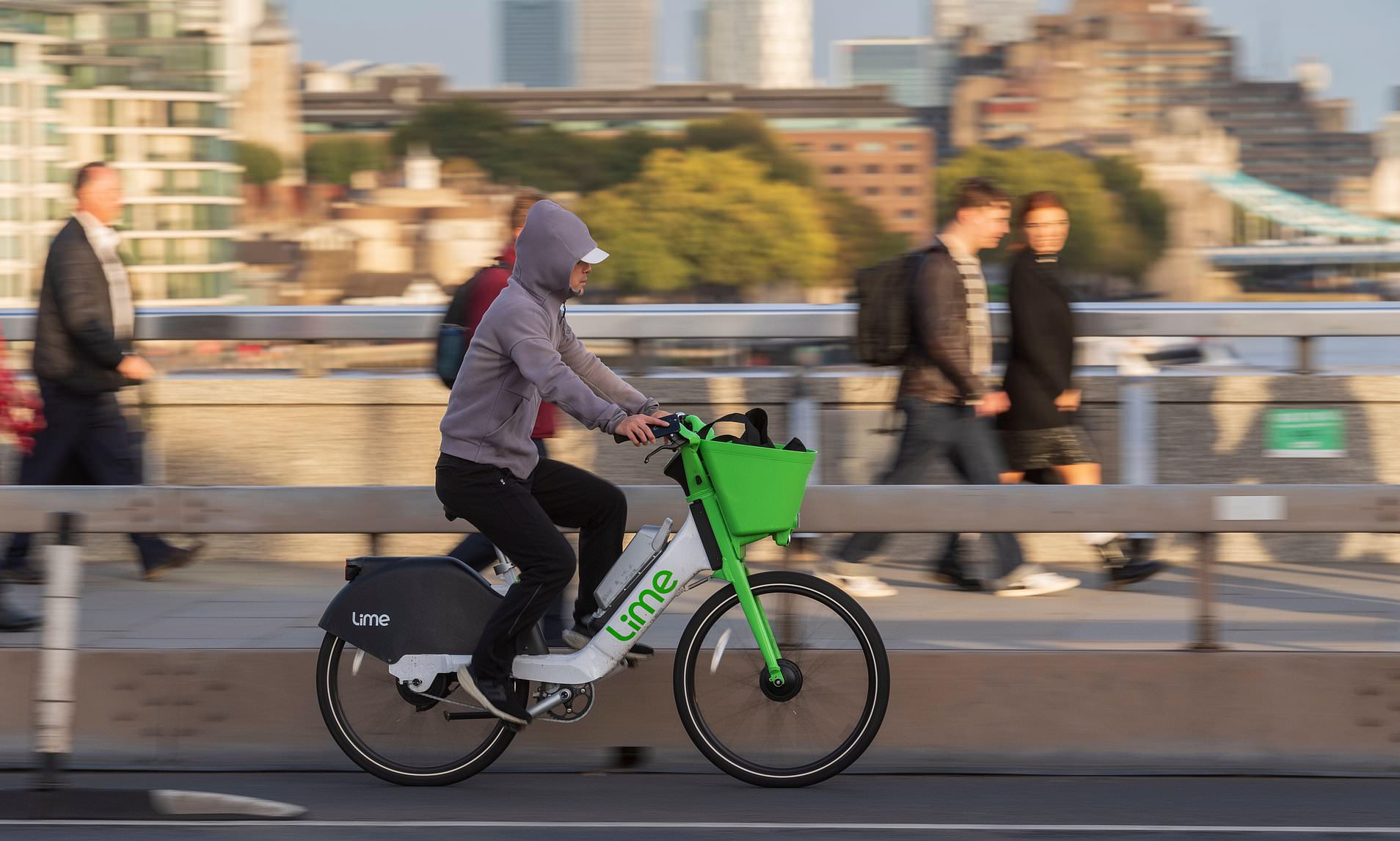
A proposal to automatically turn traffic lights green for cyclists has ignited a heated discussion on Britain’s already strained road networks, particularly in London. The idea, put forward by bike hire company Lime, suggests that giving cyclists priority at intersections could significantly curb instances of riders running red lights.
Hal Stevenson, policy director for Lime, believes implementing such a system in the capital could lead to a substantial reduction in cyclists ignoring traffic signals. However, the suggestion has been met with strong opposition, with some labelling it “farcical.”
Transport for London (TfL) recently announced ambitious plans to grant buses priority at all 3,500 traffic lights across London by 2030. While Stevenson welcomed this initiative, he argued for its extension to encompass cyclists, stating that “cyclists shouldn’t be left on red.”
Stevenson pointed out the growing prevalence of cycling in central London, noting that it now accounts for as much as one in five trips. At peak times, he observed, cycle traffic can actually exceed that of cars. Despite this shift, Stevenson highlighted that traffic light timings are still predominantly set with motor traffic speeds in mind, which can result in frequent stops and a less fluid experience for those on two wheels.
He further elaborated on the expansion of London’s cycling infrastructure, noting that TfL has grown the city’s dedicated cycling network from approximately 56 miles in 2016 to a considerable 267 miles by the end of last year. Stevenson suggested that a re-evaluation of traffic light timings would be a logical progression in building upon this success.
Drawing parallels with other leading cycling-friendly cities, Stevenson cited examples like Copenhagen and Amsterdam. He highlighted the effectiveness of “green wave” technology, which is designed to reward cyclists travelling at a safe and consistent speed with a continuous sequence of green lights. This technology, he argued, has proven to enhance both safety and rider behaviour, while also reducing journey times at a relatively low cost. Furthermore, Stevenson believes this approach could be instrumental in addressing the issue of red-light running.
However, Steve McNamara, general secretary of the Licensed Taxi Drivers Association, dismissed the proposal as “farcical,” citing London’s current state of “incredible congestion” and traffic speeds that are “slower than they’ve ever been.”
McNamara voiced concerns that companies offering bike hire, like Lime, might inadvertently incentivise users to take “dangerous risks,” including the disregard of red lights. He explained that the time-based pricing model employed by these companies could encourage faster journeys, making it cheaper for riders to complete their trips more quickly, regardless of safety implications.
Adding another layer to the debate, McNamara suggested that certain proponents of cycling infrastructure, whom he described as members of the “white, middle-class cycling lobby,” are primarily driven by an “obsession with removing vehicle traffic from the roads.”
Recent data from location technology firm TomTom has underscored the challenges of driving in London. The firm’s report identified London as the slowest capital city to drive in globally last year. The analysis revealed that, on average, it took a staggering three minutes and 38 seconds to cover just 0.6 miles in central London. This sluggish pace has been partly attributed to the widespread implementation of 20mph speed limits across the city. The debate over traffic light priorities highlights the complex and often conflicting needs of various road users in our increasingly crowded urban environments.