Rising Solar Costs and Grid Instability in Nigeria
The electricity crisis in Nigeria has reached a critical point, with grid failures making solar power an essential lifeline for households and businesses. However, the soaring costs of solar installation are pushing it out of reach for many in lower-income brackets.
According to recent findings, the average cost of solar power systems and inverters has surged by up to 208% across Nigeria. This increase is driven by sustained demand and foreign exchange pressures. Market surveys indicate that a standard solar setup, which previously cost between N800,000 and N1.3 million, now ranges from N1.8 million to N4 million, depending on capacity and components.
Nigeria has been importing a significant number of solar panels, with an estimated 2.9 million units valued at over N435 billion in 2025. This reflects a growing shift away from the unreliable national grid. The national grid faces chronic instability, with frequent collapses and low generation and distribution capacity exacerbating power shortages for over 200 million people.
The State of Nigeria’s National Grid
Nigeria has been generating electricity for over 130 years, yet it has never produced enough power to meet its growing population and industrialization needs. As of March 2026, the national grid dropped to 3,940 megawatts, which is grossly inadequate for 220 million people. South Africa generates over 48,000MW for 60 million people, while Egypt has about 59,000MW installed capacity for its 110 million population.
Nigeria has only about 13,000MW of installed capacity, but can transmit only about 4,000MW to 5,000MW through the grid on a good day due to dilapidated infrastructure. The rest goes to waste because the energy generated cannot be stored or warehoused. The grid collapsed 12 times in 2024 alone, while 128 transmission towers were vandalized in the same year. The government spent N8.8 billion just repairing them.
Between 2010 and 2022, the Nigerian Electricity Regulatory Commission (NERC) recorded at least 222 partial and total grid collapses. That’s roughly one every three weeks in 12 years. Every time the grid collapses, restarting just three power plants (Azura, Delta, and Shiroro) costs Nigeria about $25 million, which is N42.5 billion per collapse for just three plants.
Mounting Debt and Gas Shortages
Mounting debt is also a major challenge in the industry. The power sector owed generation companies N6.8 trillion as of February 2026. The indebtedness is growing by N200 billion every single month. That means it hit N7 trillion by the end of March 2026. Of that N6.8 trillion, about N3.3 trillion is owed to gas suppliers.
Gas suppliers have cut supply, as thermal plants need about 1,630 million standard cubic feet of gas per day but are getting only 692 million. That is less than 43 per cent. This has led to more widespread outages across the country. The government approved N4 trillion in bonds to fix the problem, but so far, it has issued only N590 billion.
Generators: A Costly Alternative
Nigerians spend about $14 billion every year buying and fuelling generators. There are about 22 million generators across the country with a combined capacity of about 42,000 megawatts. That’s eight times what the national grid delivers. In 2023, 767 manufacturing companies shut down, and 335 more became distressed, translating to 18,000 jobs lost.
In the first half of 2025 alone, manufacturers spent N676.6 billion on alternative power and still could not meet their needs, resulting in another 18,935 job losses. The World Bank estimates that power outages cost Nigeria $29 billion annually, which is about 10 per cent of the country’s gross domestic product (GDP).
Governance and Energy Transition
Nigeria’s electricity supply situation has all the hallmarks of poor governance. Egypt added 14,000 megawatts of gas capacity in six years using the same Siemens intervention Nigeria has been talking about for over a decade. Ghana fixed its power crisis between 2012 and 2016 and now exports surplus electricity. South Africa has gone 300 consecutive days without load shedding after committing to a real recovery plan.
Yet Nigeria has been “fixing” the power problem since 1999, when civilian rulers retrieved political power from the military. Since then, every president has had an emergency power plan. Despite taking over $4 billion in World Bank loans for the power sector, the grid can barely hold 5,000MW. Any more and it literally collapses.
Solar Power: A Necessity, Not a Luxury
The electricity crisis has worsened in recent weeks following repeated national grid collapses and persistent generation shortfalls. With power generation still hovering below 5,000 megawatts for a population exceeding 200 million, many Nigerians are left with little choice but to seek alternatives.
Now, more and more businesses and households are giving up on grid power and looking to solar for succour. However, the cost is off-putting to many. Industry players attribute the rising cost of solar power to a combination of factors, including increased demand, naira depreciation, high import duties, and logistics challenges.
A Lagos-based solar dealer identified as Elias told LEADERSHIP Sunday that “the demand has exploded because people are tired of darkness, but supply costs have also gone up. That’s why prices keep rising.”
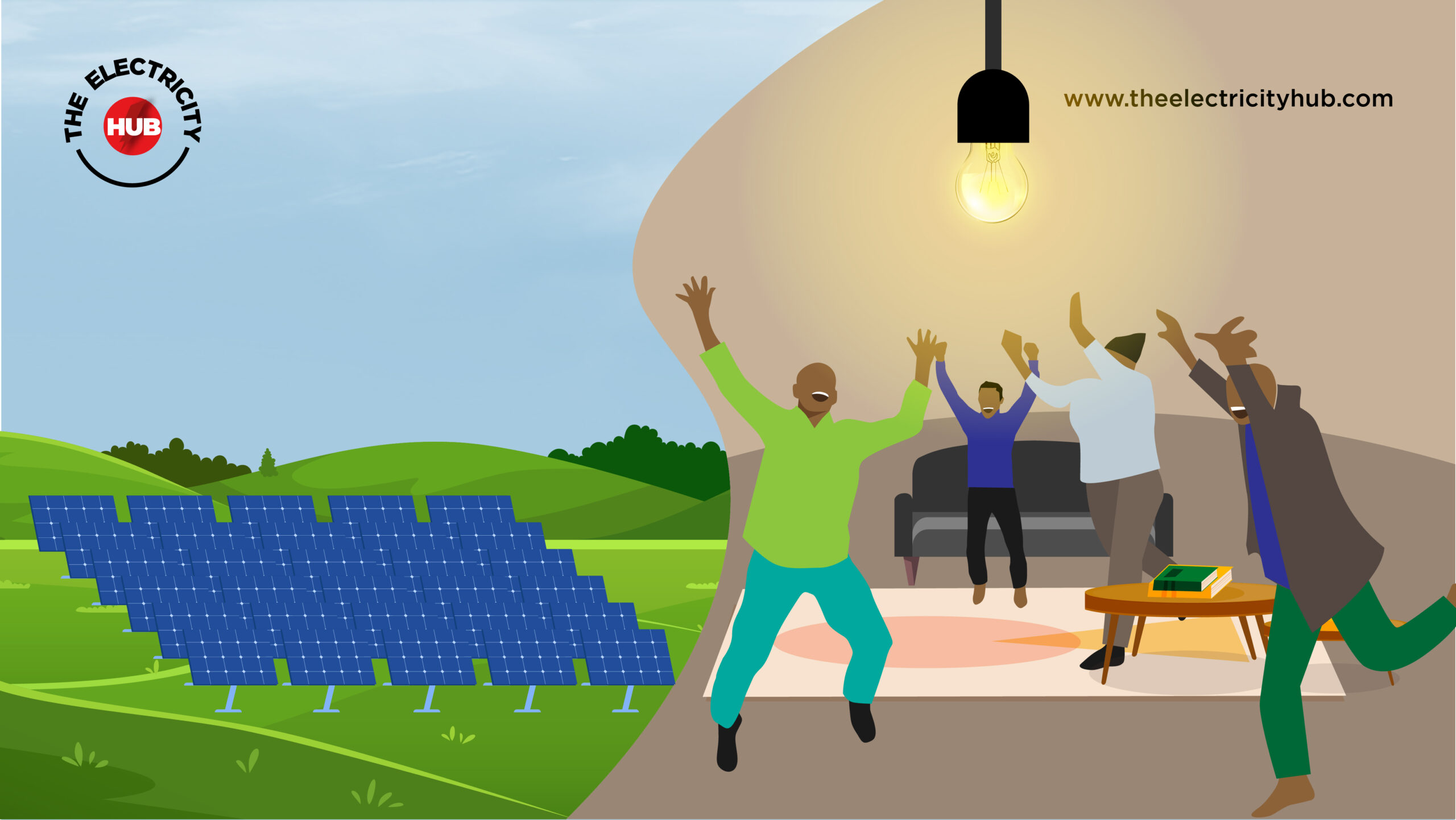
As a result, solar energy, once considered a luxury, has become a necessity for many homes and small businesses. However, the sharp increase in prices is now putting these solutions beyond the reach of low-income households, as small business owners say the situation is squeezing their margins, despite the long-term savings solar offers compared to petrol- and diesel-powered generators.
Government’s Shift to Solar
Meanwhile, the national grid has faced its most prominent distrust as the seat of power, Aso Rock Presidential Villa, Abuja, has exited the grid and adopted solar energy. The Presidential Villa formally disconnected from the grid, opting for a solar-powered mini-grid following months of testing backed by the 2025 and 2026 budgets. Officials confirmed that by March 2026, the Villa stopped drawing power from the national grid, citing high electricity costs and unreliable supply.
The decision follows fresh instability on the grid, which collapsed twice in January 2026 alone, following multiple collapses in 2025. Financial records show that the federal government earmarked about N10 billion in 2025 and N7 billion in 2026 for the Villa solar project, bringing the total to N17 billion, with lifecycle estimates ranging from N20 billion to N25 billion.
Even as the Presidency defended the move as cost-saving and environmentally responsible, analysts say it reflects a broader shift away from the national grid. Public affairs analyst Tunde Ajibola said, “When the government abandons the same grid that citizens depend on, it weakens the urgency to fix it. It becomes survival of the fittest in energy access.”
Energy consultant Ken Onos spoke in a similar vein. “What we are seeing is the formalisation of what Nigerians have done for years by exiting the grid. The risk is that it may normalise dysfunction instead of solving it.”
On his part, public affairs analyst Ake Ayodeji said, “The federal government has been consistently unfair to citizens in the management of Nigeria’s power sector. For years, electricity supply has remained unreliable, expensive, and deeply frustrating, despite repeated promises of reform. Households and businesses continue to suffer daily outages, forcing many to depend on costly alternatives like generators and solar power, just to survive.”
He added that the situation is more troubling due to the government’s response to the crisis. “Instead of fixing the national grid or making electricity accessible, authorities quietly transitioned to solar power in Aso Rock, ensuring stable electricity for themselves. This decision highlights a painful disconnect between leaders and the people they serve.”
Conclusion
Across the country, millions of households and businesses have adopted solar systems, inverters, and generators as alternatives to unreliable electricity supply. Analysts said the development signals a widening divide in energy access, where those who can afford alternatives opt out, while the majority remain dependent on an unstable grid.
Consequently, for many Nigerians, solar is no longer optional but a necessity, yet one that is increasingly becoming unaffordable.