The Rise of China’s “Safe City” Project in Africa
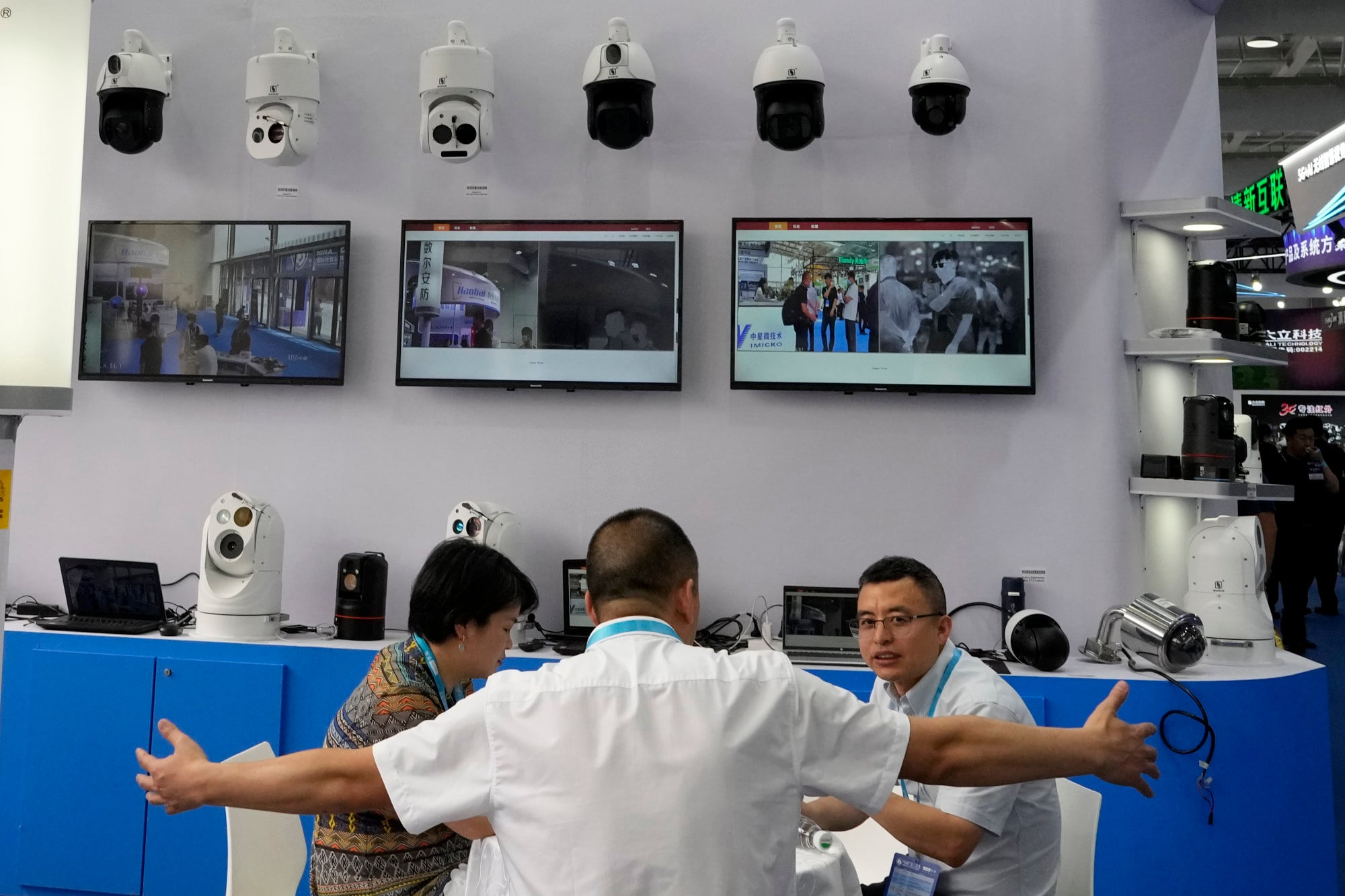
Across major African cities such as Nairobi, Lusaka, and Abuja, governments are increasingly turning to surveillance technologies and financial support from China to monitor public spaces and reduce crime. A recent survey highlights the growing influence of what is known as the “safe city” project, part of the broader Digital Silk Road initiative. This approach involves the deployment of advanced digital infrastructure, including surveillance cameras and command and control centers, often funded by Chinese banks.
The UK-based Institute of Development Studies (IDS) reported that Chinese banks have been playing a significant role in financing African governments to build and maintain this digital infrastructure. In a March report, researchers mapped smart city surveillance across 11 countries and found that Chinese companies provided equipment and technology to every nation surveyed, including Kenya, Nigeria, and Egypt.
While these systems are marketed as tools for public safety, critics argue that they are frequently repurposed to monitor and suppress political opposition, peaceful dissidents, and human rights activists. Tony Roberts, an independent digital rights researcher and co-author of the IDS report, emphasized that the rapid growth of smart city surveillance in Africa is occurring without adequate legal regulation or oversight.
Surveillance Systems and Their Implications
Unregulated surveillance creates a chilling effect that can inhibit the right to peaceful protest and limit freedom of expression. The report highlighted specific concerns in various African countries. For example, in Zimbabwe, there were fears about being targeted by facial recognition technology, while in Mozambique, cameras were concentrated in areas where political opposition was strong.
Authorities often justify the use of these technologies as counterterrorism measures. However, the study found mass surveillance in countries like Zambia and Senegal, which do not face significant terrorist threats. Nigeria, the most populous country on the continent, has emerged as the largest market for Chinese surveillance equipment.
China Exim Bank provided $399 million of the $470 million spent by Abuja on a public security network built by Chinese tech firms ZTE and Hikvision. In Lagos, Nigeria’s largest city, the federal government has deployed 10,000 high-definition cameras to enhance tech-enabled security. Similar systems have been financed by Beijing in Algeria, Egypt, Uganda, and Rwanda, where Chinese companies have become the dominant suppliers of smart city technologies.
These systems often include facial recognition and automatic car number plate recognition (ANPR) technologies, mostly supplied by Chinese firms. Researchers believe the true figure is likely higher, as these budgets are often hidden and public accounts incomplete.
The Chinese Model and Its Appeal
According to the IDS study, while companies from the United States, Europe, and Israel also supply surveillance equipment, China is by far the largest provider. One major reason for this dominance is the “safe city” surveillance package offered by Chinese banks, notably China Eximbank. These banks provide loans of around $250 million to African governments to purchase packages of thousands of surveillance cameras equipped with facial recognition technology and ANPR, often from Hikvision.
This model is typically paired with a build-and-transfer project to establish a national data center. As part of this model, Chinese technicians and trainers, often from ZTE or Huawei, then build local capacity in AI systems to analyze surveillance streams in a dedicated command and control center for police and security operatives.
Bulelani Jili, an assistant professor at Georgetown University, described these surveillance systems as “integrated governance packages.” He noted that many African governments are attracted to the Chinese systems because of the way they bundle together infrastructure, financing, and implementation, rather than any single technological feature.
“This bundled model reduces the need for fragmented procurement across multiple vendors and enables relatively rapid deployment,” Jili said. In regions where administrative capacity was uneven, this convenience often outweighed technical superiority, he added.
Jili explained that these systems are embedded within wider digital infrastructure ecosystems such as fiber networks, data centers, and e-government platforms, making them more attractive over time. Once installed, they are not easily substitutable, creating forms of institutional and technical lock-in.
Historical Context and Long-Term Concerns
Kenya was an early adopter of the technology, using a $100 million Chinese grant from the Chinese Ministry of Commerce to install 1,800 Huawei cameras across Nairobi and Mombasa following the 2013 Westgate Mall attack. The model grew out of state surveillance projects developed in China under the Golden Shield Project, which launched in the 1990s to create a nationwide CCTV surveillance network that minimized human labor and centralized data control.
Jili warned that infrastructural reliance could lead to long-term influence, especially where local technical capacity is limited. However, he cautioned that laws alone are not a fix. “Legal safeguards matter, but they should not be treated as sufficient in themselves. In some cases, regulatory frameworks can legitimise and normalise the expansion of surveillance,” Jili said.
He added that formal oversight could sometimes act as a form of consent for expansion. “The central challenge, therefore, is not simply whether surveillance is regulated, but how societies negotiate the balance between security, accountability and civil liberties once these technologies become deeply institutionalised,” Jili added.