The 14th edition of the Lahore Literary Festival (LLF) has officially commenced, ushering in a significant period for literary discourse, intellectual exploration, and cultural exchange in Pakistan. The festival, held at the Lahore Arts Council Alhamra, has established itself as a premier platform, drawing participants and audiences eager to engage with a diverse range of ideas and perspectives. The opening day underscored the event’s commitment to fostering a vibrant intellectual atmosphere, marked by academic depth and robust international participation.
The inauguration ceremony set a thoughtful and philosophical tone, featuring a keynote address by ZZ Ahmed. His discourse highlighted the indispensable role of literature, scholarly pursuits, and cultural engagement in shaping societal values, cultivating critical thinking, and fortifying democratic and humanistic principles. This address provided a solid foundation for the subsequent discussions, encouraging reflection and intellectual contemplation among attendees.
Unpacking the Legacy of Alexander the Great
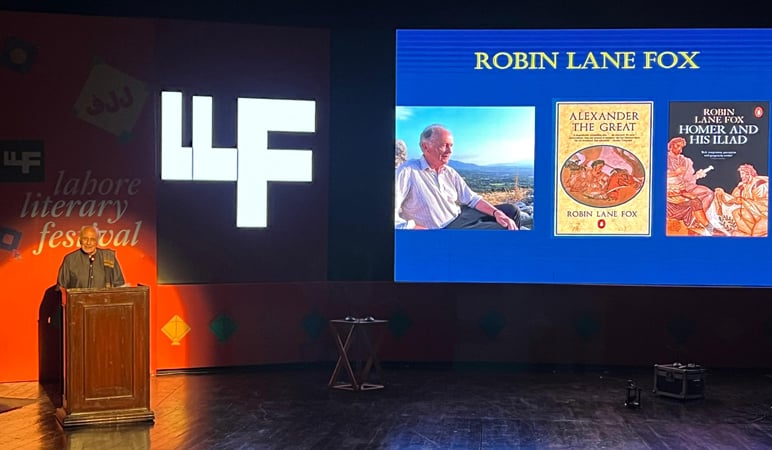
A central highlight of the opening day was the session titled “All about Alexander,” presented by the esteemed historian Robin Lane Fox. An Emeritus Fellow at the University of Oxford and author of the acclaimed work “Alexander the Great,” Fox offered a nuanced exploration of the historical figure. He moved beyond the conventional portrayal of Alexander as solely a military conqueror, instead delving into his multifaceted nature, shaped by ambition, philosophical leanings, political acumen, and human susceptibility. His presentation encouraged a re-evaluation of Alexander, presenting him as a complex personality whose enduring legacy continues to spark debate across historical, ethical, and cultural domains.
Drawing upon a rich tapestry of classical texts and contemporary scholarly research, Robin Lane Fox meticulously detailed Alexander’s military campaigns. This included his significant incursions into the Punjab region during the Indian campaign of 327 BCE, his pivotal crossing of the Indus River, and the consequential Battle of Hydaspes against King Porus. The session also explored the profound emotional and symbolic aspects of Alexander’s epic journey. A particularly poignant moment discussed was the death of his beloved horse, Bucephalus, a turning point that reportedly had a significant impact on his campaign. Furthermore, the discussion touched upon various historical and religious interpretations of Alexander’s life, including scholarly debates that draw parallels between him and the figure of Dhul Qarnayn mentioned in the Quranic Surah Al Kahf. The concept of a dual Alexander – one historical and the other legendary – was also examined, a distinction that continues to captivate historians and theologians.
Introducing this compelling session was Dr. Syed Muhammad Aijazuddin, a distinguished historian and intellectual. His comprehensive and insightful overview positioned Alexander the Great as a profoundly influential figure whose military exploits, intellectual curiosity, and cross-cultural encounters fundamentally reshaped the ancient world. Dr. Aijazuddin’s remarks added considerable academic weight to the proceedings, prompting reflection on the intricate relationships between power, philosophical thought, and historical narrative.
International Support for Cultural Dialogue
The opening ceremony also featured significant contributions from international representatives, underscoring the global importance of the festival. Raimundas Karoblis, Ambassador of the European Union to Pakistan, articulated that knowledge, literature, cultural dialogue, and mutual respect are fundamental to achieving global peace and fostering social cohesion. He reiterated the European Union’s steadfast commitment to championing these values and to enhancing cultural and intellectual collaborations.
Echoing these sentiments, James Hampson, Country Director of the British Council in Pakistan, emphasized the crucial role of education, culture, and dialogue in bridging societies and cultivating mutual understanding. He recognized festivals like the LLF as vital spaces for exchange, creativity, and learning, affirming the British Council’s ongoing dedication to promoting these ideals throughout Pakistan.
A Day of Diverse Sessions and Cultural Vibrancy
The inaugural day of the 14th LLF unfolded with a dynamic and multifaceted program spread across various halls at Alhamra. The sessions covered a wide spectrum of topics, including history, geopolitics, cultural heritage, literature, art, pressing climate concerns, and contemporary global challenges. The day was enriched by engaging poetry readings, literary sessions in Urdu and Punjabi, book launches, film screenings, and critical discussions. Collectively, these events showcased the festival’s inclusive ethos and its remarkable intellectual breadth.
The 14th edition of LLF is set to feature a total of 60 sessions, with a significant portion dedicated to Urdu and Punjabi literature (12 sessions). The festival will also host 11 book launches and welcome delegates from over 15 countries. From its very first day, the LLF has successfully transformed Alhamra into a vibrant nexus of culture and intellect, where dialogue, creativity, and tradition converge harmoniously.
Alhamra’s Commitment to Culture and Dialogue
Razi Ahmed, Chairman of the Lahore Arts Council Alhamra, spoke about the LLF’s significance as a powerful testament to Pakistan’s cultural identity, its rich linguistic diversity, and its profound intellectual heritage. He highlighted Alhamra’s consistent role in championing literature, culture, and meaningful discourse at both national and international levels.
Muhammad Nawaz Gondal, Executive Director of the Lahore Arts Council Alhamra, further elaborated on the festival’s mission to bring literature and culture closer to people’s lives. He noted that, despite ongoing renovation projects under the Chief Minister’s Initiative, Alhamra’s administration and team have diligently ensured a dignified, organized, and welcoming environment conducive to hosting international-standard literary and cultural events. He reaffirmed Alhamra’s dedication to supporting festivals that actively engage youth, students, and citizens in thoughtful dialogue, thereby contributing to Pakistan’s positive global image.
The impressive opening day of the 14th Lahore Literary Festival has undoubtedly set an inspiring and commanding tone for the proceedings to come. It has further solidified Alhamra’s position as Pakistan’s foremost cultural institution and a crucial global meeting point for ideas, reflection, and creative exchange.