UAE Minister and US Official Discuss Critical Energy Security and Bilateral Ties
A high-level meeting took place at the White House on Wednesday, bringing together U.S. Senator J.D. Vance and Sultan Ahmed Al Jaber, the UAE’s Minister of Industry and Advanced Technology and COP28 President-Designate. The discussions centred on bolstering energy security and deepening the strategic partnership between the United Arab Emirates and the United States.
During the engagement, Al Jaber extended warm greetings from the UAE leadership, underscoring Abu Dhabi’s unwavering dedication to enhancing bilateral relations. This commitment spans a broad spectrum of crucial sectors, including security cooperation, burgeoning trade and investment, technological advancement, vital energy resources, healthcare initiatives, and educational exchanges.
A significant focus of the dialogue was the paramount importance of energy security as a bedrock of global stability. Al Jaber emphatically articulated the necessity of restoring unimpeded freedom of navigation through the Strait of Hormuz, positing it as the singular and most sustainable pathway to achieving stability in international energy markets.
These critical discussions occur against a backdrop of escalating geopolitical tensions. The ongoing conflict involving the United States and Israel against Iran has significantly impacted the vital flow of global energy resources. It is estimated that nearly one-fifth of the world’s oil and liquefied natural gas transits through this strategic waterway, and disruptions have inevitably contributed to considerable volatility in global energy supplies.
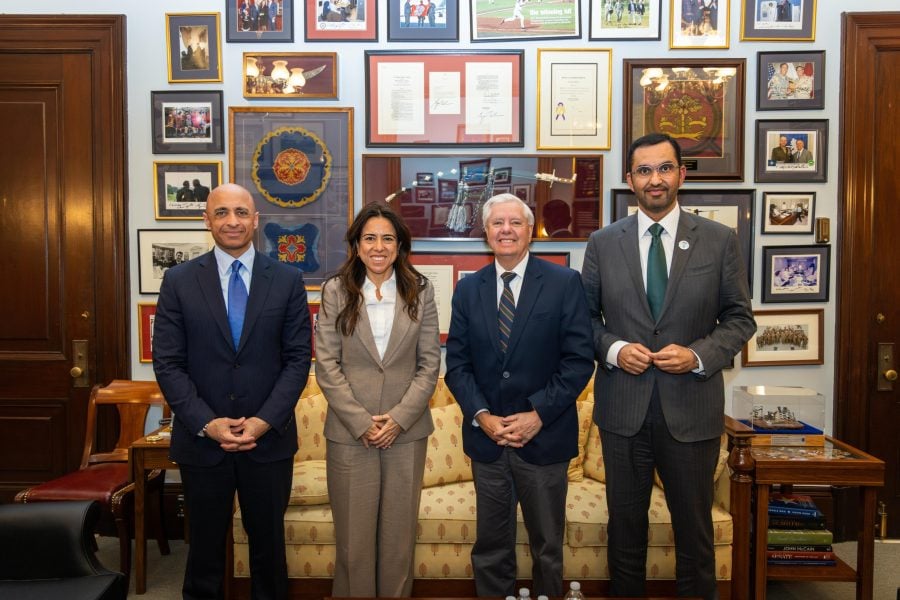
Al Jaber’s visit to Washington involved a comprehensive series of engagements aimed at addressing the dynamic global energy landscape. In addition to his meeting with Senator Vance, he also held separate discussions with U.S. senators to exchange perspectives on the evolving challenges and opportunities within the energy sector.
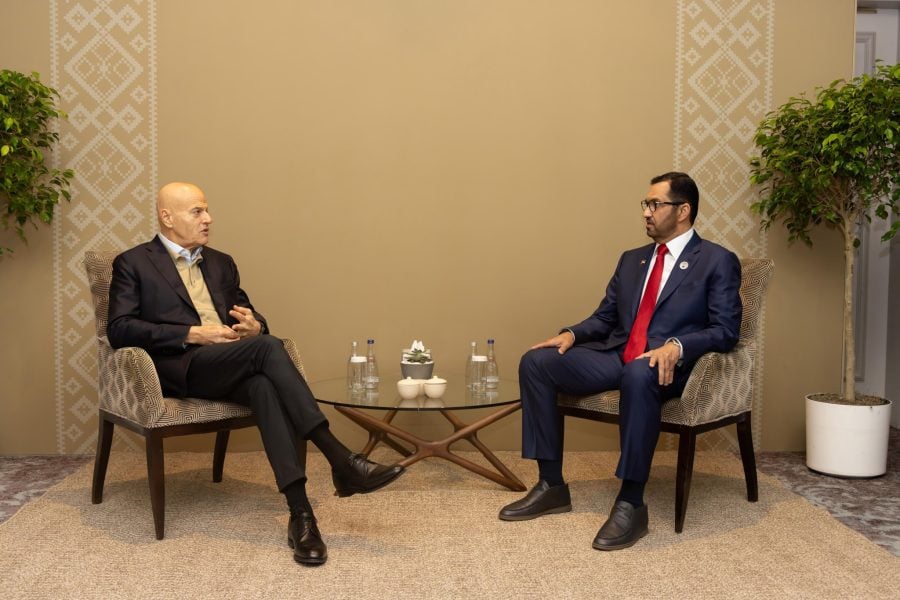
Furthermore, Al Jaber met with Claudio Descalzi, the chief executive of the Italian energy giant Eni. This bilateral discussion served as an opportunity to review significant regional developments, assess the progress of ongoing joint projects, and proactively explore avenues for future collaborative ventures.
Earlier in the week, Al Jaber issued a stark warning regarding the potential ramifications of any disruption to the Strait of Hormuz. He characterized such an event as amounting to “economic terrorism,” asserting that the consequences would reverberate far beyond the immediate energy markets. The impact, he cautioned, would inevitably extend to a wide array of industries, the agricultural sector, and ultimately, the daily lives and financial well-being of households across the globe. The strategic importance of this maritime chokepoint cannot be overstated, making its security a critical concern for international economic stability. The UAE’s proactive engagement in these high-level discussions underscores its commitment to fostering a secure and stable global energy environment, a goal intrinsically linked to broader international security and prosperity.