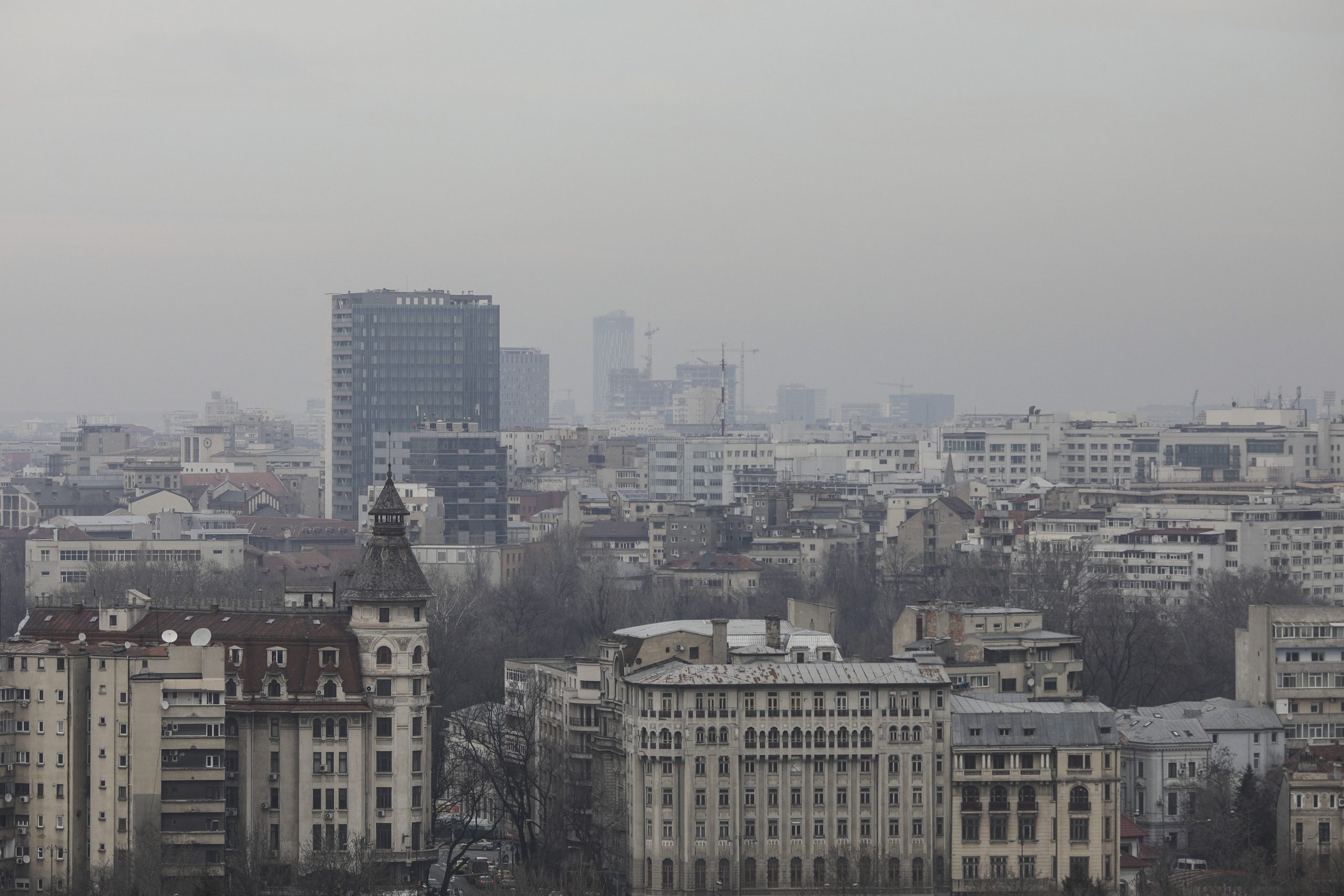
Bucharest’s air quality is under scrutiny as the Romanian Environmental Guard intensifies inspections to combat rising levels of particulate matter. The agency announced a new wave of checks at the Bucharest City Hall, focusing on the effectiveness of measures implemented to curb air pollution, particularly concerning PM2.5 and PM10 indicators, which have been frequently exceeding safe limits.
Identifying the Culprits of Air Pollution
Specialists investigating the persistent pollution issues in the Romanian capital have pinpointed several key contributors. Among the primary suspects is the anti-skid material used on roads throughout the winter months. This material, often left on roadways, can become airborne due to traffic, especially on busy boulevards, near tram lines, and along curbs.
Another significant source identified is the widespread activity at numerous construction sites across the city. These sites, ranging from major infrastructure projects and tram line rehabilitation to building constructions, demolitions, and the ambitious Subway Line 6 project, are contributing to the particulate matter in the atmosphere.
The Role of Weather Conditions
The Environmental Guard highlighted that the situation has been exacerbated by a combination of factors. The lack of precipitation meant that dust and particles settled on surfaces were not washed away by rain. Furthermore, elevated temperatures have played a crucial role by favoring the resuspension of these settled particles into the air. This phenomenon, often referred to as secondary particle formation or simply the re-stirring of dust, significantly worsens air quality.
Intensified Inspections and Enforcement
In response to these concerning trends, the Bucharest Municipality Commissariat of the National Environmental Guard launched a series of targeted field inspections across the capital. These operations, commencing on March 16, 2026, were specifically designed to identify the sources of pollution and implement strategies to mitigate their impact on the public.
The inspections encompassed a broad spectrum of potential pollution sources:
- Roadways: The focus was on assessing the lingering effects of winter anti-skid materials and the effectiveness of street cleaning protocols.
- Construction Sites: A significant effort was dedicated to monitoring adherence to air quality regulations at active construction and demolition zones.
- Infrastructure Projects: Major undertakings like tram line rehabilitation and subway construction were also subject to rigorous examination.
Findings and Corrective Actions
During the inspections, numerous violations of air quality legislation were uncovered at construction sites. These infractions included:
- Lack of adequate surface wetting to suppress dust.
- Absence of wheel-washing ramps to prevent mud and debris from being tracked onto public roads.
- Improper storage of construction materials, leading to potential dust dispersion.
- Uncovered transport of waste, allowing particulate matter to escape during transit.
In total, the Environmental Guard inspected a substantial 48 construction sites. As a consequence of the identified violations, 42 fines were issued, amounting to a total of RON 800,000 (approximately EUR 156,900).
Broader Municipal Response
Beyond individual construction sites, the National Environmental Guard also extended its oversight to all sector city halls within Bucharest. Through formal inspection reports, these local authorities were mandated to implement urgent intervention measures. A key directive involved sanitation services undertaking immediate actions to remove accumulated powdery material from public spaces.
The Environmental Guard acknowledged and appreciated the prompt response and implementation of these measures by the local authorities. This collaborative effort has already led to the initiation of mechanized vacuuming operations, including the washing and brushing of roadways and sidewalks along the city’s main arteries. These actions aim to physically remove settled pollutants and prevent their re-suspension into the air.
The ongoing commitment to monitoring and enforcement underscores the importance of clean air for the health and well-being of Bucharest’s residents. The Environmental Guard’s proactive approach signals a determination to address the complex challenges of urban air pollution through a combination of regulatory oversight, public awareness, and practical remediation efforts.