Blue Nile Governor: Army Securing Borders for Displaced Persons’ Return Amidst Incursion
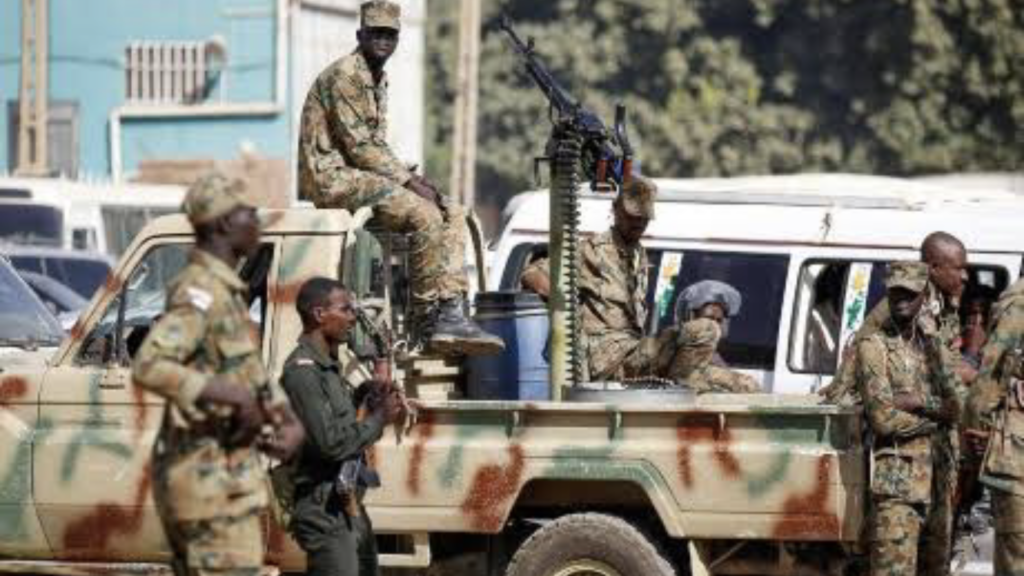
ED DAMAZIN – March 25, 2026 – Governor Ahmed al-Umda Badi of the Blue Nile region announced on Wednesday that the Sudanese army is actively engaged in operations to secure border areas with Ethiopia and South Sudan. These strategic efforts are being undertaken to facilitate the eventual return of individuals displaced by ongoing conflict.
Governor Badi presided over a crucial meeting of the state security committee following a significant incursion into the border town of Kurmuk. This military action was reportedly carried out by an alliance comprising the Rapid Support Forces (RSF) and the Sudan People’s Liberation Movement-North (SPLM-N), a faction led by Abdelaziz al-Hilu. The incursion has also prompted allegations that Addis Ababa, the Ethiopian capital, may have facilitated the assault from its territory, a claim that has intensified regional tensions.
The Blue Nile security committee has provided assurances that concerted military and logistical efforts are currently in progress with the primary objective of establishing firm control over key border points. In a public address, Governor Badi urged residents to exercise caution and remain vigilant against the spread of misinformation. He emphasized that such deceptive narratives are often disseminated with the intent of undermining domestic morale and national stability. The Governor reiterated that, despite the recent events, security in the border regions remains fundamentally stable.
Health Facilities Targeted in Kurmuk Attack
The Sudan Doctors Network has issued a grave accusation against the RSF, alleging widespread looting and destruction of health facilities within Kurmuk. According to the network, the paramilitary force systematically targeted and demolished the town’s primary hospital and pharmacy. In addition to the structural damage, the RSF is accused of stealing vital medical equipment following their takeover of the town.
The network has unequivocally condemned these actions, describing the incident as a “blatant attack on civilian infrastructure” that is explicitly protected under international humanitarian law. Reports from the ground indicate that healthcare workers were subjected to assault, with one individual sustaining severe, life-threatening injuries. The violence and destruction have triggered a mass exodus, with more than 3,000 civilians reportedly fleeing the town. Many have sought refuge in the regional capital, Ed Damazin, while others have crossed the border into Ethiopia.
Humanitarian officials have expressed profound regret and dismay over the systematic destruction of essential services. They highlighted the dire consequences of these actions, noting that thousands have been forced into displacement without immediate access to critical aid interventions. The Sudan Doctors Network has placed direct responsibility on the leadership of the RSF for these atrocities and has issued an urgent appeal to the international community to intervene and ensure the protection of fleeing civilians.
Coordinating Relief Efforts Amidst Humanitarian Crisis
Commissioner Mohamed Abdelati of Kurmuk provided further details on the scale of the displacement. He stated that approximately 433 families have made the perilous journey north, heading towards Ed Damazin, the regional capital. Local authorities are actively engaged in coordinating a multi-agency response to address the escalating humanitarian crisis. These efforts involve close collaboration with the Humanitarian Aid Commission and various United Nations agencies to manage the influx of displaced persons and provide necessary assistance. The situation underscores the urgent need for sustained international support to mitigate the humanitarian fallout and support the eventual reconstruction and recovery of affected communities.