Opposition Alliance Calls for Nationwide Strike Amidst Election Disputations and National Mourning
Islamabad, Pakistan – February 9th – Pakistan’s political landscape was marked by a nationwide strike called by the opposition alliance, Tehreek-i-Tahafuz-i-Ayin-i-Pakistan (TTAP), on Sunday. The protest aimed to voice grievances over alleged irregularities in the 2024 general elections and was coupled with a day of mourning for victims of a recent bombing. While the strike saw significant impact in some cities, others experienced a more muted response, reflecting the complex socio-political climate of the country.
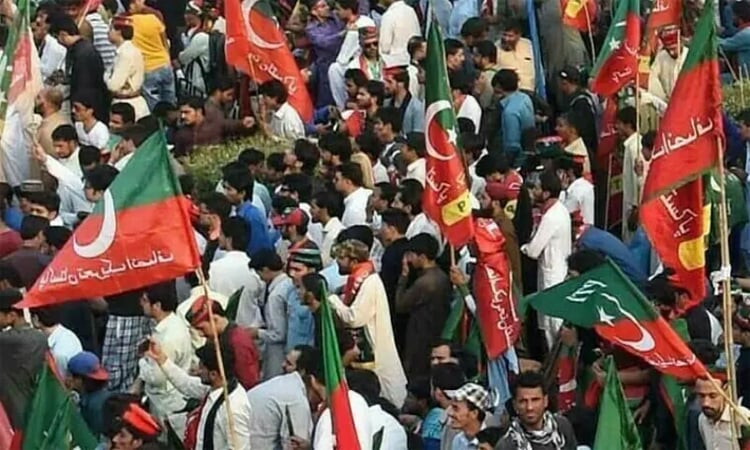
The Pakistan Tehreek-e-Insaf (PTI), a key component of the TTAP, had announced plans for nationwide protests to commemorate the second anniversary of the February 8, 2024, general elections, which the party claims were marred by widespread rigging. Adding to the day’s somber tone, the PTI also declared it would observe a day of mourning following a devastating suicide bombing at an imambargah in Islamabad that resulted in at least 36 fatalities.
A Divided Nation’s Response to the Strike Call
The effectiveness of the strike call varied significantly across Pakistan’s major urban centers. In Lahore and Islamabad, many markets remained open on Sunday, with official statements suggesting that the usual Sunday closures and the Basant festival contributed to the partial shutdown. However, the PTI and TTAP shared visual evidence across social media platforms, purporting to show closed businesses in various locations. These claims included reports from:
- Khyber Pakhtunkhwa (KP): Peshawar (partial shutdown), Abbottabad, Balakot, Haripur, Bajaur, Upper Chitral, and Lakki Marwat.
- Sindh: Hyderabad, Mirpurkhas, Umerkot, Badin, and Nawabshah.
- Punjab: Mandi Bahauddin, Mianwali, and Muzaffargarh.
- Balochistan: Quetta (complete shutdown), Chaman, Zhob, and Kuchlak.
Reports from Peshawar indicated a partial strike in the city’s older quarters, with some bazaars like Qissa Khwani remaining largely open while others, such as Hashtnagri and Rampura, observed closures. In Haripur, PTI leader Omar Ayub Khan reported a shutter-down strike and a “total public transport wheel jam,” thanking local trader and transport associations for their solidarity.
In Karachi, the situation was described as complex. Atiq Mir, Chairman of the All Karachi Tajir Ittehad, stated that while many markets were indeed shut, this was largely attributable to it being a public holiday. He noted that numerous markets across Jodia Bazaar, Saddar, Tariq Road, Clifton, and Defence Housing Authority were closed. However, he also pointed out that vendors often conduct business on Sundays. Despite this, PTI Sindh President Haleem Adil Sheikh shared images of markets, including Jackson Electronics Market in Keamari, as being shut, framing the strike as a “referendum” on the electoral process.
Protests, Mourning, and Economic Realities
The PTI’s Punjab chapter urged citizens to suspend outdoor activities and remain home as a form of protest, also calling for torch-bearing rallies after evening prayers. Party leaders in Punjab also voiced strong criticism regarding alleged police raids and arrests of their workers on Saturday, with claims of harassment of families during search operations.
In contrast, the federal capital, Islamabad, saw most markets remaining open, with traders largely disregarding the PTI’s strike call. This included major markets across various sectors. The H-9 weekly bazaar also remained operational, attracting a significant number of visitors. For some small business owners, the economic reality outweighed political solidarity. Fawad Khan, a PTI supporter and garment vendor, explained that he and other traders operate on a hand-to-mouth basis and cannot afford to close their shops, stating, “I cannot starve my family.”
Balochistan Faces Significant Disruption and Clashes
Balochistan appeared to be the most significantly affected province, with reports of a complete shutter-down and wheel-jam strike in the provincial capital, Quetta. All shops, markets, and shopping malls were reportedly closed, and traffic was sparse. Mobile internet services were also suspended in the region.
Demonstrations were staged by workers from the PTI and the Pashtunkhwa Milli Awami Party (PkMAP), which is led by TTAP chief Mehmood Khan Achakzai. Arrests of political workers were reported, with some individuals detained for allegedly forcing shops to close and blocking roads. The PTI’s Balochistan chapter claimed that 40 TTAP workers had been arrested.
Clashes erupted in the Brewery and Khaizi Chowk areas along the Western Bypass, where police reportedly used tear gas to disperse protesters who had blocked roads with burning tires and barricades. Similar disruptions were witnessed on the Eastern Bypass, though businesses in the Bosa Mandi area began to open after 1 PM.
The TTAP, through its statements on social media platform X, asserted that strikes represent a “documented Constitutional method to express irritation with the system” and a means for the public to express their “hatred towards lies and oppression.” The alliance framed the day not merely as a strike, but as a powerful demonstration of public sentiment against perceived injustice and electoral fraud.