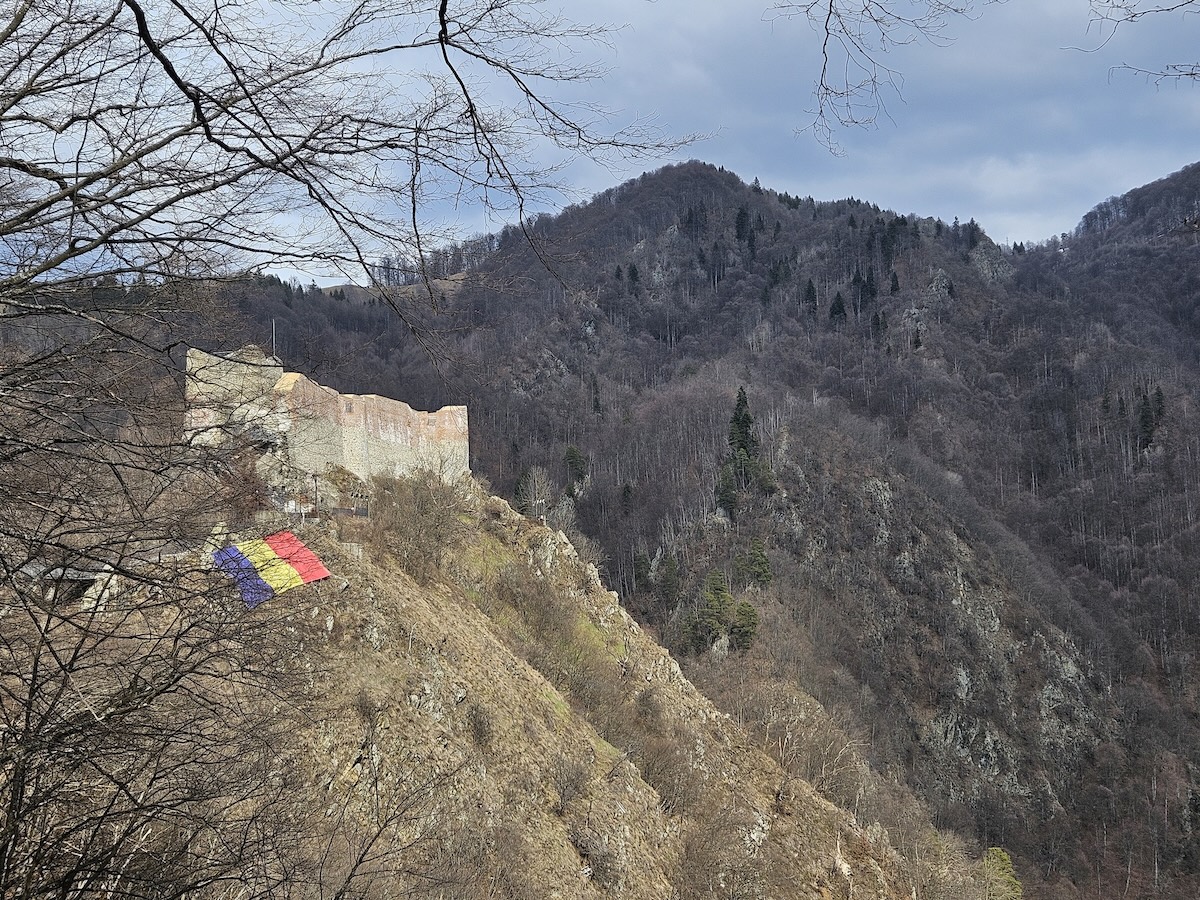
Poenari Fortress Shows Early Signs of Degradation Post-Restoration
Argeş County, Romania – Less than a year after the completion of a significant restoration project funded by the European Union, Poenari Fortress in Argeş County is already exhibiting signs of degradation. The Vidraru Mountain Association has brought these concerns to light, sparking questions about the longevity and quality of the conservation efforts at this historically vital Romanian landmark.
Nestled within the dramatic landscape of the Carpathian Mountains, along the renowned Transfăgărășan road, Poenari Fortress holds a profound connection to Vlad the Impaler. It served as his secondary residence and a crucial strategic point for defence against the Ottoman Empire. The fortress, a symbol of Romanian history and resilience, was officially reopened to the public on April 14, 2025, after undergoing an extensive rehabilitation and conservation initiative. The site is currently under the administration of the Argeş County Museum, an entity supported by the Argeş County Council.
The ambitious project, officially designated as “Conservation and Consolidation of Poenari Citadel Argeş,” received substantial financial backing from the EU’s Priority Axis 5 programme. This programme is specifically designed to enhance urban environments and safeguard invaluable cultural heritage. The overall financial commitment for the rehabilitation contract surpassed RON 25 million. A significant portion, nearly RON 10 million, was allocated as non-reimbursable public funding, with the remaining approximately RON 16 million provided through the beneficiary’s own financial contribution.
Concerns Over Durability and Execution
The emergence of deterioration so soon after the project’s conclusion is a cause for concern, particularly given the substantial investment of public funds and the relatively short timeframe. These early signs of wear and tear prompt critical examination of the project’s execution, the materials used, and the oversight mechanisms that were in place.
The Vidraru Mountain Association voiced their concerns via a social media post, detailing the observed issues. While the specifics of the degradation were not fully elaborated in the initial report, the mere presence of damage less than a year into the post-restoration period raises red flags for heritage preservationists and the public alike.
Key areas of potential concern following such restoration projects often include:
- Material Compatibility: The use of modern materials that are not fully compatible with the historic fabric of the fortress can lead to accelerated decay.
- Application Techniques: Improper application of consolidation or repair materials can compromise their effectiveness and longevity.
- Environmental Factors: While restoration aims to protect against the elements, inadequate drainage or protection measures can still allow water ingress and freeze-thaw cycles to cause damage.
- Structural Integrity: Inadequate structural consolidation can lead to new stresses and strains within the existing architecture.
- Oversight and Quality Control: Insufficient or ineffective quality control during and after the restoration process can allow minor issues to develop into more significant problems.
Historical Significance of Poenari Fortress
Poenari Fortress is more than just a collection of stone walls; it is a tangible link to a pivotal period in Romanian history. Its strategic location offered commanding views of the surrounding landscape, crucial for defence. Vlad the Impaler, a figure often mythologized, utilized the fortress as a secure base, contributing to its historical resonance. The fortress’s challenging access, requiring a climb of over 1,400 steps, has historically deterred casual visitors, preserving its rugged and remote character. This difficult ascent, however, also adds to its allure and the sense of accomplishment for those who reach its summit.
The recent restoration aimed to not only preserve the physical structure but also to make it more accessible and safer for the increasing number of tourists drawn to its historical significance and dramatic setting. The Transfăgărășan road, a world-renowned scenic route, brings many visitors to the region, and Poenari Fortress is a key attraction along this route.
The Path Forward
The revelation of early degradation necessitates a thorough and transparent investigation into the restoration process. This should involve:
- Independent Assessment: A comprehensive review by independent heritage conservation experts to identify the root causes of the degradation.
- Public Disclosure: Clear communication from the Argeş County Museum and relevant authorities regarding the findings of any investigation.
- Corrective Actions: Development and implementation of a plan to address the existing damage and prevent further deterioration.
- Accountability: Ensuring that any parties responsible for substandard work are held accountable.
The European Union’s investment in Romania’s cultural heritage is substantial, and projects like the restoration of Poenari Fortress are vital for preserving the nation’s identity and attracting cultural tourism. The current situation underscores the critical importance of rigorous project management, meticulous execution, and continuous monitoring to ensure that public funds are used effectively and that Romania’s historical treasures are protected for future generations. The durability of such significant heritage sites depends heavily on the quality and integrity of the restoration work undertaken.