

A Mother’s Grief: Honoring Renee Good’s Legacy of “Radical Kindness”
In the wake of a tragic loss, the family of Renee Good has stepped forward to share their pain and advocate for a world guided by compassion. Becca Good, the wife of Renee, made her first public appearance since her partner was fatally shot by an ICE agent, speaking at a memorial service held at Powderhorn Park in Minneapolis. The gathering, attended by a large crowd a month after Renee’s death, served as a poignant moment for the community to remember and honour a life cut short.
Renee, a 37-year-old mother of three, was killed when an ICE agent, Jonathan Ross, discharged his weapon. According to reports, the incident occurred during a protest when Renee allegedly ignored demands to exit her vehicle, reversed it, and attempted to drive away.
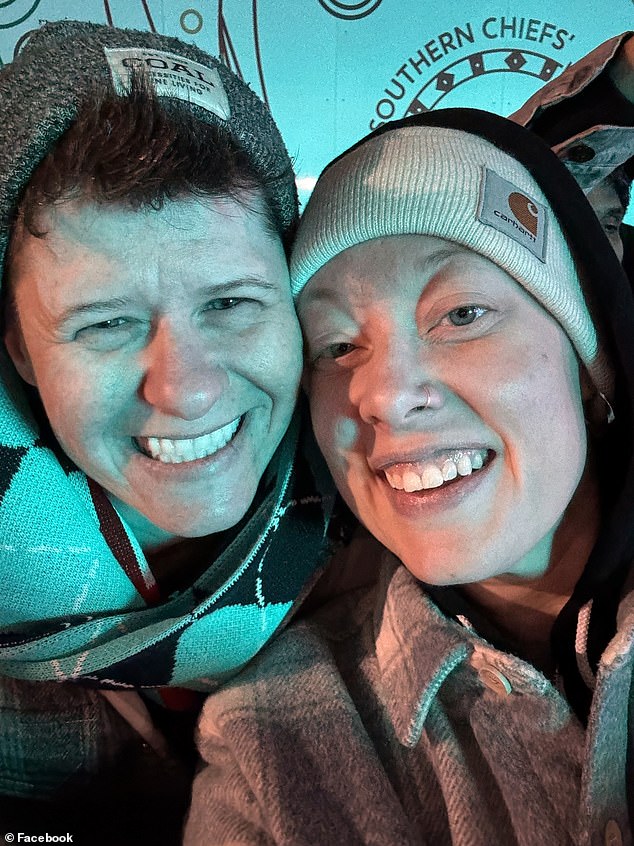
At the memorial, Becca Good chose to deliver her statement through Rabbi Arielle Lekach-Rosenberg, who read her words to the assembled mourners. “Becca Good, Renee’s wife, has had to grieve alone for weeks,” Rabbi Lekach-Rosenberg shared. “This is a really important moment—Rebecca gets to share words back to you. So, it is my honour to get to offer Becca’s words.”
A City’s Support and a Plea for Empathy
Becca’s statement began with a heartfelt expression of gratitude to the city of Minneapolis. “Minneapolis has shown me that even in the middle of grief and fear, people still show up for each other,” she conveyed. “Thank you to this incredible community for showing up again and again—organizing food and rides, making sure our kids get to school, checking in on neighbours, and standing together in the cold. I am so proud to call Minneapolis my home.”
Her words then broadened to encompass a wider concern for those suffering in silence. “Renee was not the first person killed, and she was not the last,” Becca stated, drawing a parallel to the recent killing of Alex Pretti by a federal agent. “You know my wife’s name, and you know Alex’s name, but there are many others in this city being harmed that you don’t know—their families are hurting just like mine, even if they don’t look like mine.”

Becca emphasized that these tragic events are not isolated incidents but are happening to neighbours and friends, asserting that such violence should not befall anyone.
Remembering Renee: A Life of Service and Kindness
The widow’s statement painted a vivid picture of Renee’s character, highlighting her dependability and her dedication to volunteer work and teaching. “Renee was always helping out, making things a little better for others,” Becca recounted. “Seeing the world now celebrate the parts of her that I’ve always known—the kindness, the humour, the warmth—reminds me of her spirit.”
Becca shared her and Renee’s philosophy of living their lives as a testament to the world they wished to create. “Renee and I believed that if we lived every day in the world as we wanted it to be, we could build toward making that world a reality. So I am doing that every day—and every night, as I kiss my son at bedtime and tell him things are going to get better.”
The Power of “Radical Kindness”
Central to Becca’s message was the concept of “radical kindness,” a principle that guided their family. “Renee and I chose kindness. We believed that every life deserves the same care, treatment, and dignity, no matter who they are or what they look like,” she concluded her statement. “That shouldn’t be radical. If it is, then I want Renee and our family to be known for how we practiced radical kindness every day.”
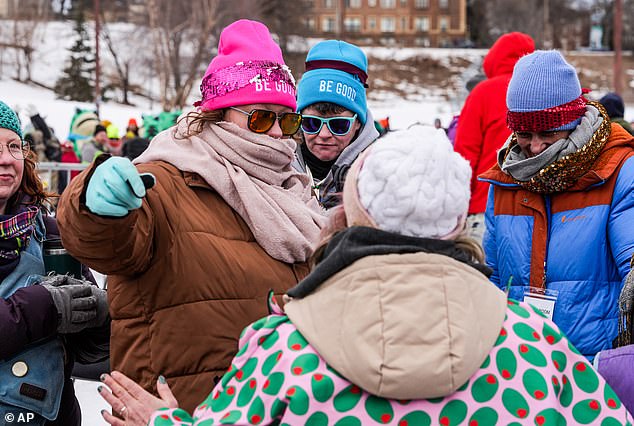
Renee’s sister, Annie Granger, also took to the stage, sharing personal anecdotes that underscored Renee’s vibrant personality. “Renee was completely hilarious,” Annie said. “Every time I talked to her, I laughed until I cry-snorted, but she cried-snorted with me.” Annie offered Renee’s likely advice in their current time of sorrow: “I think Renee’s advice to us right now would be to take care of ourselves, care for our neighbours. Receive care from our neighbours, rest and eat, and play and show up.”
Addressing Accusations and Seeking Truth
Following Renee Good’s death, claims have circulated from high-ranking officials, including Homeland Security Secretary Kristi Noem and President Trump, suggesting she had a criminal history and engaged in “domestic terrorism” by allegedly attempting to hit Agent Ross with her vehicle.
However, Renee’s family has vehemently denied these accusations. Public records indicate no criminal history beyond a minor traffic infraction.
The Tragic Final Moments
Details emerging from official reports paint a somber picture of Renee Good’s final moments. Paramedics arrived at the scene at 9:42 am, finding Good unresponsive inside her Honda Pilot, with visible blood on her face and torso, according to a Minneapolis Fire Department report. She was found not breathing, with an “inconsistent” pulse.
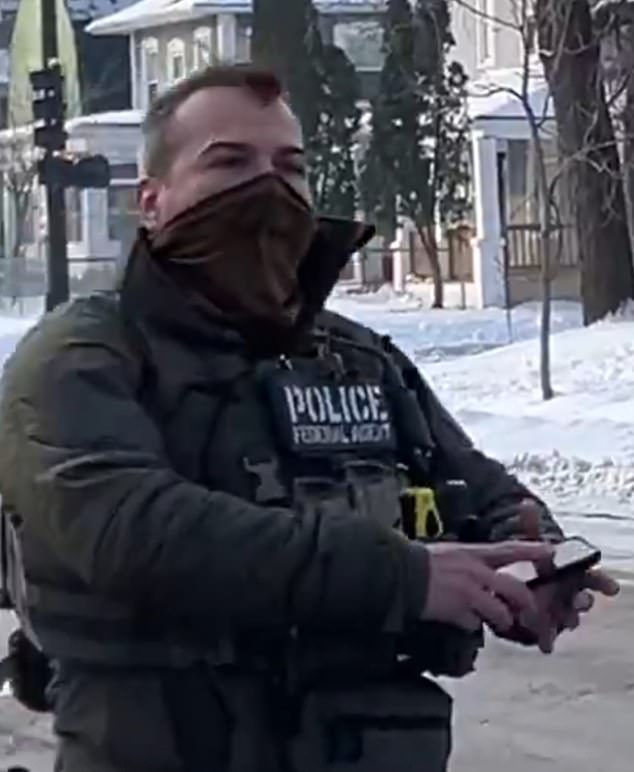
First responders documented a total of four gunshot wounds: two in her chest, one on her left forearm, and one on the left side of her head. Paramedics attempted to revive her on the sidewalk as protests and law enforcement activities escalated nearby. Despite continuous life-saving measures administered at the scene, in the ambulance, and at the hospital, CPR was ultimately discontinued at 10:30 am.
The ICE agent involved, Jonathan Ross, reportedly sustained internal bleeding in his torso, with Homeland Security stating that Good allegedly struck him with her vehicle. The severity of his injuries remains undisclosed, as internal bleeding can range from minor contusions to more serious harm.


