Decades after the Vietnam War concluded, a new battle is being waged against its toxic legacy, not on distant battlefields, but within the waterways connected to Sydney Harbour. University students are on the front lines, working to remove remnants of the notorious Agent Orange chemical from Homebush Bay, a site with a history steeped in industrial pollution.
A Toxic Past in Homebush Bay
For a significant portion of the 20th century, the Rhodes peninsula, specifically Homebush Bay, located approximately 19 kilometres west of Sydney’s central business district, was a hub for the production of herbicides, pesticides, and preservatives. Among the companies operating there was the US firm Union Carbide, a name tragically linked to the 1984 Bhopal disaster. At the Rhodes site, Union Carbide manufactured 2,4-T and 2,4-D, two key components of Agent Orange, a defoliant extensively used by the US military during the Vietnam War.
Agent Orange contained persistent organic pollutants known as ‘dioxins’. These compounds are notorious for their longevity in the environment and their detrimental health effects on humans. The Australian Department of Veterans’ Affairs (DVA) notes that the US employed this chemical mixture as a defoliant to deny the enemy food and shelter. Between 1962 and 1971, the US military sprayed Agent Orange across an estimated 3 million hectares of land in southern Vietnam, impacting approximately 20,000 villages and leading to an estimated 3 million Vietnamese people developing severe health conditions, including various cancers, birth deformities, and neurological disorders. Union Carbide’s presence in Rhodes spanned from 1928 to 1986.
Lingering Smells and Unforeseen Spills
Sharon Weismantel’s personal connection to Rhodes began in 1986, around the time Union Carbide was scaling back its operations. She moved to the area a year later, joining her now-husband, a local resident. At that time, the community on their side of the railway tracks comprised around 275 residents. Ms. Weismantel recalls a pervasive chemical odour emanating from the nearby factories, a scent that reminded her of her high school chemistry classes.
“There was a time when there was some spill at Union Carbide … on the Thursday, and by Saturday, it was affecting the leaves on hydrangeas — they were withering,” Ms. Weismantel recounted, illustrating the immediate and visible impact of industrial accidents. Her father-in-law also worked at the CSR Chemicals site in Rhodes, which experienced its own spills. She explained the difficulty in locating these spills: “The environmental people could never find it [the spill] because the product had actually gone through the soil. It was heavier than water and heavier than the soil.”
Reclaiming Land, Layer by Toxic Layer
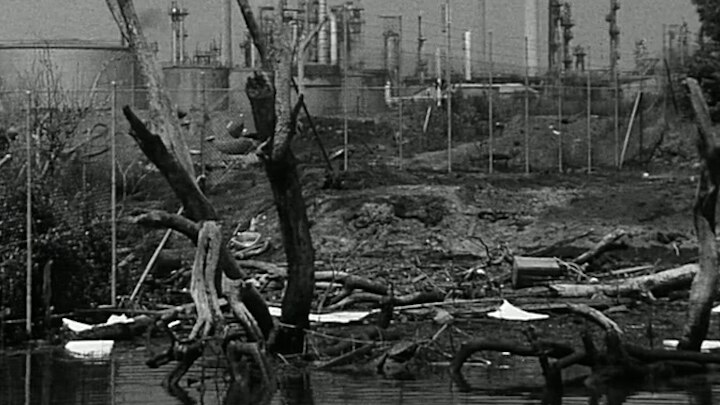
The most significant environmental challenges at Union Carbide’s Rhodes facility emerged when the company sought to reclaim land in Homebush Bay. During an era with less stringent environmental regulations, toxic waste was routinely dumped into the bay, covered with soil, and the process repeated.
“If you look at aerial photos of the Rhodes peninsula, you’ll see that it used to be quite skinny at the northern end, and that skinniness disappeared,” Ms. Weismantel observed, referring to the extensive land reclamation efforts. Concerns grew that dioxins were migrating from the site into the wider harbour ecosystem. An initial clean-up attempt in 1993 proved unsuccessful, dashing hopes of using the area for an athlete’s village during the Sydney 2000 Olympics.
A more comprehensive remediation project commenced in 2004, a joint venture between commercial entities and the government. Ms. Weismantel vividly described the process: “When they were doing the clean-up, they would give us tours of the site, and they showed us one time the layers. I described it as being like a layered chocolate mud cake.” The excavation of these waste layers released a “terrible smell,” she added. The contaminated soil was transported to an on-site facility where it was superheated to vaporise and extract the contaminants. This extensive remediation effort concluded in 2011, with the local council reportedly investing $200 million.
Dioxins in Sydney’s Aquatic Life
The World Health Organization classifies dioxins as “highly toxic” substances that bioaccumulate in the fatty tissues of animals, moving up the food chain. By 2010, reports in The Sydney Morning Herald indicated that dioxins from the former factory site had infiltrated the harbour, extending more than 10 kilometres in either direction from the source. This contamination led to elevated dioxin levels in local fish, prompting a commercial fishing ban west of the Harbour Bridge in 2006.
A New Hope: Bioremediation by University Students
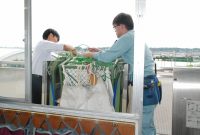
Currently, a new approach is being pioneered by a team of advanced science students from the University of New South Wales. Led by Dylan Freeman, these students are working on a bioremediation program aimed at treating Homebush Bay and mitigating further contamination of Sydney Harbour. Bioremediation harnesses the power of microorganisms to break down and remove toxins from polluted environments. The students are focused on refining an existing bioremediation technique to make it more cost-effective and scalable for widespread application.
“Bioremediation is pretty non-invasive. All you really have to do is dig a well and pump liquid in, and then you leave it and monitor it,” Mr. Freeman explained, contrasting it with traditional methods that often involve large-scale excavation and water pumping.
The student team ventured to the mudflats of Homebush Bay, clad in full protective gear, to collect sediment samples. Their research revealed the presence of naturally occurring bacteria that had evolved to tolerate and, potentially, metabolise the dioxins. The team cultivated these beneficial bacteria and reintroduced them to the contaminated site using a plunger system.
After a three-month trial period, the research indicated a “quite significant” decrease in dioxin levels, a remarkable achievement considering the compounds’ typical persistence for hundreds of years. “These bacteria, we’re not 100 per cent sure what they’re doing yet, but they might be eating them [the dioxins],” Mr. Freeman hypothesised. He believes that as dioxins break down, the affected ecosystem will gradually recover, offering benefits to both the fishing industry and the broader community.
While Ms. Weismantel finds the project promising, she raises pertinent questions about the depth of penetration for the injected solutions and whether the treatment might inadvertently harm beneficial microorganisms. “I think it does sound promising as long as it’s not going to get rid of the good stuff as well … especially with the mangroves,” she commented, highlighting the delicate balance of the estuarine environment.