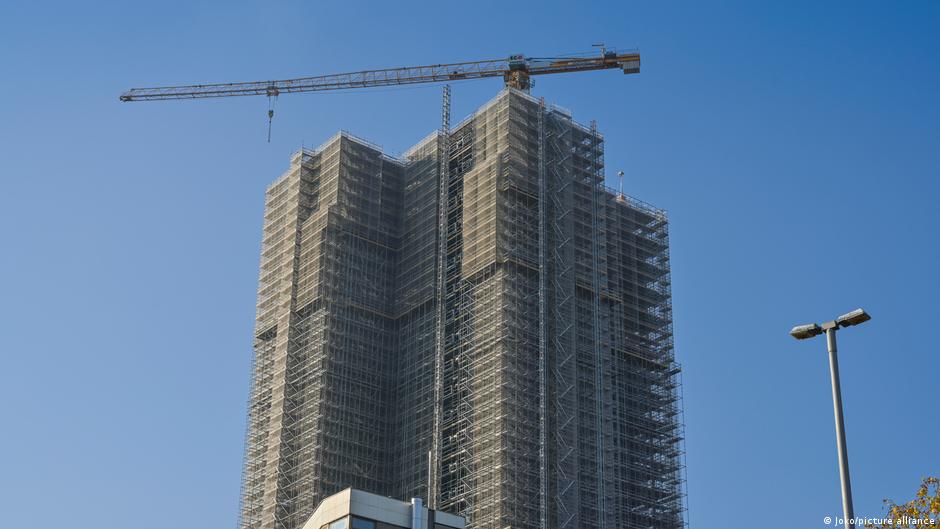
Germany’s Affordable Housing Crisis Deepens Amid Stalled Construction Reforms
Germany is grappling with a severe and escalating shortage of affordable housing, a crisis that appears to be exacerbated by the government’s attempts to accelerate construction. Despite the introduction of new legislation aimed at streamlining building processes, industry experts and academics are sounding the alarm, warning that current measures are insufficient to address the spiraling costs and the growing gap between housing demand and supply.
The stark reality is that Germany is building at a pace and cost that is out of reach for the average earner. According to Dietmar Walberg, head of the Kiel-based building research institute Arge, the average price per square meter for newly constructed living space in major German cities stands at €4,630 ($5,350). When land costs are factored in, this figure rises to an even more prohibitive €5,400. “That is too expensive for average earners,” Walberg stated, highlighting the fundamental disconnect between construction costs and the affordability for a significant portion of the population.
While the coalition government has made efforts to inject more funds into the sector, with the Construction Ministry’s budget for 2026 set to increase to €7.6 billion, the impact of these financial injections remains uncertain. The core issue, as identified by numerous stakeholders, lies not just in funding but in the efficacy of the policy framework designed to boost construction.
The “Construction Turbo” Falters
Introduced late last year, the government’s flagship initiative, dubbed “Bau-Turbo” (construction turbo), aimed to provide a significant push to the building sector. The legislation, which introduced a new paragraph (§ 246e) into the German Building Code, was intended to empower local authorities to expedite planning and approval processes. Under this new rule, municipalities are allowed to approve construction, change-of-use, and renovation projects that deviate from standard building code provisions, provided they are for new residential buildings. A key element of the “Bau-Turbo” was the automatic approval of planning applications after two months, unless a municipality explicitly vetoed them.
However, this ambitious plan appears to be falling short of its objectives. Matthias Günther, head of the Pestel Institute, a research body focusing on the economy and housing, has been critical, describing the legislation as “a lot of hot air” that will “not achieve anything in the short term.” The Federal Association of the German Construction Industry (HDB) echoes this sentiment, with managing director Tim-Oliver Müller pointing to a “melange of crises” that has battered the industry. These include the repercussions of Russia’s invasion of Ukraine, escalating energy prices, soaring material costs for concrete and steel, persistent inflation, and a sharp rise in interest rates from below 1% to between 3% and 4%.
Despite the issuance of 10% more building permits in 2025 compared to the previous year, the outlook for actual housing completions remains bleak. The real estate association GdW anticipates a significant drop, projecting only 200,000 new apartments to be completed this year. This figure falls drastically short of the estimated 300,000 new units required annually to meet the nation’s burgeoning demand.
Reforming Standards for Simpler Construction
Industry associations are now emphasizing the need for the government to pivot its funding policy towards “basic standard housing construction.” This suggests a shift away from complex or high-end projects towards more functional and cost-effective building solutions.
Dietmar Walberg of Arge has pinpointed simpler construction methods as a crucial element in overcoming the affordability hurdle. In response, the German government has been developing plans for a reform of building standards. The “building type E,” with “E” signifying “einfach” (simple), was presented in November. This concept aims to eliminate costly extras and maintenance-intensive technologies, such as underground parking garages, thereby reducing both construction and long-term operational expenses. However, this proposal is still awaiting cabinet approval, further delaying potential solutions.
The current regulatory landscape adds another layer of complexity. Building regulations are not uniform across Germany’s 16 federal states and vary significantly between municipalities. This creates an intricate and ever-expanding patchwork of rules, dictating everything from the number of electrical sockets required in a room to the permissible shapes and colors of roofs. This fragmentation can lead to lengthy and costly adaptations for developers.
Environmental Concerns and the Housing Affordability Link
While the push for increased construction is driven by a desperate need for housing, environmentalists have raised valid concerns. The potential easing of planning regulations, they fear, could lead to the unchecked development of green spaces. With less time for local residents to voice objections, there is a risk that valuable natural areas, crucial for buffering heatwaves and providing active cooling, could be built upon. Stefan Petzold from the nature conservation association NABU highlighted the vital role of green spaces in urban environments for climate resilience.
The severe housing shortage is undeniably a primary driver behind the dramatic surge in rents across major German cities. Bernard Faller from the Federal Association for Housing and Urban Development (VHW) notes that over half of Germany’s population resides in rented accommodation, the highest proportion within the European Union. While Germany boasts some of the world’s most robust tenant protection laws, Faller points out that these regulations primarily safeguard existing tenants and can inadvertently hinder those seeking new accommodation, particularly young people and larger families. The fundamental issue, he reiterates, remains the persistent deficit of available homes relative to demand.
Demographic Shifts and Future Demand
Looking ahead, demographic trends suggest that the demand for housing is unlikely to abate, despite Germany’s aging society. Arnt von Bodelschwingh of the Berlin-based research institute RegioKontext explained that the trend towards increasingly smaller households means that the overall number of housing units required will continue to rise in the coming years, even if the total population remains stagnant. Without a substantial increase in new construction, the housing market risks further stagnation, exacerbating the existing crisis.