The local stock market, which recently crossed 8,000 for the first time, is experiencing uncertainty because of the risk of a U.S. Treasury yield shock. This comes after a combination of external negative factors, such as worries about the extended high-interest rate policy in the U.S., Japan’s unexpected rise in prices, and the geopolitical tensions in the Middle East. Moreover, South Korea’s first-quarter economic growth rate of 1.7%, which was higher than anticipated, has also added pressure. The possibility that the Bank of Korea may struggle to reduce interest rates if the economy becomes overheated is another negative factor affecting stock prices.
◇ U.S. Treasury interest rates above 4.5%, KOSPI falling under 8,000
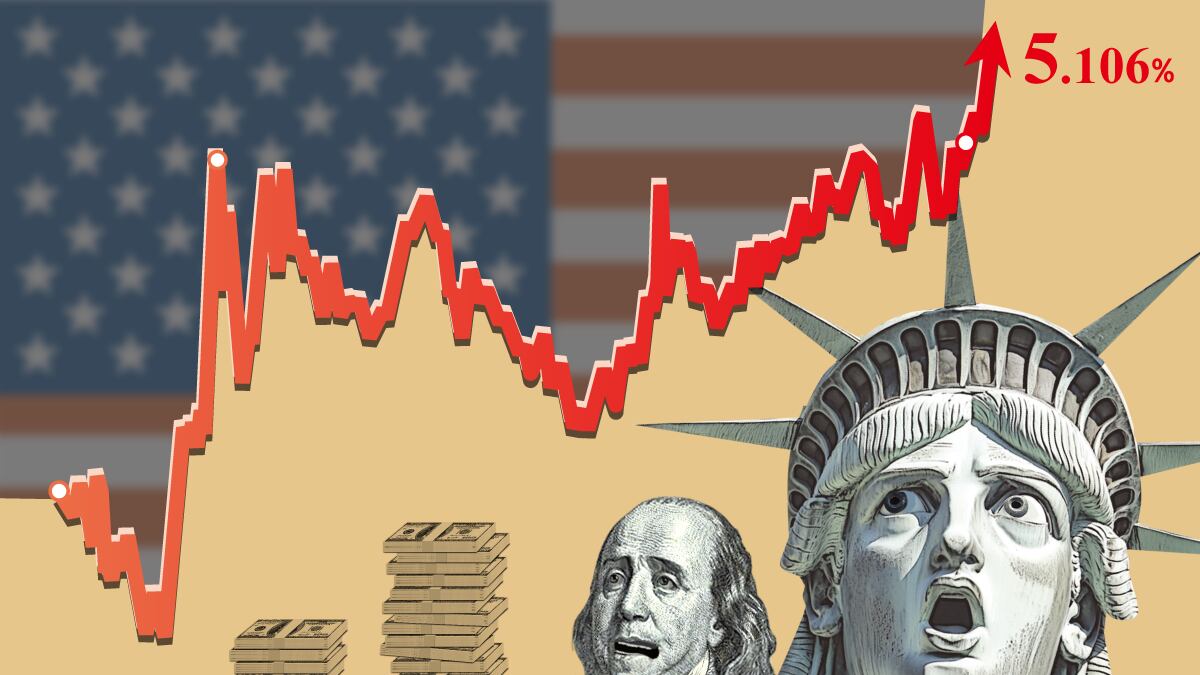
As reported by Investing.com on the 17th, the U.S. 10-year Treasury yield reached 4.595% on the 15th, marking the highest point in a year and three months. The U.S. 10-year Treasury yield, which serves as a benchmark for asset pricing, is considered a crucial psychological threshold that market participants are closely monitoring. Tiger Brokers, a global financial media outlet, commented, “If the 4.5% level is surpassed, the cost of borrowing for businesses and individuals will increase significantly, causing a major shift of capital from riskier assets such as stocks and real estate to safer ones like bonds, potentially leading to a widespread revaluation of global asset prices.” In addition, on the same day, the U.S. 30-year Treasury yield also climbed to 5.128%, surpassing the 5% mark—the highest level since just before the 2007 global financial crisis.
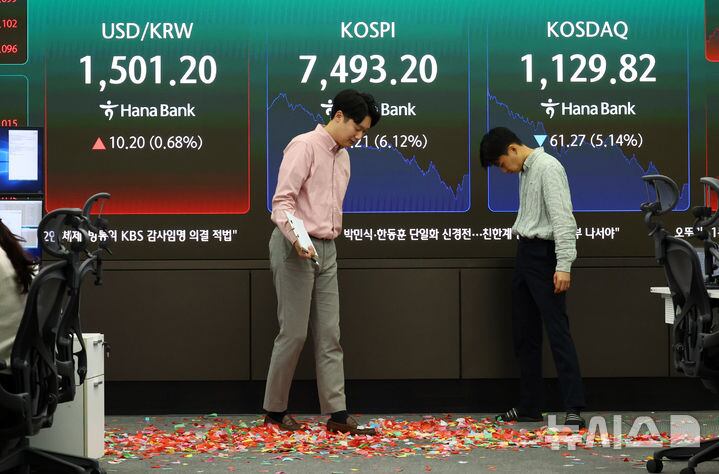
This sudden surge in interest rates quickly impacted the local stock market. On the 15th, the KOSPI index ended at 7,493.18, dropping 6.12% compared to the previous trading day, as significant selling by international investors occurred right after the index surpassed 8,000 during the session.
The significant increase in U.S. Treasury yields is closely linked to Japan’s inflation. Japan’s producer price index (PPI) growth rate for last month, released on the 14th, reached 4.9% compared to the same period last year, much higher than the market’s predicted 3.0%. While Japan had previously worried about deflation, the increasing likelihood that higher costs for businesses will result in higher consumer prices (CPI) has made it challenging for the Bank of Japan to avoid increasing interest rates. South Korea also reported a first-quarter GDP growth rate of 1.7%, well above initial expectations, but there are worries that an overheated economy might necessitate tighter monetary policy through interest rate increases, which could negatively impact investment confidence.
◇ Foreign investors leaving as U.S. interest rates rise… Could this have a negative impact on the Korean stock market?
The ongoing increase in U.S. Treasury yields serves as a structural negative element that endangers the core stability of our stock market by prompting foreign capital to leave. As U.S. Treasuries, seen as the most secure investments, provide assured high interest rates nearing 5%, there is little incentive for international investors to take risks and remain in emerging markets such as South Korea. Moreover, increasing interest rates diminish the projected future earnings of companies, leading to lower stock valuations.
This poses a significant risk to the domestic stock market, which is heavily weighted towards growth and technology stocks, including semiconductors. As businesses take on substantial loans for facility investments to stay competitive with advancements in the AI industry, the increased demand for capital is further escalating interest rates. Oh Geon-young, Team Leader of Shinhan Bank’s Premier Pathfinder, stated, “Contrary to the optimism that productivity gains from AI innovation will reduce prices, a paradoxical scenario is unfolding where the large-scale funding requirements of companies are actually causing interest rates to rise.”
Major international media outlets also highlight these intricate negative factors. U.S. financial media outlet The Motley Fool noted, “Increasing Treasury yields are associated with declining bond prices, and the upward movement in Treasury yields indicates ongoing selling pressure in the market.” A British asset management company, AFH Wealth Management, referenced an analysis from Goldman Sachs, stating that a 0.1 percentage point increase in Japanese government bond yields could lead to a rise of approximately 0.02 to 0.03 percentage points in the yields of major countries’ government bonds, including the U.S., resulting in a ripple effect.
If the expenses of war rise because of the ongoing conflict in the Middle East, a harmful cycle of increasing bond sales might persist. U.S. financial company Charles Schwab stated, “The rise in Treasury yields indicates that market worries about inflation caused by the war and potential interest rate increases have intensified.”
- Monday 5900 won membership, 2900 won for newspaper readers, Chosun membership
- 8 titles of newspapers and magazines worth 55,000 won, enjoy unlimited reading – Chosun Membership
- Receive 7000 points to use like cash, shop wisely, Chosun Membership