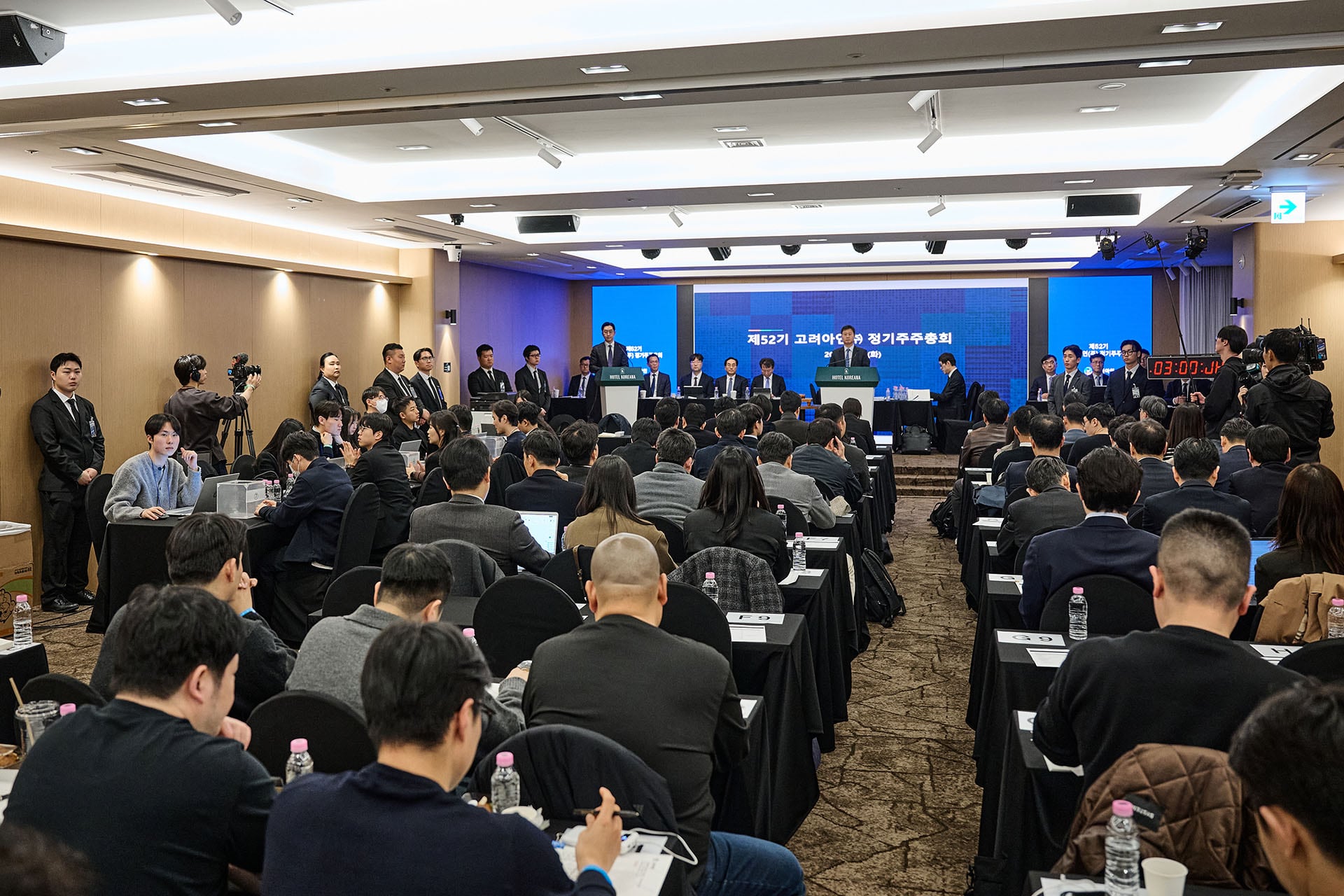
Shareholders Scrutinize Corporate Decisions as New Transparency Rules Reshape Annual Meetings
The landscape of corporate governance in South Korea has undergone a significant transformation following the implementation of new financial authority regulations, mandating the full disclosure of shareholder meeting voting results. This shift, effective from the first of this month, has injected an unprecedented level of transparency into what were once often perfunctory annual gatherings, leaving companies in a state of heightened anticipation and, at times, considerable anxiety.
Previously, shareholder meeting outcomes were typically summarized with simple affirmations like “approved as proposed” or “rejected.” However, the revised regulations now require the disclosure of approval and rejection rates for each agenda item, down to the decimal point. This granular level of detail provides a stark numerical reflection of shareholders’ sentiments towards company management and their strategic decisions, a stark contrast to the more generalized outcomes of past meetings.
One notable instance illustrating this new dynamic occurred at Hanwha Aerospace’s shareholder meeting on the 24th. A proposal to extend director terms from a maximum of two years to three years garnered approval from 69.8% of shareholders. This particular resolution, requiring a special majority of at least two-thirds of attending shareholders’ voting rights, narrowly passed by a margin of just 3.2 percentage points. While the company justified the extension by citing the need to “strengthen stability in board operations,” civic groups such as the Solidarity for Economic Reform voiced criticism, characterizing it as a maneuver to “reduce the number of directors and lower minority shareholders’ chances of entering the board.” The fact that over 30% of shareholders registered their disagreement underscores the increased scrutiny now directed at such corporate proposals.
The “60% Approval” Dilemma: A New Corporate Fear
This year, a recurring and unsettling figure for many corporations has been approval rates hovering in the 60% range. Proposals related to extending director terms, which have long been a point of contention due to concerns about potentially circumventing the spirit of the Commercial Act amendments, have become particular focal points of shareholder dissent. The explicit stance taken by the National Pension Service, which declared its opposition to such proposals, appears to have significantly influenced voting outcomes.
At Shinsegae, a proposal to alter the term of a by-election director narrowly scraped through with 71.8% approval. In a more decisive outcome, Hyosung Heavy Industries’ proposal to reduce its board size failed to gain traction, receiving only a 58.8% approval rate. This has led to a new sentiment within corporate circles: “A 60% approval is scarier than rejection.”
A source from a major conglomerate commented on this phenomenon, stating, “The moment the numbers are disclosed, shareholder support becomes a permanent record. A 70% approval means 30% openly opposed, which burdens future management.” Another executive from the business community echoed this sentiment, admitting, “Even after passing, it feels like a loss.”
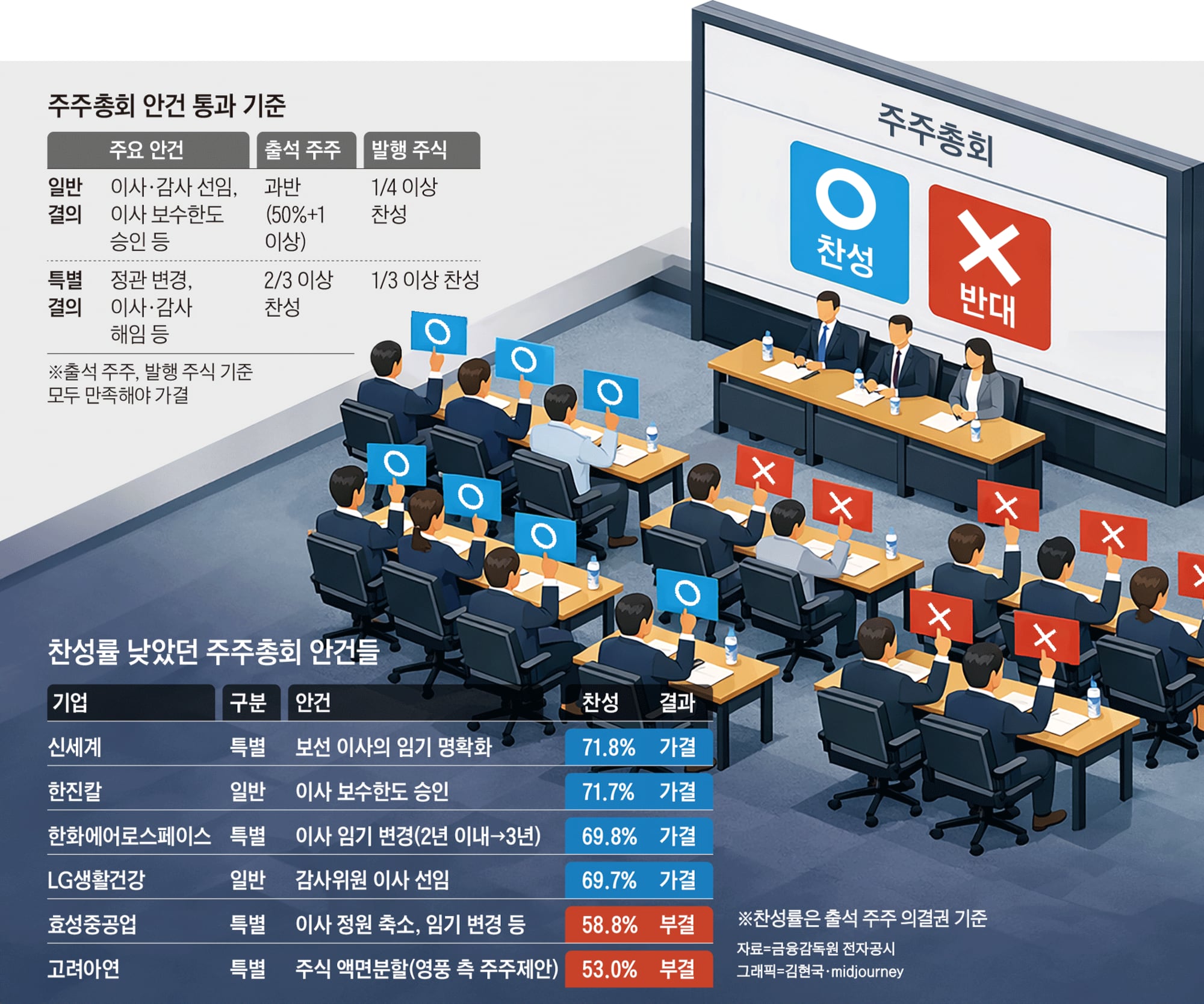
The implications of these precise voting figures extend beyond director terms. Many companies have also encountered challenges with votes concerning the limits on director compensation. At Hanjin Kal’s shareholder meeting on the 26th, held amidst a closely contested stake between Chairman Cho Won-tae and the second-largest shareholder, Hoban Group, a proposal to cap director compensation passed with 71.7% approval. This figure contrasts sharply with the earlier appointment of Cho himself, which was approved with a more substantial 93.8% endorsement. The data indicates that even shareholders who overwhelmingly supported the chairman’s appointment expressed reservations about the proposed compensation limits. This trend is partly attributed to Supreme Court rulings that restrict major shareholders’ voting rights on executive pay packages they have approved themselves, thereby amplifying the influence of minority shareholders, whose collective dissent is now quantifiable. Hyosung Heavy Industries saw its compensation limit proposal narrowly approved with 69.3% support, while Korea Aerospace Industries (73.6%) and Hanwha Vision (76.1%) also navigated similar hurdles, demonstrating a widespread shareholder concern regarding executive remuneration.
Emerging Data for Strategic Shareholder Engagement
The detailed disclosure of approval rates for individual director appointments is now providing immediate insights into which candidates command shareholder confidence and which do not. LG H&H’s proposal to appoint a member to its audit committee, for instance, received a relatively low 69.7% approval, signalling that nearly one in three shareholders cast a dissenting vote.
These detailed voting disclosures are poised to become critical “vote calculation” data for activist funds and minority shareholders as they strategize for the upcoming annual meetings. The precise numbers reveal the extent of underlying opposition to various corporate agendas, offering a clear picture of potential future challenges. With the impending implementation of the cumulative voting system and mandatory electronic shareholder meetings next year, the intensity of shareholder engagement and potential “vote battles” is expected to escalate.
A representative from the business community observed, “Companies may increasingly avoid proposing sensitive agendas if low approval rates are anticipated.” This suggests a potential shift in corporate strategy, where the fear of publicizing low shareholder support could lead to a more cautious approach in putting forward contentious proposals. The era of opaque shareholder meetings is definitively over, replaced by a new paradigm of data-driven corporate accountability.