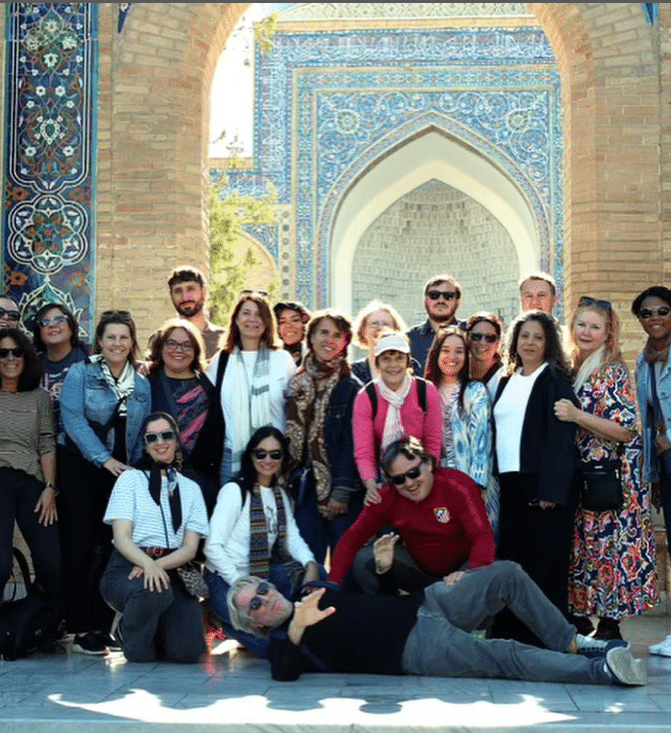
Thailand’s Anti-Corruption Watchdog Calls for Halt to Tourism-Focused Overseas Study Trips
Thailand’s Anti-Corruption Organisation (ACT) has issued a strong appeal to state agencies, urging them to cease organising overseas study trips that appear to be primarily driven by tourism rather than genuine educational or developmental objectives. The call highlights a significant drain on public funds that could be better allocated to essential services.
Mana Nimitmongkol, Chairman of the ACT, revealed findings from an analysis conducted by ACT Ai, which indicated that between 2016 and 2025, state agencies orchestrated a staggering 928 overseas study trips. The cumulative expenditure for these excursions is estimated to exceed 2.5 billion Thai Baht, averaging approximately 250 million Baht annually.
This substantial financial outlay, when juxtaposed with the budgets for critical social programs, raises significant concerns. Mr. Nimitmongkol pointed out that the annual expenditure on these trips could alternatively fund around 10 million school meals, based on an average allocation of 25 Baht per meal. This would be sufficient to support 50,000 students for an entire academic year, or over 100 million meals across a decade.
“We frequently hear about corruption and shortages within school lunch programs,” Mr. Nimitmongkol stated. “It represents a major lost opportunity if the state organises trips without clear and meaningful outcomes.”
The ACT chairman cautioned that the actual number of such organised trips could be even higher. This is attributed to the diverse and sometimes vague project titles used, which can obscure the true nature of the activities. These titles often include terms like “training programmes,” “capacity-building initiatives,” “international conferences,” or “exchange schemes,” making it difficult to precisely track all tourism-oriented excursions.
The cost of individual trips has also been a point of concern, with some excursions reaching an astonishing 20.8 million Baht for a single event. Popular destinations for these trips have included European countries such as France, Germany, Italy, and Austria, with Japan and South Korea also being frequent choices. It is noted that no such trips were recorded between 2020 and 2022, a period coinciding with the global Covid-19 pandemic.
Judicial Move Praised, Sets Precedent
In a positive development, the ACT acknowledged and praised a recent decision by a judicial training institute to cancel a planned 10-day study trip to France, Monaco, and Italy involving 26 Supreme Court judges. This cancellation followed considerable public criticism. Mr. Nimitmongkol lauded this as a “courageous move that upholds good governance.”
He urged the judiciary to build upon this commendable step by implementing stricter policies and practices concerning overseas travel. The emphasis should be on ensuring accountability, demonstrating value for taxpayers’ money, and setting a positive example for other government agencies.
Mr. Nimitmongkol clarified that public disapproval is not directed at the timing of such trips, but rather at their questionable content and objectives. He noted that many of these trips often focus on general subjects like the geography, economy, society, and culture of popular tourist cities, rather than on specialised professional development.
Prioritising Public Interest Over Personal Gain
While acknowledging the importance of international learning and exposure, Mr. Nimitmongkol stressed that trips which essentially function as tourism constitute a misuse of public resources. Such practices, he argued, violate fundamental ethical standards that mandate the prioritisation of public interest above personal gain.
The ACT’s appeal underscores a broader societal expectation for transparency and responsible fiscal management within government operations. The organisation’s findings and recommendations aim to foster a culture of accountability, ensuring that public funds are utilised effectively for the benefit of the nation and its citizens. The call for stricter oversight and clearer objectives for official overseas travel is expected to resonate across various government departments, prompting a re-evaluation of existing protocols and a renewed commitment to genuine public service.