The Unsung Heroes of Global Crises: South Korean “Industrial Warriors”
In the face of global turmoil, from civil wars and pandemics to international conflicts, a distinct group of individuals often remains when others flee: the “essential personnel” of South Korean companies. These individuals, dubbed “industrial warriors,” are the last to pack their bags, embodying a commitment that transcends profit margins and personal safety. Their dedication, often forged in the crucible of crisis, has not only ensured the continuity of vital operations but has also built enduring trust and cemented the global standing of K-construction and K-businesses.
Tales of Resilience in the Face of Conflict
The harrowing experience of Daewoo Engineering & Construction during the 2011 Libyan civil war serves as a potent example. As Western construction firms abandoned millions of dollars in equipment and evacuated, Daewoo’s essential personnel chose to stay. They directly engaged with local tribal leaders, articulating the critical importance of their work: “If we leave, this power plant and road will stop, and the future of your children will be cut off.” Their sincerity and commitment deeply resonated. In response, tribal leaders mobilized armed village youths to provide round-the-clock security for the project site. This remarkable act of solidarity, born from mutual respect and shared vision, became a legendary testament to the power of human connection in adversity, laying a foundation of trust that defined K-construction.
The commitment of these “industrial warriors” extends beyond armed conflict. During the 2003 SARS outbreak, which brought China to a standstill and triggered global concern, South Korean companies’ essential staff remained on the ground. Their steadfast presence allowed them to cultivate unique relationships and a deep understanding of the Chinese business landscape, forging strong guanxi (關係)—the principle of “a friend in need is a friend indeed”—with their Chinese counterparts. This demonstrated a profound understanding that business relationships, especially in times of crisis, are built on mutual reliance and unwavering support.
Navigating Geopolitical Storms
The ongoing Russia-Ukraine war presents another stark illustration of this unwavering dedication. LG Electronics continues to operate its after-sales service networks, maintaining a crucial presence with essential personnel stationed on-site. Meanwhile, Orion, a company that has successfully positioned its Choco Pie as a beloved “national snack” in Russia, has achieved remarkable growth despite the conflict. When the early stages of the war led to global logistics breakdowns and threatened critical raw material shortages, Orion’s team braved severe cold conditions to secure alternative supply lines. Their efforts ensured 100% factory operating rates, a feat that contributed to a staggering fourfold surge in their Russian sales over the past three years.
A Legacy of Global Commitment
The commitment of South Korean firms to their global operations during times of crisis is not an isolated phenomenon. History offers compelling parallels, notably with Coca-Cola during World War II. Chairman Robert Woodruff famously declared, “A soldier on the frontline should be able to buy a Coke for just five cents anywhere.” Despite the initial unprofitability of this endeavor, Woodruff viewed it as a strategic, long-term investment. Over 140 Coca-Cola technicians, many in uniform, established local bottling plants in dozens of frontline locations across Europe, diligently fulfilling this promise. This bold initiative was instrumental in Coca-Cola’s postwar ascent to global dominance, though it came at a tragic cost, with two essential personnel ultimately losing their lives in the process.
Honoring the “Industrial Warriors”
Recognizing the immense sacrifices made by these dedicated individuals, Samsung Electronics Chairman Lee Jae-yong reportedly provided gifts valued at 5,000,000 Korean won each to over 500 essential personnel stationed in conflict-ridden Middle Eastern zones. This gesture serves as a crucial acknowledgment and compensation for those who willingly place themselves in harm’s way. Behind the official designation of “essential personnel” lie the profound fears and anxieties of their families, who endure the constant worry of their loved ones’ safety.
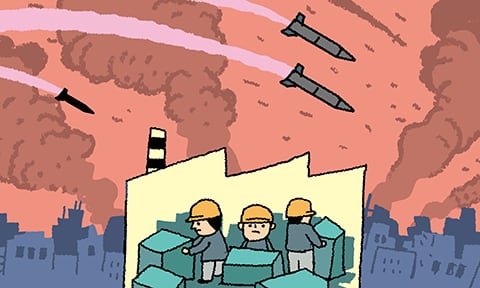
Those who continue their work, with the sounds of explosions a grim backdrop to their daily tasks, are indeed true industrial warriors. While machinery can be repaired and factories rebuilt, the intangible asset of human trust, once shattered, is exceptionally difficult to restore. In conflict zones and during global crises, these essential workers are not merely defending products and factories; they are safeguarding the foundational trust and operational continuity that will sustain future endeavors and economic recovery. Their unwavering commitment is a testament to the human spirit and a critical, often overlooked, component of global business resilience.