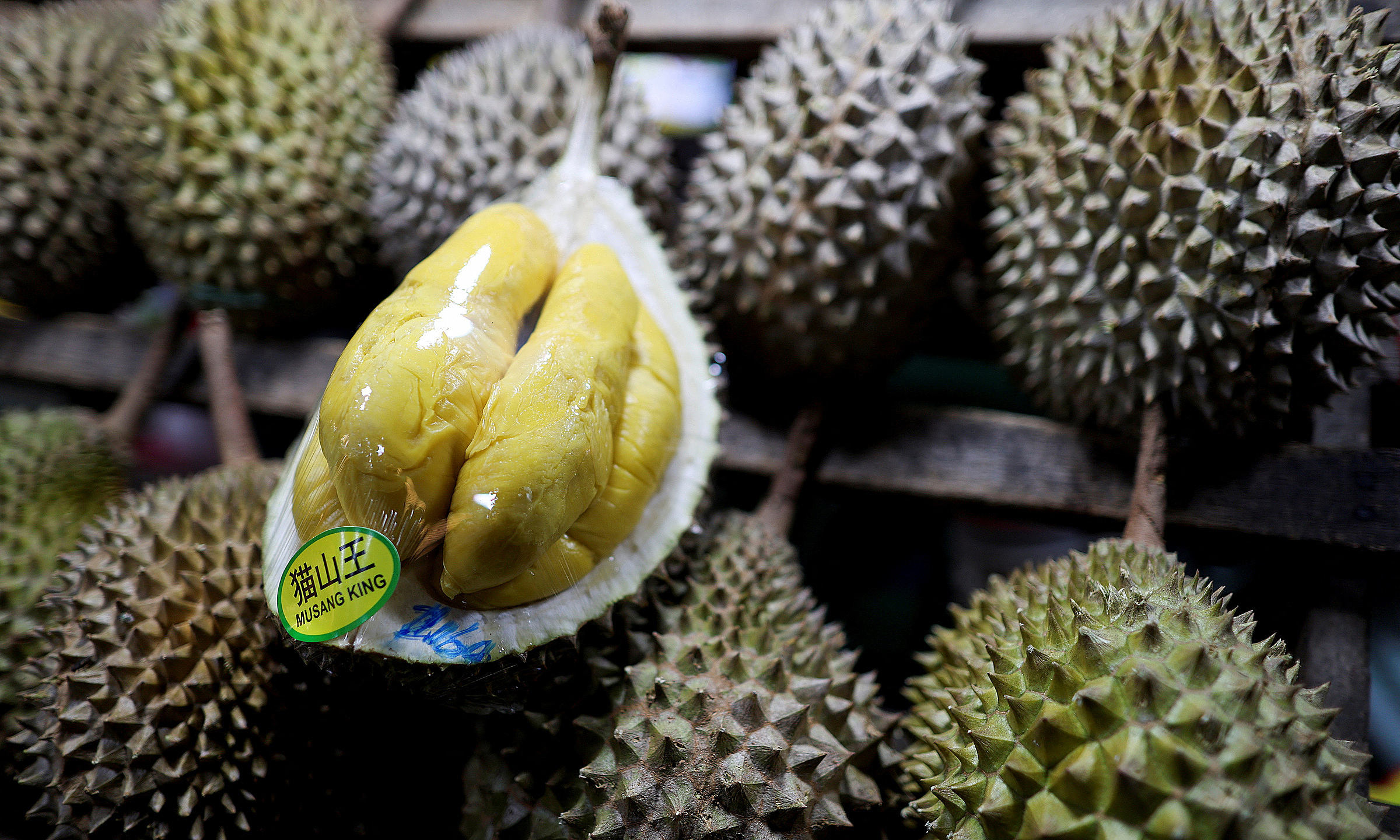
The Durian Dilemma: Oversupply and Price Collapse in Malaysia
Malaysia’s durian growers have long been at the forefront of capitalizing on the growing demand for this tropical fruit, especially from China. However, the recent boom has led to an oversupply that is now causing a significant price crash. This situation has left many farmers struggling to sell their produce, despite years of investment and expansion.
The Musang King variety of durian, known for its rich flavor and creamy texture, has become a symbol of luxury in China, often compared to the brand “Hermès.” This premium status has driven a surge in production across Malaysia. According to government data cited by The New York Times, the area under durian cultivation in Malaysia has grown from just over 163,000 acres in 2016 to more than 227,000 acres by 2024. During the same period, annual output nearly doubled to over 568,000 tons.
Lu Yuee Thing, owner of several durian farms near Raub, a town known as Malaysia’s durian capital, shared how many farmers shifted from growing rubber or oil palms to cultivating durians. “A lot of the trees [planted then] are now starting to bear fruit,” she said, highlighting the scale of the transformation.
Market Oversupply and Falling Prices
The rapid increase in production has led to an oversupply in the market, particularly during overlapping harvests in states such as Kedah, Penang, Perak, Selangor, Johor, and Pahang. As a result, prices have plummeted. The Musang King, which typically retails for RM90-100 per kilogram, can now be found for as little as RM9 (US$2.2), marking a 90% drop.
The Federal Agricultural Marketing Authority (FAMA) stated that the growth in production has outpaced domestic demand and the market’s ability to absorb the increased supply. “In such a situation, farm-gate prices inevitably come under pressure when supply exceeds demand,” FAMA noted.
Additionally, some fruits fail to meet export standards and are redirected to the local market, further exacerbating the oversupply. This glut has created opportunities for bargain hunters in Malaysia and neighboring Singapore, where durians are being sold at steep discounts and, in some cases, even given away for free.
Impact on Farmers and Efforts to Stabilize the Market
For many farmers, the current situation is a financial crisis. Han Sing Keng, a durian farmer and seller in Johor, has had to rely on other crops like bananas to offset the losses from durian sales. “The market pressure is too high for me,” he said, adding that the cheap fruit flooding the market may not meet quality standards. “The name is still Musang King, but the quality is not up to standard.”
To help farmers, FAMA has stepped in to purchase durians directly from them. The agency aims to buy 1,000 tons worth RM7 million through 42 operational centers, while businesses and entrepreneurs it supports have acquired another 1,199 tons valued at RM3.28 million.
Expanding Markets and Processing Surplus
One of the key challenges is ensuring that demand keeps pace with rising production. To address this, FAMA is processing surplus fruit into pulp, which is then supplied to manufacturers of cakes, ice cream, and other food products. This initiative helps reduce waste and creates new revenue streams.
FAMA is also looking to expand exports beyond China to markets such as the UK, Canada, the UAE, Australia, and the Netherlands. The agency’s director-general, Abdul Rashid Bahri, mentioned that they are exploring these opportunities, according to The Star.
Efforts are also underway to boost exports to China. Prime Minister Anwar Ibrahim has indicated that he plans to raise the issue of falling durian prices with Chinese Premier Li Qiang during his visit to China next month. “China’s standards are very high, but I will try to negotiate,” he said, as quoted by the South China Morning Post. “I will ask him to buy a bit more, then the price will go up.”
Developing New Trade Routes and Future Goals
Malaysia is collaborating with Thailand and Chinese customs authorities to develop a land transport route for durian shipments to China. This move is expected to reduce logistics costs and help exporters reach smaller Chinese cities with populations of around two million people each, according to national news agency Bernama.
China’s appetite for Malaysian durians has remained robust since it approved imports of fresh whole durians from Malaysia in 2024. During the first five months of 2026, Malaysia sent 11,803 metric tons of durians to China, nearly four times the 3,029 tons shipped a year earlier.
Looking ahead, Malaysia’s trade promotion agency, Matrade, in Beijing, has set a goal to raise durian exports to China to $229 million by 2030. This ambitious target highlights the importance of the Chinese market for Malaysia’s durian industry and the need for continued efforts to stabilize and grow the sector.
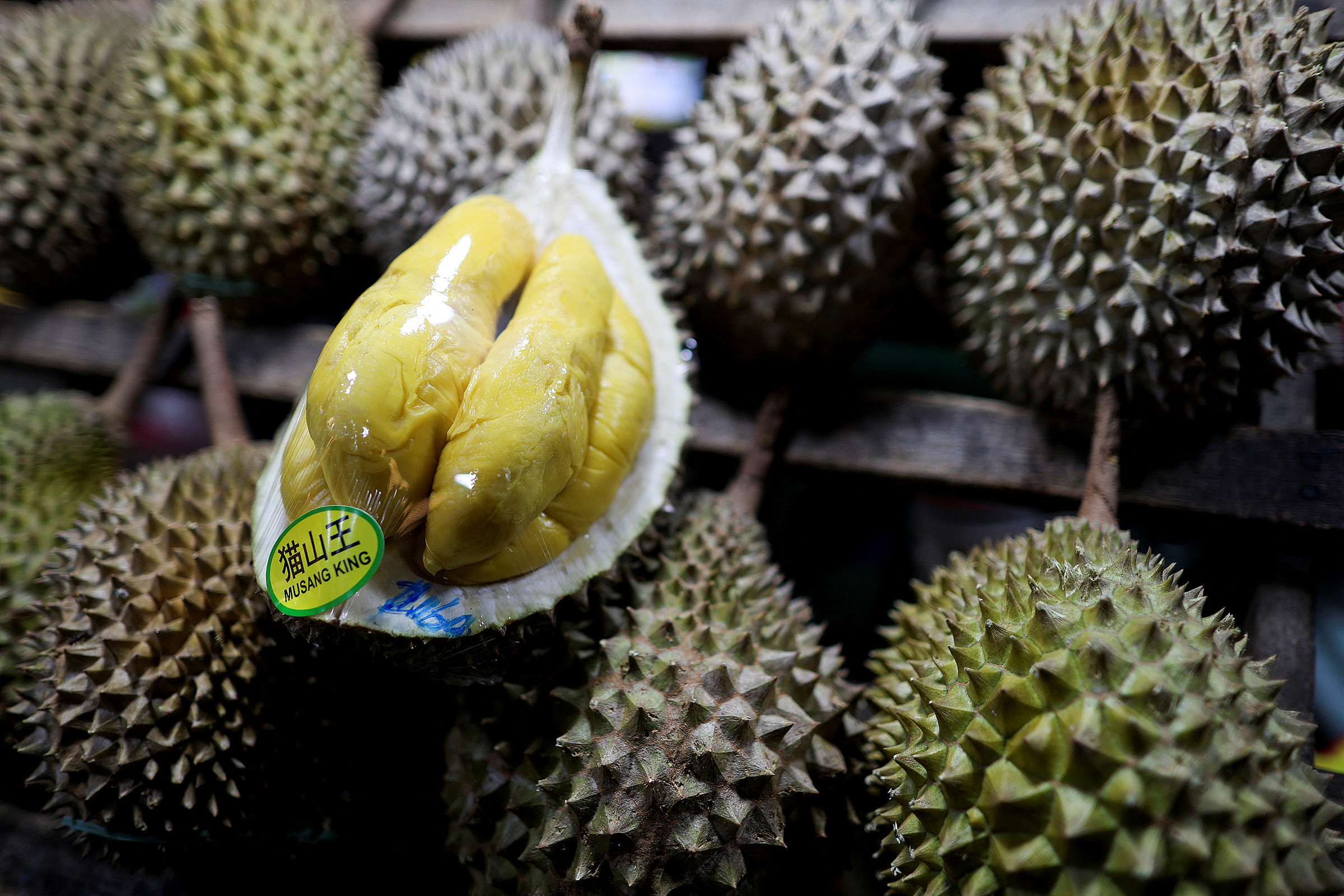
Durians are displayed at a stall in Jalan Alor Night Market in Kuala Lumpur, Malaysia March 17, 2026. Photo by Reuters