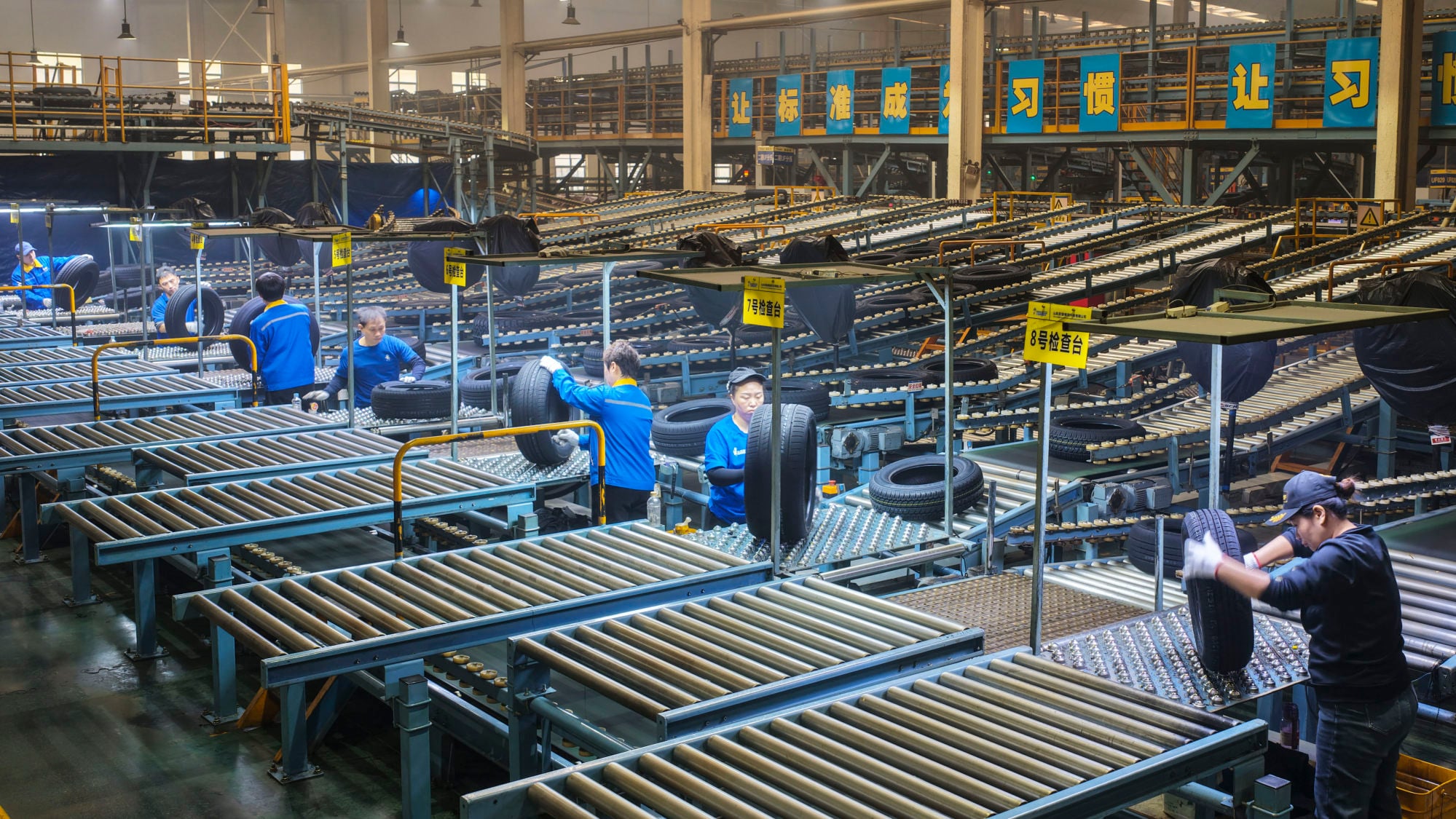
The European Union has announced the imposition of definitive anti-dumping duties on Chinese car and light lorry tyres, with rates reaching up to 45.3 per cent. This decision comes as a response to what the EU considers significant dumping margins and “material injury” to its domestic tyre industry.
According to the European Commission, most indicators showing injury—such as sales quantity, market share, employment, profitability, and productivity—demonstrated a clear negative trend during the period under review. The Commission highlighted that the influx of Chinese tyres into the EU has had a detrimental impact on local firms, particularly in the budget “tier 3” segment, which consists of the cheapest tyres.
Over 90 per cent of Chinese tyre imports into the EU fall into this budget category, according to the Coalition Against Unfair Tyre Imports. The remaining portion includes higher-end tier 1 and 2 tyres from South Korean brands like Hankook Group, which are produced in Chinese factories.
Shandong Yongsheng Rubber Group, a budget tyre producer, faces the highest duty rate of 45.3 per cent. Additionally, 64 other producers will be subjected to a 24.4 per cent duty. These include Chinese plants for global brands such as Pirelli (Italy), Goodyear (USA), Continental (Germany), and Sumitomo (Japan). In contrast, Hankook received only a 4.3 per cent duty.
The Commission argued that China’s domestic prices are too distorted to serve as a benchmark due to the influence of the state within the country’s “socialist market economy.” This framework, it claims, allows Beijing to interfere with prices and costs. However, the Commission noted that Beijing did not respond to inquiries regarding these distortions.
As part of its measures, the EU selected Turkey as a substitute source for “undistorted” prices. This move has been contested by Chinese producers and South Korean companies Kumho Tire and Hankook. The Korean groups argued that Turkey’s continued imports of Russian steel should have disqualify it from consideration, but the Commission rejected this claim.
The China Chamber of Commerce to the EU warned that the new tariffs could place an additional cost burden on the automotive sector. It stated that the significant differences in duty rates among producers might affect the competitive position of companies operating in the same market, including European and Asian manufacturers with production facilities in China.
Citi analysts expressed optimism about the potential benefits of the duties for Europe’s tyre sector. They described the news as “helpful for sentiment” and predicted that dealer buying behavior could soon begin to better support local players. According to their analysis, the positive reaction is expected to be most felt at Goodyear, followed by Michelin, then Continental, and finally Pirelli.
Key Points of the Decision
- The EU has imposed anti-dumping duties on Chinese tyres, with the highest rate set at 45.3 per cent.
- The decision was based on the negative impact of Chinese tyre imports on the EU’s domestic industry.
- Over 90 per cent of Chinese tyre imports into the EU fall into the budget “tier 3” segment.
- Shandong Yongsheng Rubber Group faces the highest duty rate, while other major producers face varying rates.
- The EU selected Turkey as a substitute source for undistorted pricing, a move challenged by some stakeholders.
- The China Chamber of Commerce warned of potential cost burdens for the automotive sector.
- Analysts from Citi believe the decision could help stabilize the EU’s tyre sector and improve sentiment.