Political Parties Withdraw from Constitutional Taskforce
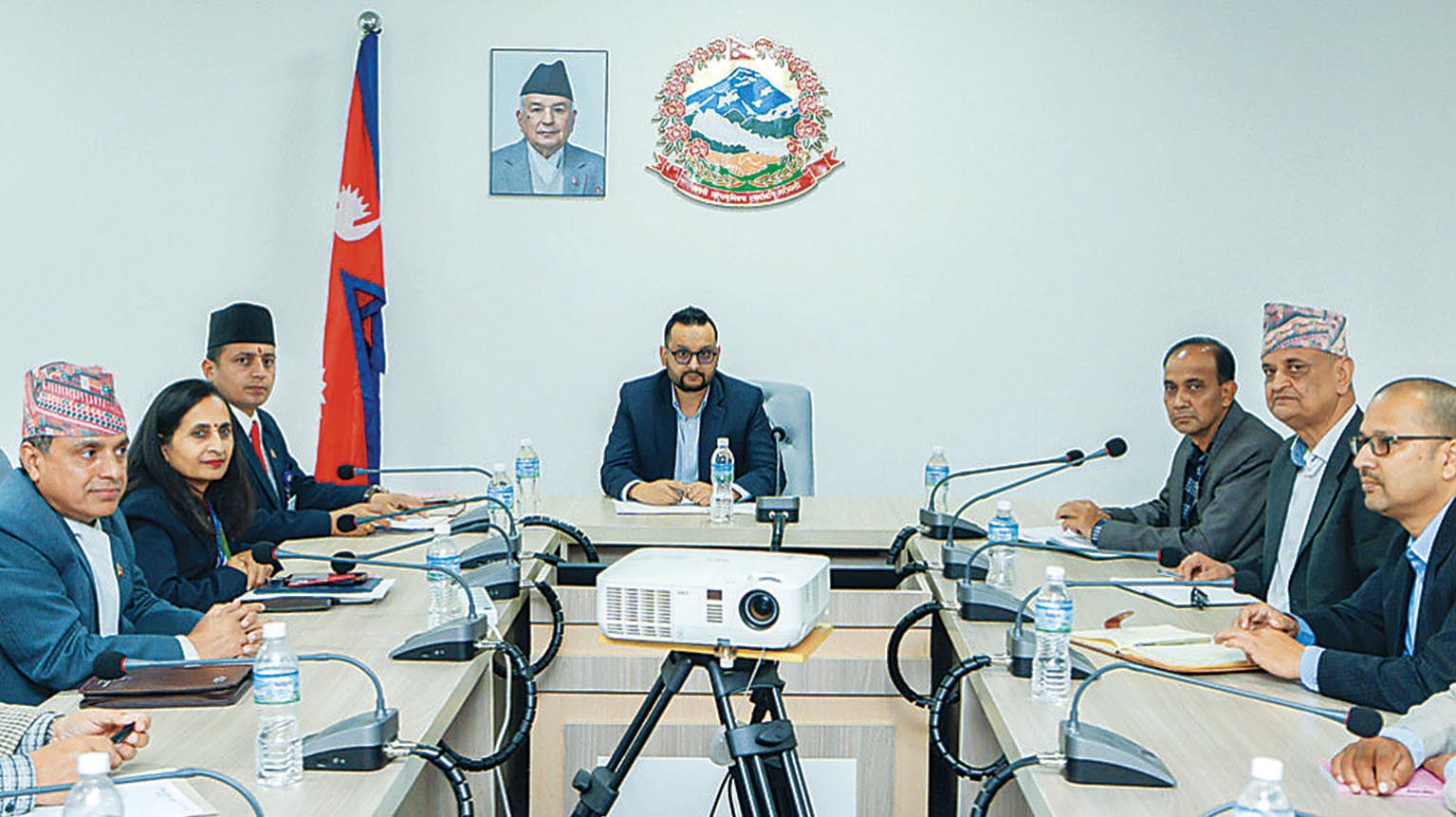
Kathmandu, July 8 — A government taskforce tasked with drafting a discussion paper on constitutional amendments has found itself in the midst of a political crisis after several influential political parties decided to withdraw from the process. The move has raised concerns about the future of Nepal’s fragile constitutional consensus and the integrity of the reform process.
Representatives from four major political parties — the Nepali Communist Party (NCP), the Loktantrik Samajbadi Party (LSP), the Janata Samajbadi Party (JSP), and the Rastriya Janamorcha — formally dissociated themselves from the panel. They submitted a six-point dissenting memorandum to Asim Shah, the taskforce coordinator and political advisor to Prime Minister Balendra Shah. The memorandum outlined serious concerns about the panel’s intent and operational jurisdiction.
The withdrawal comes at a critical juncture, as the taskforce was nearing the end of its 100-day deadline. The sudden exit of these parties has sparked widespread anxiety within the federal capital about the stability of the nation’s constitutional framework.
Opposition Criticizes the Taskforce
The dispute escalated into public view over the weekend. On Sunday, Gagan Kumar Thapa, the president of the Nepali Congress, delivered a scathing critique of the taskforce during a speech at the party’s central office in Sanepa. He accused the government of approaching the constitutional amendment process in an immature and reckless manner.
“You cannot approach a solemn exercise like amending the national constitution in a flippant or casual manner,” Thapa said. “The taskforce appears to have picked up the constitution like a small booklet, whimsically deciding to throw out this section or strike down that clause.”
Thapa emphasized the importance of the 2015 constitution, which he described as a hard-won document born from historic struggles by indigenous groups, Dalits, Tharu, and Madhesi communities. While acknowledging that the constitution is a living document that can be reviewed and amended, he warned against reducing it to a “playground for populist whims.”
Demands for Consensus and Transparency
Following Thapa’s remarks, representatives from the four dissenting parties formalized their protest. They called for an immediate halt to the current discussion-paper formulation process and demanded a binding commitment to safeguard the preamble and foundational tenets of the current constitution. Additionally, they urged the government to ensure that any proposed amendments emerge from an all-party meeting with national consensus.
The dissenting memorandum was signed by Dev Gurung of the NCP, Laxman Lal Karna of the LSP, Surendra Jha of the JSP, and Manoj Bhatt of the Rastriya Janamorcha. Notably, the inclusion of the Rastriya Janamorcha — a party known for its opposition to federalism — added to the controversy.
“If the government is genuinely serious about constitutional reforms, it must first scrap this flawed taskforce process,” the joint statement read. “Secondly, there must be an explicit, unshakeable state commitment that the constitutional preamble, inclusion frameworks, and fundamental principles will remain untouched. Any justifiable amendment must be routed through an official all-party mechanism to build national consensus before any draft reaches the floor of parliament.”
Allegations of Overreach and Unscientific Methods
Dev Gurung, an NCP leader, alleged that the taskforce had overstepped its original administrative boundaries. “We initially joined to assist in formulating a broad, balanced discussion paper. However, the taskforce began functioning like a supreme drafting committee tasked with rewriting the entire constitution,” he said.
Laxman Lal Karna, a former lawmaker from the LSP, echoed similar concerns. He revealed that while the initial stages involved constructive interactions with constitutional experts and retired bureaucrats, the taskforce’s working method became highly problematic. “The turning point arrived when the coordinator and select members began visiting private residences to collect arbitrary opinions,” he said. “We strongly objected to this unscientific, door-to-door approach for a national charter.”
Karna also criticized the leadership’s intention to push through a final report based on internal majority and minority voting, rather than forging a consensus. “We refused to sit as silent witnesses to a majoritarian rewriting of our country’s supreme law,” he said.
Defenses and Continued Efforts
Defending the taskforce’s credibility, coordinator Shah described the multi-party walkout as an act of political opportunism. He expressed disappointment that the opposition representatives chose to quit the panel after participating in its work for 83 days. “These representatives were present from our very first meeting, formally presenting their party positions and actively participating in our extensive stakeholder consultations,” he said.
Shah dismissed fears regarding the dilution of basic constitutional features, claiming he had repeatedly assured all participating members that the core identity of the constitution would remain fully protected. Despite the walkout, he announced that the taskforce would meet its deadline and present the final report directly to the Council of Ministers.
Ongoing Challenges and Uncertainty
With major parliamentary forces now out of the loop, the fate of the proposed constitutional review hangs in a delicate political balance. The four withdrawing parties have raised five key objections against the government’s constitutional amendment taskforce, accusing it of attempting a complete rewrite under the guise of preparing a discussion paper.
First, they questioned the legal validity of the panel, arguing that the government has failed to clarify its amendment agenda or the taskforce’s jurisdiction. Second, they claimed that open-ended consultations across all clauses violate the public mandate. Third, they recalled that the 2015 constitution was forged through national consensus among all major political parties, legal experts, and the public. Fourth, they argued that the current government’s five-year governance mandate differs fundamentally from a mandate to overhaul the constitution. Finally, they demanded an immediate scrapping of the discussion-paper process and a firm commitment to protect core constitutional principles.