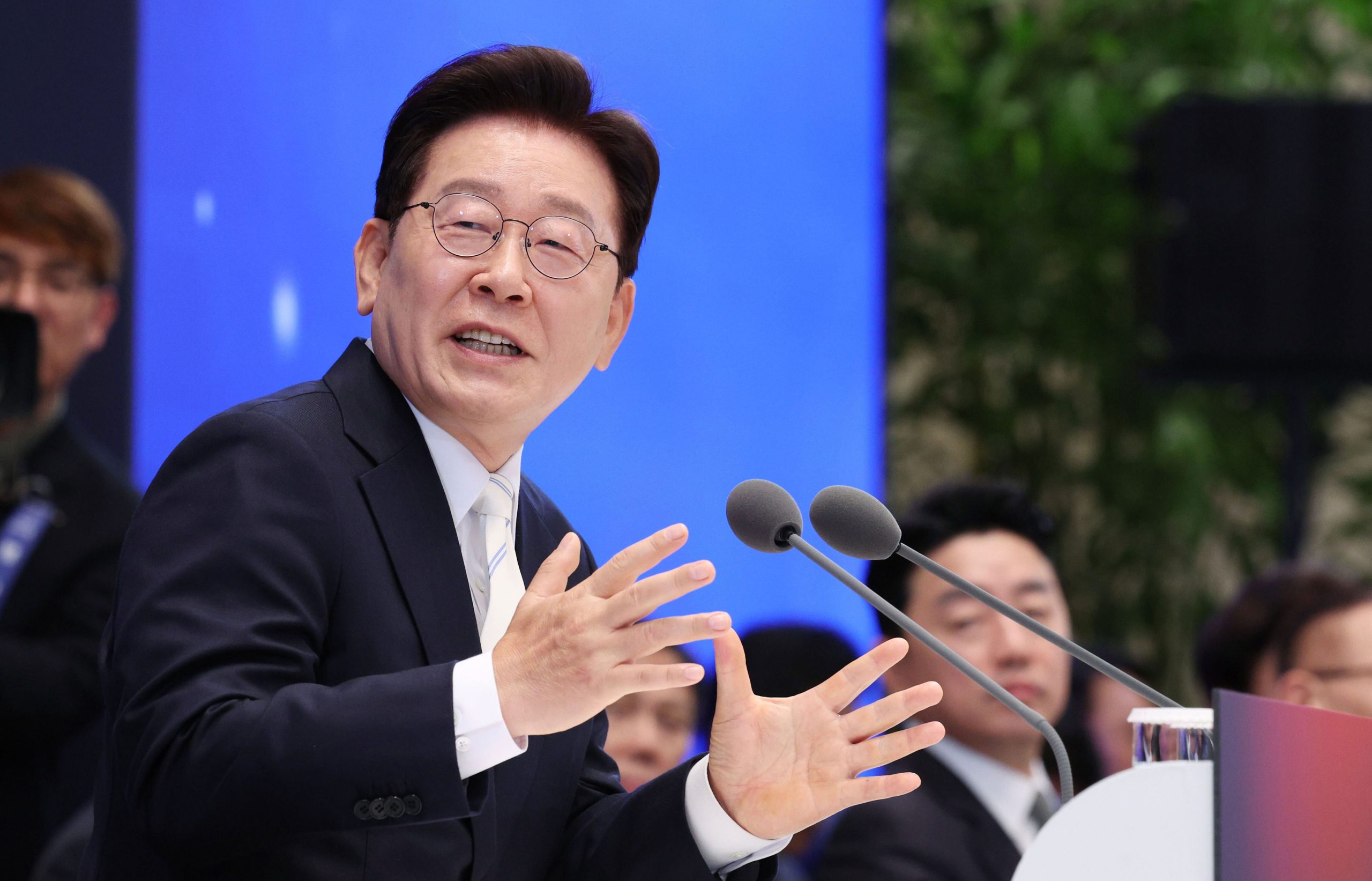
President Lee Jae Myung acknowledged the “realistic necessity” of concluding a Korea-Japan Acquisition and Cross-Service Agreement (ACSA) during a press briefing on the first anniversary of his inauguration on the 5th. However, he drew a clear line against early progress, emphasizing that public sentiment and historical grievances have not yet been resolved. He stressed that genuine security cooperation is only possible if Japan first offers a sincere apology, using his characteristic blunt analogy.
During a Q&A on trilateral security cooperation with the U.S. and Japan, President Lee said, “When it comes to the ACSA issue, South Korean citizens would think, ‘What nonsense is this?’” He added, “From my perspective, there is a realistic necessity. However, that is merely a practical need, and our people currently find it difficult to accept this due to their emotional stance.”
President Lee noted, “I would get scolded if I publicly discussed this necessity,” and clarified that he had explicitly conveyed to Japan, “You must understand the emotional position of our people.” This implies that even if security interests exist, progress is impossible without public consensus.
He identified Japan’s attitude toward historical issues as the root cause of stalled military cooperation. To explain, he used the analogy of a “fistfight and medical expenses.”
He said, “I was clearly hit in the past, and my eye even burst from the blow. I had to pay medical expenses and could not work. Now, if someone says, ‘Let’s be friends,’ I might agree for practical reasons, but can we truly cooperate completely?”
He continued, “To become real friends, one must say, ‘I’m sorry for hitting you. You must have been in pain. The medical costs were high, right? I won’t do it again.’ Only then can I be certain they won’t hit again. However, Japan says, ‘When did I hit you? I apologized once—isn’t that enough? I did it three times already—do I have to do it again?’ How can hearts truly connect under such circumstances?”
President Lee emphasized that this is not mere political rhetoric but “part of the deep-seated feelings of the South Korean people.” He stated, “This is not about money or other issues—it is purely an emotional matter. Does South Korea lack money that it would demand old medical expenses?”
He added, “While Japan may wish to strengthen military cooperation with South Korea or the U.S., Northeast Asian security issues should ultimately be addressed through a complex multilateral security framework. Currently, the security landscape is advancing confrontatively, so we must proceed cautiously and adjust the pace.”
President Lee also disclosed a private conversation with Japanese Prime Minister Sanae Takaichi during their meeting in Andong, North Gyeongsang Province, last month. He said, “I directly told Prime Minister Takaichi, ‘Korea-Japan relations are often described as close yet distant, but I hope we can become close and even closer. However, unresolved historical issues remain.’”
Finally, President Lee stated, “Fundamentally, since historical grievances are not yet resolved, there are limits to military cooperation. However, these issues must eventually be settled to establish genuinely sincere Korea-Japan relations. I believe the day will come when Japan sincerely says, ‘I’m sorry for hitting you.’”
- 월 5900원 멤버십, 신문 독자에게는 2900원, 조선멤버십
- 55000원 상당의 신문-잡지 8종 마음껏 보기, 조선멤버십
- 현금처럼 쓸 7000포인트 받아 알뜰한 쇼핑, 조선멤버십