The human body is a biological marvel, a complex assembly of parts ranging from the microscopic intricacies of our cells to our limbs, eyes, liver, and brain. This incredible structure has been pieced together over an astonishing four billion years of evolutionary history. Yet, scientists are still grappling with the fundamental question of why we evolved into this specific form. Puzzling questions abound: why do humans uniquely possess a chin? And why, relative to body weight, are human testicles triple the size of a gorilla’s, yet a mere fifth of a chimpanzee’s? As explored in the book “The Tree of Life,” many of these evolutionary “why” questions remain unanswered, but we are beginning to uncover some of the solutions.
The grand narrative of evolution explains how life began from simple origins, detailing the construction of each species and the addition of fundamental components to the biological blueprint. By tracing our lineage up the evolutionary tree, we can follow a winding path through increasingly specialised branches. We humans, for instance, were animals before we became vertebrates, and mammals before we evolved into primates.
The groups of species we share these evolutionary branches with offer clues about the order in which our body parts appeared. For example, a body and a gut, innovations stemming from the animal branch, must have preceded the development of a backbone and limbs from the vertebrate branch. Similarly, traits like milk production and hair, characteristic of mammals, emerged before fingernails, a feature of primates.
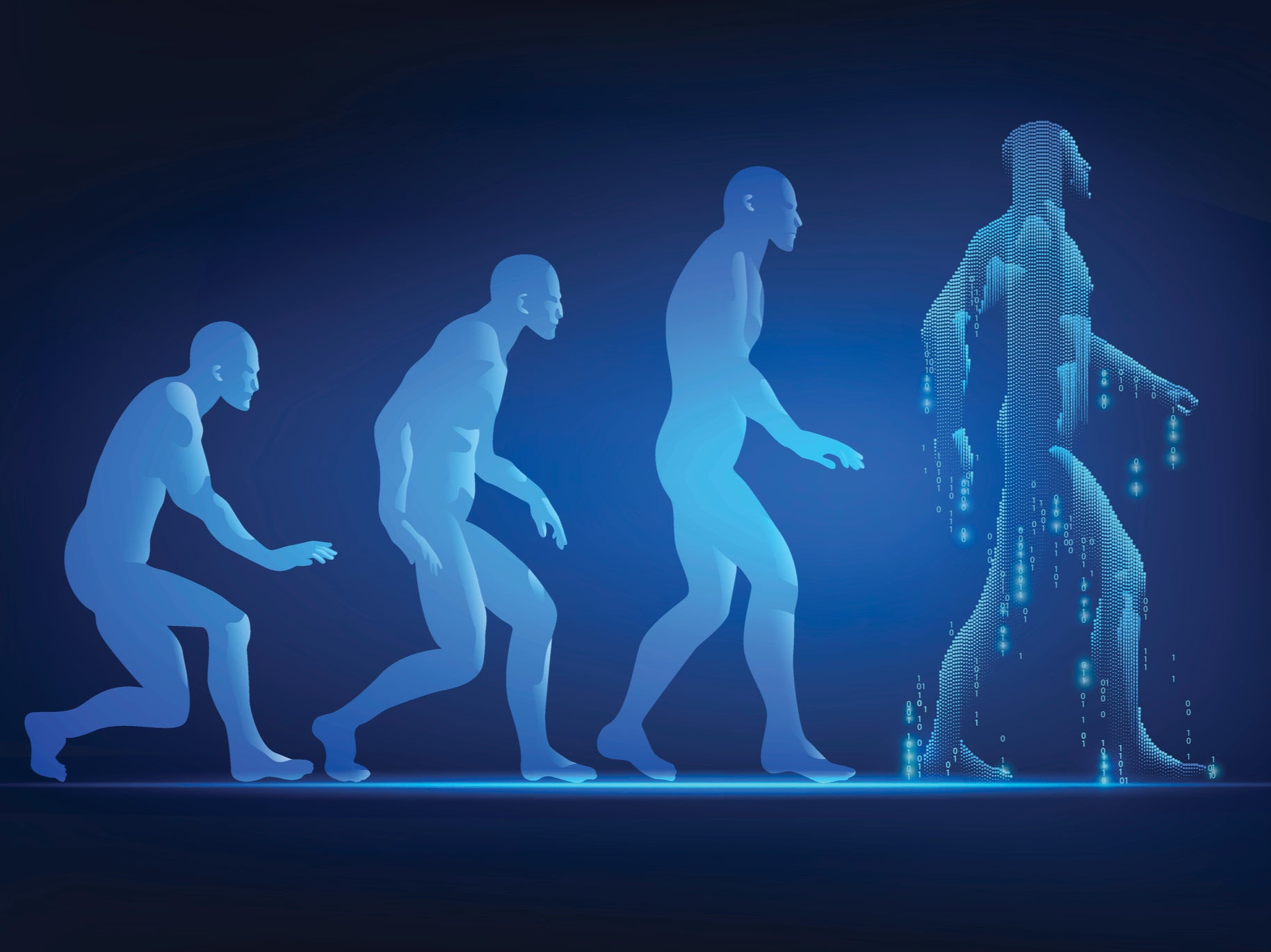
Investigating the specific evolutionary purpose of individual body parts presents a unique challenge. This can only be effectively studied if a particular feature has evolved independently on multiple occasions across different branches of the evolutionary tree. This phenomenon of repeated evolution is known as convergence. While it can sometimes complicate our understanding of species relationships – for instance, swallows and swifts were once thought to be closely related but are now known to be more distantly linked – convergent evolution serves as a powerful tool when viewed as a series of natural experiments.
The Significance of Size: A Case Study in Primate Testicles
The size of primate testicles provides a classic illustration of how convergent evolution can illuminate evolutionary questions. Consider the Abyssinian black and white colobus monkey and the bonnet macaque. Adult males of both species are roughly the same body size. However, their testicle sizes differ dramatically, much like the contrast between humans and gorillas versus chimpanzees. Colobus monkey testicles weigh a mere 3 grams, while those of macaques are a substantial 48 grams.
Several plausible explanations could account for these disparities. One theory suggests that large testicles might function like a peacock’s tail – not inherently useful in themselves, but attractive to females. A more compelling explanation, however, relates to their mating behaviours. Male colobus monkeys fiercely compete for exclusive access to a harem of females. In contrast, macaques live in peaceful, mixed troops of around 30 individuals, where mating is more promiscuous, with males mating with multiple females and females with multiple males.
For a colobus monkey with a dedicated harem, producing a minimal amount of sperm might suffice; if a single ejaculation leads to conception, why expend energy on producing more? For a male macaque, however, reproduction involves a direct competition between his sperm and that of other males. Larger testicles in macaques would likely produce more sperm, thereby increasing his chances of passing on his genes. This explanation seems logical, but how can we verify it? This is where convergent evolution proves invaluable.
Across the vast mammalian branch of the evolutionary tree, we observe numerous groups that have independently evolved testicles of varying sizes. In nearly all these separate instances, a consistent correlation emerges: larger testicles are found in promiscuous species, while smaller ones are characteristic of more monogamous species.
A silverback gorilla, for example, with its relatively small testicles, commands sole access to its harem. Chimpanzees and bonobos, known for their highly promiscuous social structures, possess significantly larger testicles. Dolphins, meanwhile, exhibit some of the largest mammalian testicles, accounting for up to 4% of their body weight – the equivalent of human testicles weighing approximately 3 kilograms. While studying wild dolphin mating habits is challenging, spinner dolphins, at least, align with this pattern, engaging in communal mating events known as “wuzzles.”
It is through these multiple, independent observations facilitated by convergent evolution that we have been able to identify this consistent link between testicle size and mating behaviour across the mammalian class. As for humans, our testicle size falls somewhere in the middle – the implications of which are open to interpretation.
The Enigma of the Human Chin
The human chin, however, remains a subject of considerable scientific debate. Much like with testicle size, there are about half a dozen plausible hypotheses attempting to explain its evolutionary origin. Some propose it evolved to strengthen the jaw, perhaps for combat in early human ancestors. Another theory suggests it developed to enhance the visual impact of a masculine beard. It’s even posited that the chin might be a vestigial feature, a by-product of the advent of cooking and the consequent softening of food, leaving behind a non-functional facial prominence as our jaws weakened.
Intriguingly, a distinct chin, as seen in modern humans, is absent in all other mammals, including our closest extinct relatives, the Neanderthals. This uniqueness of the Homo sapiens chin, while providing a rich array of potential explanations for its evolutionary purpose, also presents a significant hurdle. In the absence of convergent evolution – that is, if the chin hasn’t evolved independently elsewhere – we lack a robust method to empirically test these competing hypotheses.
Ultimately, some aspects of human biology and evolution may be destined to remain enduring mysteries, adding to the fascinating complexity of our species.