Giving Your Winter Woollies a Longer Life: Expert Advice for Caring for Knitwear
Winter is undeniably the season for cosy knitwear, and with the right care, your favourite jumpers and cardigans can see you through many chilly seasons to come. While many of us might painstakingly hand wash and meticulously air dry our beloved woollens, a fabric expert suggests there’s a simpler, less labour-intensive approach to keeping your knitwear in top condition – and it involves washing them far less often than you might think.
Rebecca Van Amber, a senior lecturer at RMIT University’s School of Fashion and Textiles, advocates for a minimalist washing routine for knitwear. According to her, the frequency of washing should be significantly reduced, with only one specific time of year demanding a thorough clean.
The Crucial Pre-Storage Wash
“If you’re like me and you also put your wool jumpers away for the winter, you do want to wash them before you store them,” Van Amber explains. “Because if they have any sort of dirt or food on them that will make it more of an attraction for moths and those sorts of insects that might damage your wool.”
This pre-storage wash is paramount to protecting your garments from pests. “So you don’t need to wash your wool very much when you’re wearing it, but you do need to wash it before you store it, for sure,” she reiterates.
Wool’s natural properties make it remarkably resistant to odours, meaning your woollen jumpers can be worn multiple times between washes without developing unpleasant smells. For knitwear made from acrylic fibres, which can absorb odours more readily, Van Amber still advises against frequent washing. This is primarily to prevent the common issue of pilling, where small balls of fibre form on the fabric’s surface.
Keeping Knitwear Fresh Between Washes
To maintain freshness and a clean appearance between your infrequent washes, several simple strategies can be employed:
- Layer Up: Wearing a shirt underneath your knitwear acts as a barrier, preventing direct contact with your skin and reducing the transfer of sweat and body oils.
- Air It Out: Simply airing out your knitwear in a shady, breezy spot outdoors or in a well-ventilated area indoors can work wonders in refreshing the fabric.
- Spot Clean Stains: For minor spills or stains, opt for spot cleaning rather than a full wash. This targeted approach can effectively remove the mark without subjecting the entire garment to unnecessary wear and tear.
Machine Washing: The Smart Way to Clean Delicates
While hand washing is often touted as the gold standard for delicate items like knitwear, Van Amber admits it’s not a practice she personally follows. Instead, she relies on her washing machine’s specialised cycles and a few inexpensive accessories to keep her knitwear looking its best.
Her key recommendations for machine washing delicate garments include:
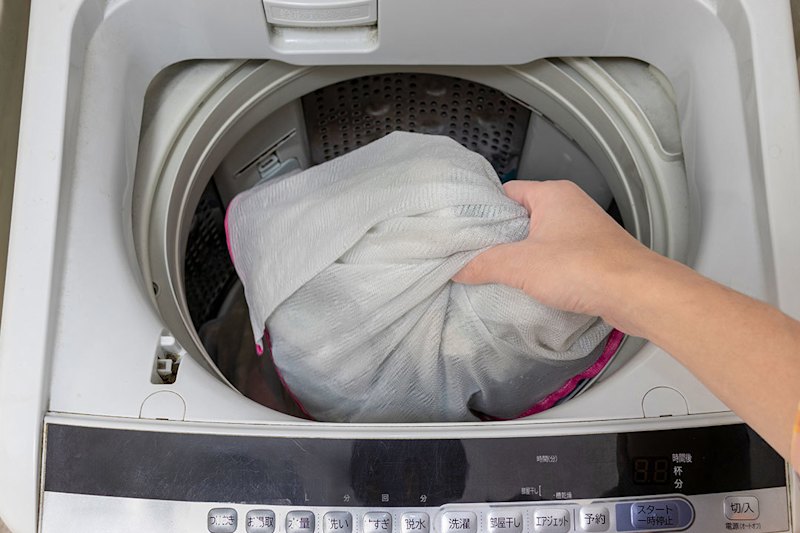
- Mesh Laundry Bags: “I’m a huge fan of using those mesh bags for those delicate items,” Van Amber states. “Putting them in one of those mesh bags… they’re so inexpensive and putting any delicate item in that bag, I find really helps make it last a lot longer.” These bags provide a protective cocoon for your knitwear during the wash cycle.
- Delicate or Wool Cycle: Utilising the appropriate cycle on your washing machine is crucial. “If I’m washing anything delicate [in the machine] for me, it really comes down to using that bag, using my delicate or wool cycle on my machine,” she advises.
- The Right Detergent: This is perhaps the most critical element. Van Amber stresses the importance of using a detergent specifically formulated for wool and delicate fabrics. “And most importantly, using the right detergent,” she adds. “That is my number one tip; use a wool wash, a laundry powder or liquid that is designed for the type of clothing that you’re washing.” These specialised detergents can be found at most supermarkets and discount stores for a very reasonable price.
Drying and Storing for Longevity
Once your knitwear has been washed, the drying process is just as important. Van Amber generally hangs most items on a clothes airer, but for more delicate pieces, she opts for flat drying. It’s strongly advised to avoid using a clothes dryer, as the heat and tumbling action can cause significant damage to the fibres.
For heavier knitwear, a clever technique involves laying the item on a towel and then rolling the towel up with the garment inside. This helps to gently squeeze out excess water. Once the moisture has been absorbed by the towel, the knitwear can then be laid flat on a fresh, dry towel to complete the drying process.
Proper storage is the final step in ensuring your knitwear’s longevity.
- Fold, Don’t Hang: “Definitely, you don’t wanna be hanging your sweaters or jumpers up in the closet because they will stretch out, especially in the shoulders because of the hangers,” Van Amber explains. Folding your knitwear neatly prevents stretching and maintains the garment’s shape.
- Sealed Storage: When winter concludes and your knitwear is ready to be put away, ensure it’s completely dry before storing it in sealed containers or vacuum-sealed bags. This protects them from dust, moisture, and those pesky moths, ensuring they emerge clean and ready to wear when the cold weather returns.