Eastern European Cities on Edge as Drone Incidents Spark Fears of Escalation
The recent crash of a Russian drone into a residential building in Galați, Romania, has sent ripples of concern across Europe, drawing sharp condemnation from the NATO alliance and intensifying anxieties among residents in cities close to Ukraine’s borders. The incident, which saw a drone on an attack run against Ukraine deviate from its course and impact a building in a NATO member state, has amplified fears that the ongoing conflict could spill over into neighbouring territories.
Residents in Galați, a city in eastern Romania, are now grappling with a heightened sense of vulnerability. Vasile Opincă, an 87-year-old resident living near the site of the crash, described a pervasive feeling of unease. From the tenth floor of his apartment, he now finds himself regularly scanning the skies, a habit born out of apprehension for future incidents. “For sure we are afraid,” he told Euronews, his voice tinged with worry. “I have nowhere to go except under the table.”
Beyond the immediate threat of aerial attacks, Opincă also voiced concerns about practical preparedness in the event of an emergency. He highlighted the precariousness of his food supplies, relying solely on what is stored in his refrigerator. The prospect of a power outage, he explained, would significantly complicate matters, leaving him with even fewer options.
The Russian drone that crashed into a residential building in Galați sparked widespread condemnation across Europe, as well as from the NATO alliance.
But also residents from the eastern Romanian city voiced growing concerns. As Russia has intensified its attacks on Ukraine in recent months, many fear that similar incidents could occur again in the future.
Calls for Enhanced Emergency Preparedness in Schools and Communities
The safety of children has become a paramount concern for parents. While schools in Romania currently conduct drills for earthquake preparedness, many parents believe these measures are insufficient to address the evolving threat posed by drones. Liviu Stoian, father of a ten-year-old pupil, articulated this sentiment, stating, “These drone incidents are becoming increasingly more common.” He stressed the need for schools to educate children about the potential dangers.
Stoian’s concerns extend beyond the school gates, advocating for broader community-wide training. “The general population, in the first place here in Galați, should be trained very well,” he urged, emphasizing the importance of equipping all citizens with the knowledge to respond effectively should an incident occur.
The drone that crashed in Galați was part of an overnight aerial assault on Ukraine. While the exact cause of its course deviation remains unclear, the incident underscores the potential for unintended consequences and the widening reach of the conflict. The drone struck the roof of a building, igniting a fire. Fortunately, emergency services responded swiftly, evacuating residents and treating two individuals for injuries.
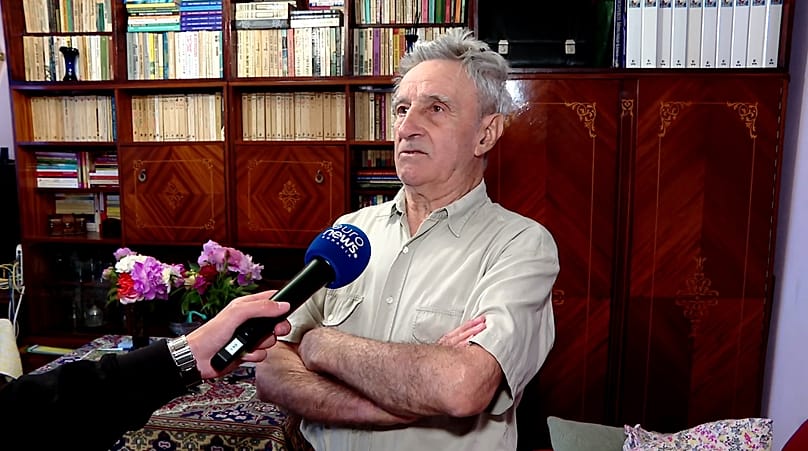
“Food that’s stored in the fridge is all that I have,” he told Euronews, but said that matters would become more complicated if a power outage were to occur.
Parents have also expressed concerns about how to protect their children in the event of a drone-related incident. Currently, schools offer drills on how to respond during earthquakes, but some parents say existing emergency preparedness measures should be broadened to address the growing threat posed by drones.
“These drone incidents are becoming increasingly more common,” Liviu Stoian, the father of a ten-year-old pupil told Euronews. “The school should also instruct the children to know what can happen”.
Stoian believes such training should not be limited to students. “The general population, in the first place here in Galați, should be trained very well”.
The drone had been part of an overnight attack on Ukraine and changed trajectory what led it to crash in Romania, a NATO member state. It crashed onto the roof of a building and sparked a fire. Two people were injured and residents were evacuated.
It is unclear what caused the drone to change its course, but the incident added to concerns that the war could spread across the alliance’s borders.
NATO Reaffirms Commitment to Collective Defence
In the wake of the Galați incident, NATO Secretary-General Mark Rutte spoke with Romanian President Klaus Iohannis, expressing “absolute solidarity” with the ally. Rutte reiterated NATO’s unwavering commitment to defending its member states.
“NATO stands ready to defend every inch of Allied territory,” Rutte stated on social media platform X. He further emphasised the alliance’s ongoing efforts to bolster its readiness. “We will continue to enhance our readiness to deter and defend against any threat, including from drones.” This declaration signals NATO’s intent to adapt its defence strategies to counter emerging aerial threats and reassure its members of collective security in an increasingly volatile geopolitical landscape. The incident in Galați serves as a stark reminder of the proximity of the conflict and the imperative for robust preparedness measures across the alliance.