A Growing Movement in Nigerian Para-Sports
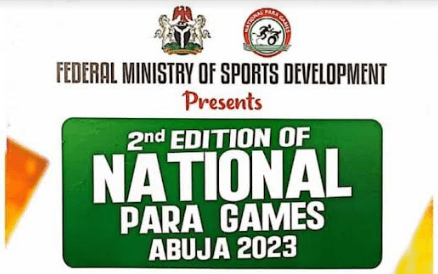
Nigeria’s capital, Abuja, is set to witness a surge of energy and anticipation as athletes, officials, and sports enthusiasts gather for the 3rd National Para-Sports Festival, scheduled to begin on Saturday, March 28, 2026. This event marks a significant milestone in Nigeria’s efforts to promote inclusivity, develop elite performance, and recognize the achievements of athletes with disabilities.
The festival has steadily gained prominence within the country’s sporting ecosystem, representing a crucial step toward a more inclusive society. As a flagship event in Nigeria’s para-sports calendar, it brings together competitors from across the federation to participate in a diverse range of disciplines. Beyond competition, it serves as a platform to celebrate resilience, showcase talent, and reinforce the unifying power of sport in bridging social divides.
The opening ceremony will be led by the Chairman of the National Sports Commission, Shehu Dikko, alongside the Director General, Bukola Olopade. Both officials have emphasized that the Games reflect Nigeria’s commitment to developing and promoting inclusive sports at all levels. Olopade described the event as more than a sporting contest, highlighting its role in celebrating courage, breaking societal barriers, and inspiring a new generation of athletes.
A Wide Range of Para-Sports
The competition will feature a wide array of sports, including para athletics, wheelchair basketball, para powerlifting, and amputee football, among others. In total, events scheduled for the Games include:
- Amputee Football
- Para Athletics
- Para Badminton
- Para Canoe
- Para Cycling
- Para Karate
- Para Powerlifting
- Para Shooting
- Para Soccer
- Para Swimming
- Para Taekwondo
- Para Table Tennis
- Sitting Volleyball
- Wheelchair Basketball
- Wheelchair Tennis
This diversity reflects the growing depth and variety of para-sports in Nigeria.
A History of Growth and Development
Although this is only the third edition of the festival, it has already begun to establish a distinct identity within Nigeria’s broader sports framework. The maiden edition in 2022, which was largely experimental but ambitious in scope, featured over 4,000 para-athletes from 21 states competing in 15 sports. Bayelsa State emerged as the overall champion, setting a benchmark for subsequent competitions.
That inaugural outing laid the groundwork for standardizing classification systems, aligning rules with global best practices, and identifying athletes with the potential to excel internationally under the guidance of the International Paralympic Committee.
By the second edition, the festival had expanded significantly, drawing participation from all 36 states and the Federal Capital Territory. The increased scale was matched by improvements in technical organization, officiating standards, and athlete preparation. Bayelsa State successfully defended its title, while standout performances, particularly in para powerlifting, highlighted Nigeria’s continued dominance in strength-based adaptive sports.
More importantly, the second edition solidified the festival’s role as a feeder system for international competitions, including the Paralympic Games and continental championships. Athletes identified during the Games have since transitioned into national teams, reinforcing their value as a critical talent development pipeline.
Strategic Hosting in Abuja
The 2026 edition in Abuja is widely regarded as a consolidation phase, one aimed at institutionalizing previous gains while advancing organizational efficiency, inclusivity, and competitive standards. Organizers are placing strong emphasis on accurate classification, athlete welfare, and adherence to international benchmarks to ensure credibility and global comparability of results.
Hosting the Games in Abuja is also a strategic decision. As Nigeria’s administrative and political hub, the city offers superior infrastructure, accessibility, and visibility. These factors are essential for attracting sponsorship, enhancing media coverage, and securing policy support, all of which are vital for the sustained growth of para-sports.
Challenging Stereotypes and Promoting Inclusivity
In a society where persons with disabilities often encounter structural barriers, the festival presents a compelling counter-narrative, one that emphasizes ability, excellence, and contribution. It creates a space where athletes are not defined by limitations but celebrated for their achievements, thereby challenging stereotypes and reshaping public perception.
Nigeria’s long-standing success in para-sports, particularly in disciplines such as powerlifting, underscores the importance of sustaining this momentum. The festival plays a central role in this regard by providing a structured environment for talent identification, systematic training, and exposure to competitive pressure.
Para-Soccer: A Highlight of the Festival
Para-Soccer will be the center of attraction at the 2026 festival. Alhaji Misbahu Laan Didi, the founder of para-soccer, expressed profound happiness that the sport has become an integral part of the Games. Speaking to Weekend Trust Sports, Didi thanked the National Sports Commission (NSC) for including the sport in the events for the 3rd National Para-Sports Festival.
He commended the states that have agreed to send their players to participate in the competition. As the founder and former president of Para-soccer Federation, Didi emphasized that competitions like this will support the spread of para-soccer in Nigeria and beyond. He noted that the game is already played in at least six other African countries.
Didi added that para-soccer is the only indigenous sport featured at the Games and will be the center of attraction. He mentioned that if the government and corporate organizations pay premium attention to para-soccer, the sport has the potential to become a Paralympic event.
He pointed out that para-soccer is not as expensive as other sports. While it costs almost nothing to acquire roller skates for the players, a sport like wheelchair tennis or basketball is quite expensive because of the high cost of the wheelchairs. Didi urged for more support, stating that after more than three decades, they do not have a permanent sponsor. He called on others to join in promoting para-soccer, emphasizing that this indigenous sport must not be allowed to die.