President Trump’s Bold Claims and the Uncertain Path Forward
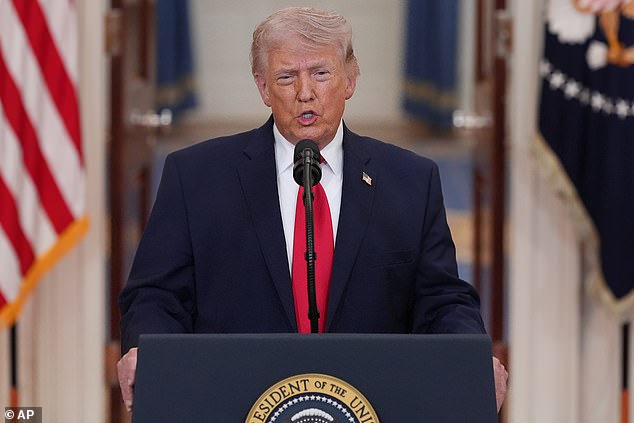
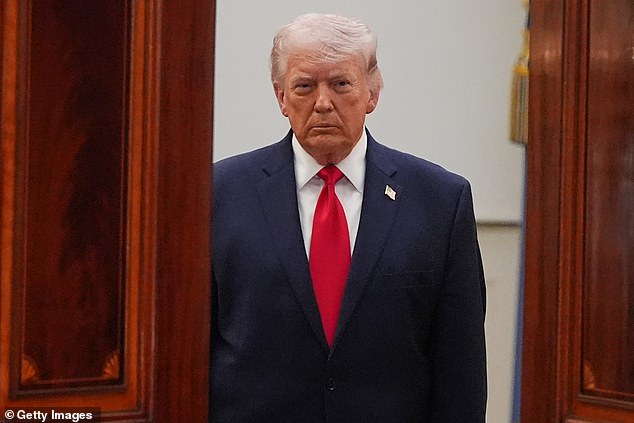
President Donald Trump made a series of strong statements during a 20-minute address from the White House, attempting to reassure the American public that the U.S. military was on the verge of defeating Iran. He pledged to “bomb the Islamic Republic back to the Stone Ages,” emphasizing the strength of the U.S. military in preventing Iran from acquiring a nuclear weapon. Trump claimed that this military operation would not become a “forever war” like those in Iraq or Vietnam.
“We are going to hit them extremely hard over the next two to three weeks,” he said. Trump argued that due to the U.S. military’s might, Americans no longer needed to fear the threat of “nuclear blackmail” from Tehran. “They were the bully of the Middle East, but they’re the bully no longer. This is a true investment in your children’s and your grandchildren’s future.”
He also highlighted what he called “swift, decisive, overwhelming victories on the battlefield” in the past four weeks. Trump pointed out that the U.S. had fought in Iraq, Korea, Vietnam, and two World Wars before, but the conflict with Iran had only lasted 32 days. “We are in this military operation—so powerful, so brilliant—against one of the most powerful countries, for 32 days, and that country has been eviscerated and essentially is really no longer a threat,” he claimed.
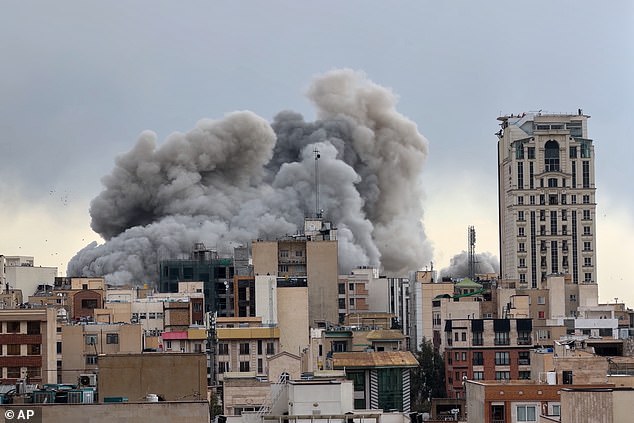
Despite these claims, Iran continued its attacks on Israel and Persian Gulf neighbors. On Wednesday, Iran and Hezbollah launched rockets from Lebanon into Central Israel as Passover began, forcing millions to flee their Seders to seek shelter. Trump suggested he had ruled out direct military action against Iran to retrieve its enriched uranium, stating that the nuclear sites obliterated by B-2 bombers would take months to rebuild. “And we have it under intense satellite surveillance and control. If we see them make a move, even a move for it, we’ll hit them with missiles very hard again.”
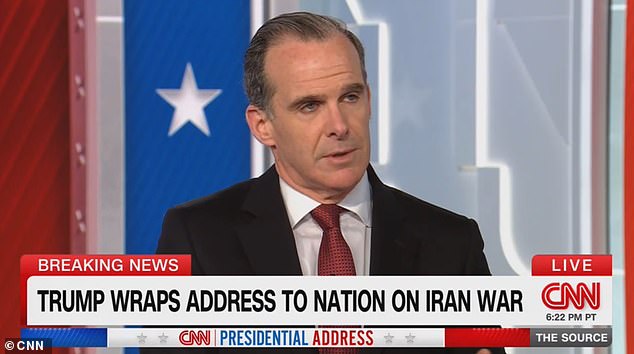
Trump encouraged countries reliant on oil through the Strait of Hormuz to “build some delayed courage” and “take it.” However, many, including former Trump staffer Brett McGurk, remained unconvinced about the clarity of the president’s plan. McGurk noted that Trump’s speech seemed to suggest an escalation of the conflict rather than a resolution. “He basically threatened Iran that we’re going to prepare to send you back to the Stone Age. So I think this war is going to continue for some time.”
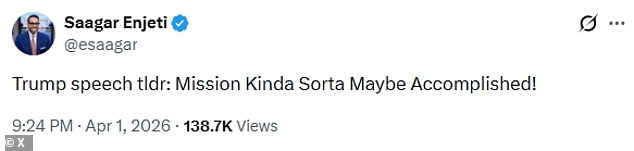
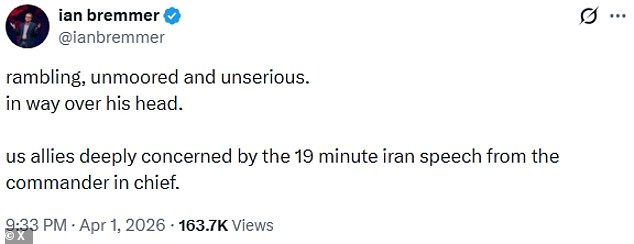
Conservative pundit Saagar Enjeti compared the speech to George W. Bush’s “mission accomplished” address, calling it “Mission Kinda Sorta Maybe Accomplished!” Analysts like Ian Bremmer criticized the speech as “rambling, unmoored, and unserious,” suggesting Trump was “in way over his head.”
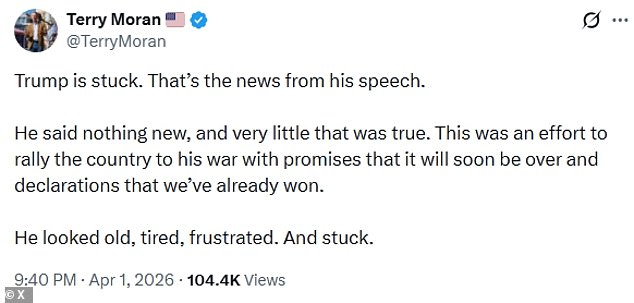
Former ABC News anchor Terry Moran stated that Trump was “stuck” and lacked substantial information to share. “He said nothing new and very little that was true,” Moran said. “This was an effort to rally the country to his war with promises that it will soon be over and declarations that we’ve already won.”
A New York-based think tank, the Soufan Center, noted that Trump’s speech suggested he was willing to leave the Strait of Hormuz off the table, potentially leaving other nations to deal with the consequences. “While Trump explicitly thanked US allies in the Persian Gulf for their cooperation and allyship, an expedited US withdrawal without securing the Strait will leave many of these countries, whose economies are dependent on energy exports, in the lurch.”
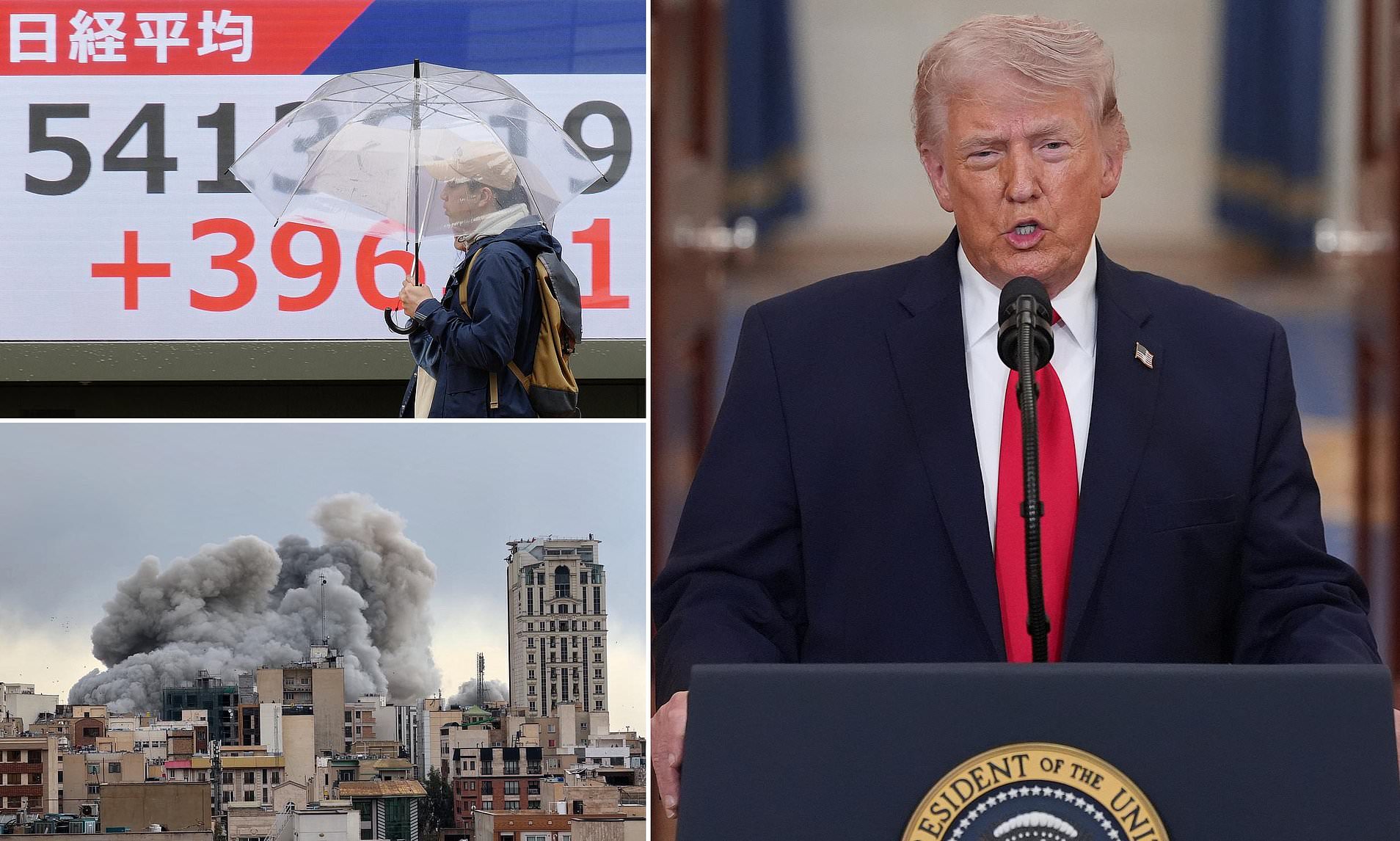
The market reacted negatively to Trump’s speech, with oil prices rising sharply and Asian stocks falling. Brent crude jumped more than 4.9 percent to $106.16 per barrel, while the Nikkei 225 dropped 1.9 percent. Takashi Hiroki, chief strategist at Monex in Tokyo, noted that the market was disappointed because the speech lacked concrete details about ending hostilities with Iran. “What the market wants is a clear outline for the ceasefire,” he said.
Trump defended the rising oil and gas prices, claiming they were a worthy sacrifice for taking out Iran. “Many Americans have been concerned to see the recent rise in gasoline prices here at home. The short-term increase has been entirely the result of the Iranian regime launching deranged terror attacks against commercial oil tankers in neighboring countries that have nothing to do with the conflict,” he said.
He warned that allowing Iran to rebuild its nuclear program would lead to worse outcomes. “This is yet more proof that Iran can never be trusted with nuclear weapons. They will use them, and they will use them quickly. It would lead to decades of extortion, economic pain, and instability worse than we can ever imagine.”
Since the war began on February 28, Trump has offered shifting objectives and repeatedly claimed the conflict could end soon while also threatening to widen it. With thousands of additional U.S. troops heading to the Middle East and speculation about potential attacks on Iran’s Kharg Island oil export hub, the situation remains uncertain. The role of Israel, which has been bombing Iran alongside the U.S., adds further complexity to the unfolding crisis.