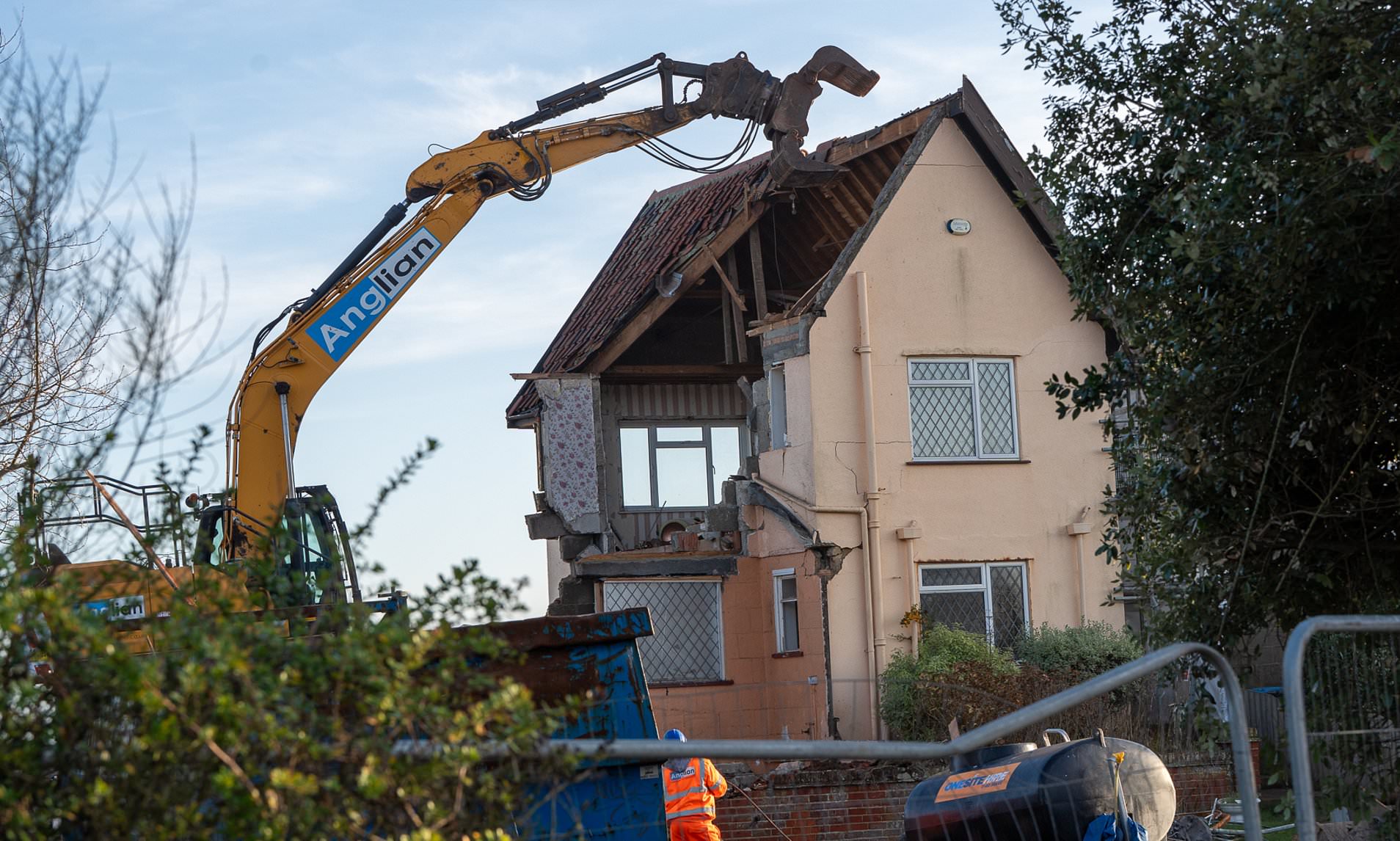
Locals Fume as “Trauma Tourists” Flock to Witness Coastal Erosion Devastation
Residents of the picturesque Suffolk village of Thorpeness are fuming at the influx of gawking visitors, dubbed “trauma tourists,” who are descending upon their community to witness the devastating effects of severe coastal erosion. The sightseers are not only disrupting the lives of those losing their homes but are also engaging in deeply disrespectful behaviour, including posing as relatives to gain access to properties and even stealing mementos.
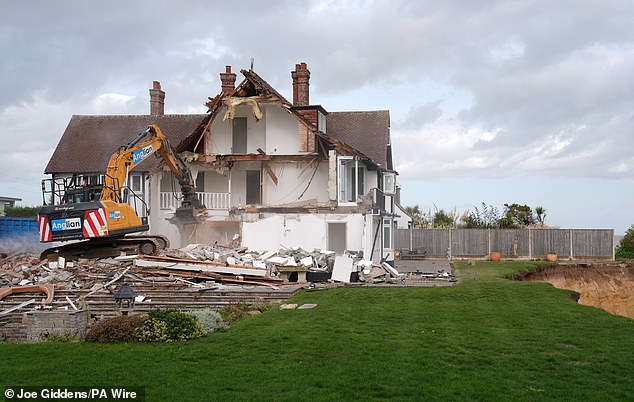
The idyllic clifftop homes, once symbols of affluence, are now precariously perched on the edge of destruction, with many succumbing to the relentless power of the sea. This winter alone has seen four homes already demolished, with demolition work slated to begin on another six imminently.
One such victim is 89-year-old Shelley Cowlin, who recently saw her home of 48 years reduced to rubble. Forced to relocate to temporary accommodation, Mrs. Cowlin expressed her profound distress at the behaviour of the onlookers. “We don’t want people relishing in glee at the tragedy of other people,” she stated, recounting how some visitors had shamelessly pretended to be her gardener or grandchildren to gain entry to her property.
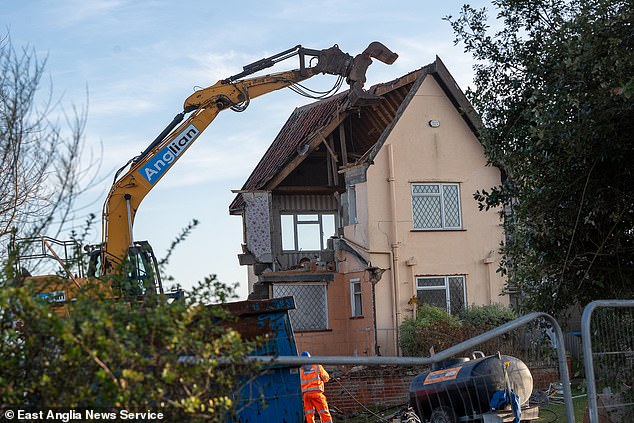
“We had one fellow deciding to remove my ornamental flower pots and then another guy decided he was my so-called gardener and he was not,” Mrs. Cowlin told the BBC, her voice laced with disbelief. “I have a very nice gardener and it was not him. I don’t understand the mentality. I really do feel they must be a bit peculiar. Why do you want to take photographs of houses that have been demolished. It’s just not on.”
A steady stream of day-trippers has been observed parading up and down North End Avenue, the epicentre of the erosion crisis, armed with cameras and smartphones to capture the demolition work. The situation has escalated to the point where some individuals are even flying drones to capture aerial footage of the demolitions, which are then promptly uploaded online. This brazen activity defies a strict Civil Aviation Authority ban on drone flights in the area, a measure put in place due to the proximity of the Sizewell power station.
A Community in Heartbreak
The emotional toll on the residents is palpable. A villager, who wished to remain anonymous, described the situation as “disgusting” and called for greater respect from the visitors. “People should have some respect,” they urged. “There are people who have lived here for decades who are losing their homes. It is a deeply personal thing for them. They are losing years of happy memories as well as their homes. It is just heartbreaking. They don’t deserve to be gawped at.”
Bill Seale, the vice chairman of the Aldringham-cum-Thorpe parish council, echoed these sentiments, describing the scene as “pretty horrific.” He highlighted the distress experienced by homeowners forced to move their possessions while being subjected to the stares of onlookers. “One woman whose house was in the firing line was told to move out all her possessions and she had to put up with people passing and staring at her as she was putting things in her car,” he recounted.
The Financial and Emotional Ruin of Coastal Erosion
The financial burden on those losing their homes is also immense. While residents receive a £6,000 grant to assist with moving their belongings, this amount is often insufficient to cover removal fees. The cost of demolition itself can be as high as £60,000, a devastating expense for individuals already grappling with the loss of their homes and cherished memories.
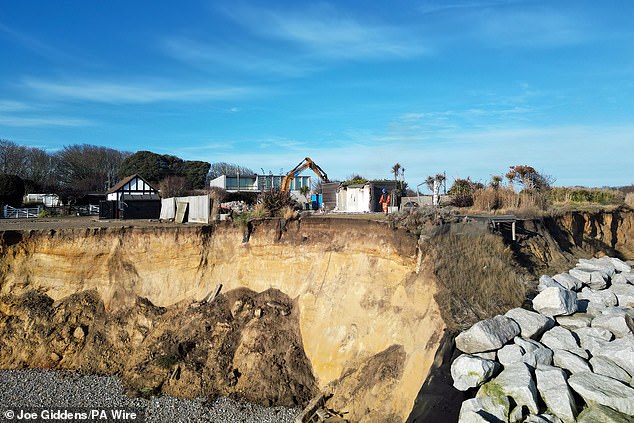
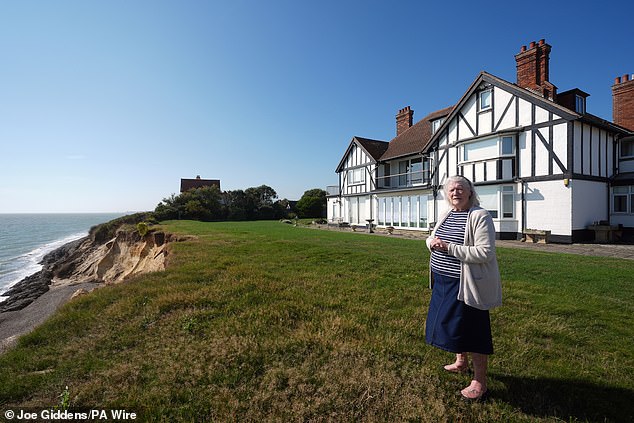
Shirley Tilbrook, the parish council clerk, expressed her frustration at the inability to deter visitors. “There have been lots of people down here looking at what is going on which tends to be hurtful for the people involved,” she stated. “We are trying to keep people away but we can’t stop them from coming down.”
Jean Flick, 88, is another resident facing the heartbreak of losing her four-bedroom house, a property that would have been worth up to £1.7 million had it not been for the encroaching sea. Speaking before the demolition of her home began in October, she expressed the deep emotional pain of losing her home. “No compensation, we have to pay for it to be pulled down and my heart will just break because it’s my home,” she said. “I know a lot of people have this problem (on) the coast and I sympathise with them because, until it happens to you, you don’t realise the emotion that goes into the fact you’re going to lose your home.”
Thorpeness: A Dream Turned Nightmare
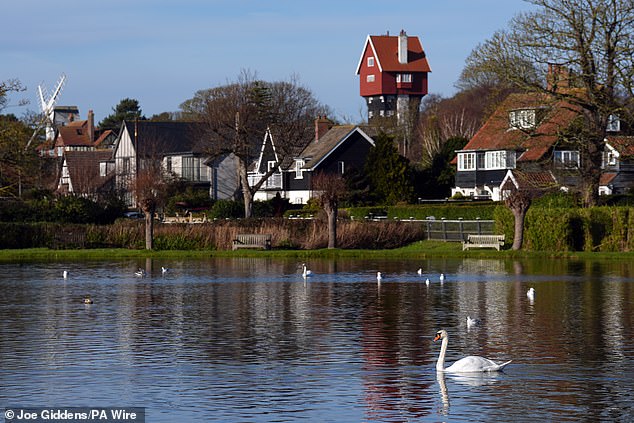
Thorpeness, originally conceived as a charming fishing hamlet and a holiday playground by Scottish barrister Glencairn Stuart Ogilvie, is now a community grappling with a devastating environmental crisis. The village’s unique features, including the shallow Thorpeness Meare, inspired by J.M. Barrie’s Neverland, now stand as poignant reminders of a past that is rapidly being swallowed by the sea.
The scale of the crisis has prompted community meetings, with over 150 people attending a recent gathering organised by Suffolk Coastal MP Jenny Riddell-Carpenter. The MP described the losses as “soul destroying” and noted the alarming acceleration of erosion since Christmas. Residents have made valiant efforts to protect their homes with sandbags, but these measures have largely proven futile against the relentless force of nature.
East Suffolk Council, responsible for managing 48 miles of coastline, allocated £750,000 for sea defences last year. A council spokesperson acknowledged the immense difficulty faced by homeowners and urged visitors to exercise consideration and avoid the affected area. “This is an incredibly difficult time for homeowners facing demolition and for all Thorpeness residents,” the spokesman stated. “We would urge people to be considerate to the local community and refrain from visiting the affected area wherever possible.”