Strengthening Security Partnerships: U.S. and African Nations Collaborate for Regional Stability
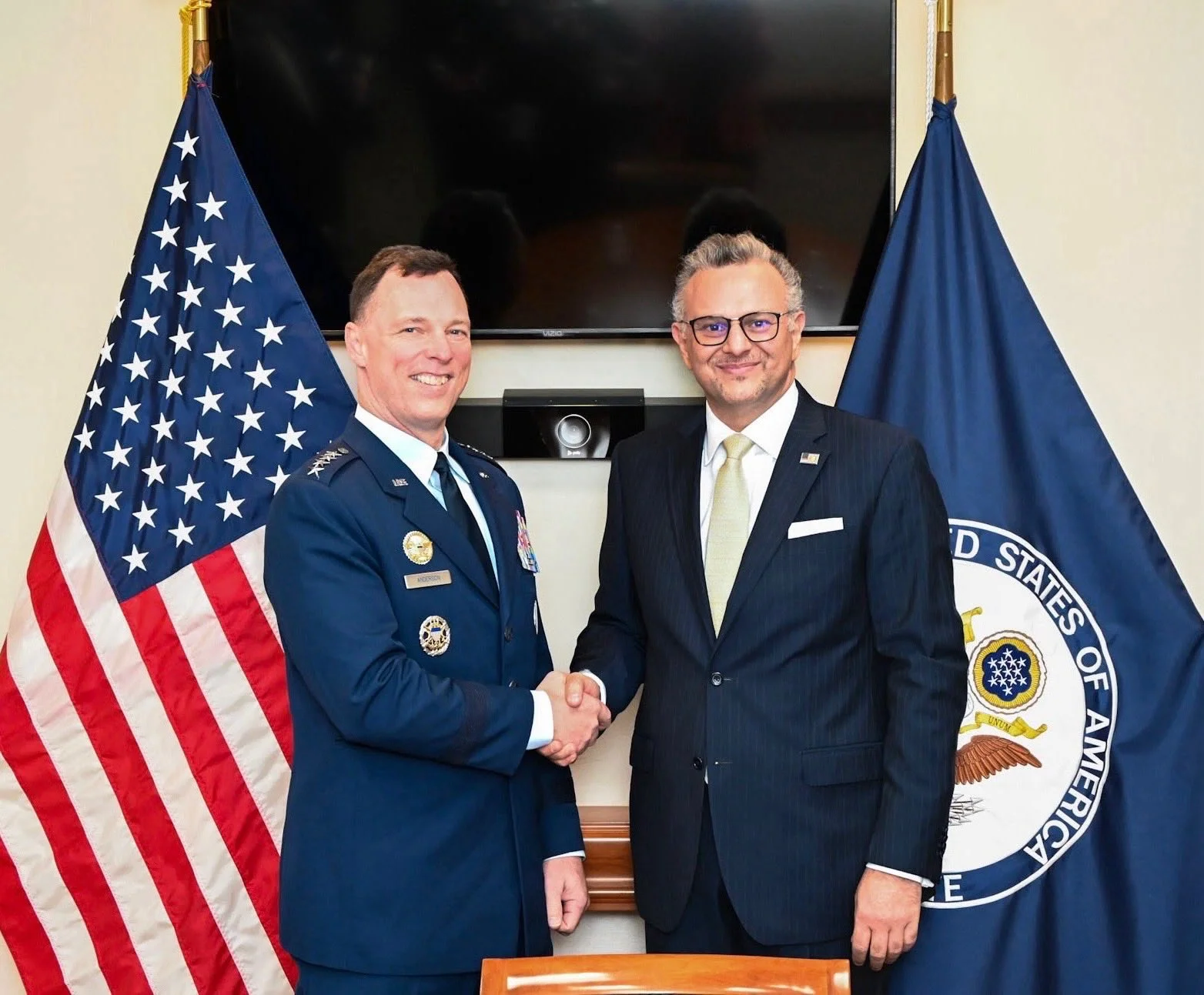
A recent high-level meeting between Massad Boulos, President Donald Trump’s special advisor for African and Arab affairs, and General Dagvin Anderson, the commander of the United States Africa Command (AFRICOM), has underscored the deepening security cooperation between the United States and African nations. The discussions focused on enhancing joint efforts to promote peace and security across North Africa, with specific attention given to upcoming multinational military exercises.
General Anderson, who assumed leadership of AFRICOM on August 14, 2025, has been actively engaged in fostering these critical partnerships. His meeting with Advisor Boulos highlighted the strategic importance of collaborative security initiatives in addressing regional challenges.
“This week, I met again with General Anderson for a discussion on U.S.-Africa security partnerships,” stated Massad Boulos on Wednesday, March 25. “We spoke about our joint efforts to strengthen peace and security across North Africa, including the upcoming African Lion exercise in Morocco and Flintlock exercise in Libya that promote regional coordination and cooperation.”
The emphasis on exercises like African Lion and Flintlock signals a commitment to improving interoperability and readiness among partner nations. These large-scale drills are designed to simulate real-world scenarios, allowing military forces to train together, share best practices, and build mutual trust. Such collaboration is crucial for effectively combating a range of security threats, from terrorism to illicit trafficking, and for ensuring regional stability.
General Anderson’s commitment to engaging with key African partners was evident in his visit to Morocco on October 20, just two months after taking command of AFRICOM. During this visit, he held significant discussions with high-ranking Moroccan officials, including Abdellatif Loudiyi, the minister delegate in charge of National Defense Administration, and General Mohammed Berrid, the inspector general of the Royal Armed Forces and commander of the Southern Zone. These meetings served to reinforce the strong defense relationship between the U.S. and Morocco and to coordinate future security endeavors.
African Lion 2026: A Cornerstone of Joint Military Training
The upcoming African Lion 2026 military exercise is a prime example of the robust cooperation between the U.S. and Moroccan armed forces. Scheduled to run from April 20 to May 8, 2026, this significant event will involve a comprehensive range of training activities across multiple locations in Morocco, including Agadir, Tan-Tan, Kenitra, and Benguerir.
The scale and scope of African Lion are designed to test and enhance the capabilities of all participating forces in areas such as:
- Combined Arms Maneuvers: Integrating various military branches and capabilities for coordinated operations.
- Logistics and Sustainment: Practicing the complex logistical support required for sustained military operations.
- Intelligence, Surveillance, and Reconnaissance (ISR): Enhancing the ability to gather and analyze critical information.
- Counter-terrorism Operations: Training to effectively respond to and neutralize terrorist threats.
- Humanitarian Assistance and Disaster Relief (HA/DR): Preparing for joint responses to humanitarian crises.
Preparations for the 22nd edition of this vital exercise have been underway, with Agadir hosting a crucial planning meeting from February 2 to 6. This preparatory phase is essential for ensuring the smooth execution of the exercise and for maximizing its training value for all involved parties. The success of African Lion not only strengthens the capabilities of the U.S. and Moroccan militaries but also contributes to the broader security architecture of the region.
The Strategic Importance of AFRICOM’s Engagement
AFRICOM’s role in fostering security partnerships across the continent is multifaceted. Beyond military exercises, the command works to build the capacity of African partner nations, promote professional military education, and support efforts to counter violent extremism and transnational threats. The ongoing dialogue between U.S. officials like Massad Boulos and General Dagvin Anderson highlights the strategic imperative of these engagements. By investing in these partnerships, the United States aims to empower African nations to take greater ownership of their security challenges, leading to a more stable and prosperous continent. The continued emphasis on joint training and strategic dialogue signals a long-term commitment to mutual security interests and a shared vision for a peaceful North Africa.