Ghana Takes a Leap Forward in Public Financial Management with Value for Money Office Bill Approval
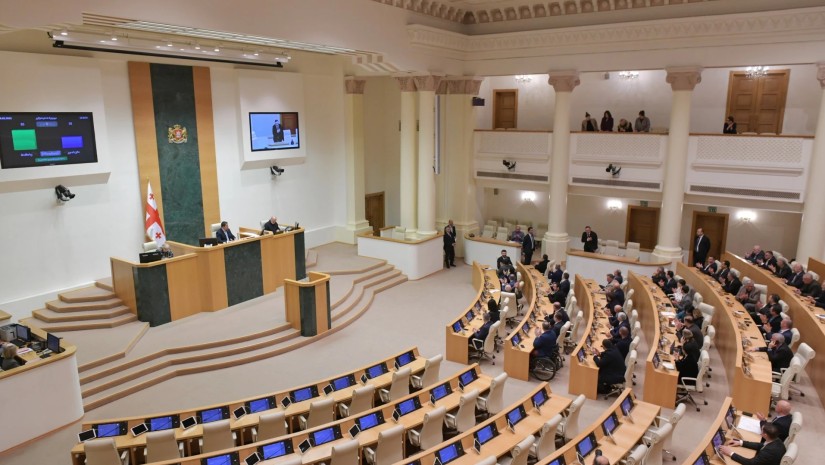
Ghana’s Parliament has officially passed the Value for Money Office Bill, 2026, a landmark piece of legislation poised to fundamentally reshape the nation’s approach to public financial management. This pivotal development signals a robust commitment to enhancing transparency, efficiency, and accountability across all government expenditures and procurement processes.
The bill, having successfully navigated its third reading and received final approval, establishes a dedicated Value for Money Office. This specialized entity will be tasked with the crucial roles of regulating, monitoring, coordinating, and conducting thorough value-for-money assessments on behalf of the government.
Addressing Long-Standing Inefficiencies
The introduction of this legislation, presented by the Minister for Finance, Dr. Cassiel Ato Baah Forson, directly confronts persistent issues that have plagued the public sector. These include concerns over inflated contract values, significant cost overruns on projects, the abandonment of vital infrastructure, and a general weakness in accountability mechanisms.
A detailed memorandum accompanying the bill shed light on the deep-seated inefficiencies embedded within the nation’s expenditure management framework. It highlighted that while existing laws, such as the Public Procurement Act and the Audit Service Act, primarily focus on adherence to procedural guidelines, they fall short in evaluating whether public funds are truly delivering optimal value for the taxpayer.
Furthermore, the memorandum pointed to a troubling inconsistency in pricing across various Ministries, Departments, and Agencies (MDAs), as well as Metropolitan, Municipal, and District Assemblies (MMDAs). This disparity is often attributed to the absence of standardized cost benchmarks, creating fertile ground for potential mismanagement.
The situation was further exacerbated by the cessation of operations by Crown Agents, an organization that previously conducted essential value-for-money assessments. Their departure left a significant institutional void, which the newly established Value for Money Office is designed to fill.
The Mandate of the Value for Money Office
Upon its formal establishment, the Value for Money Office is expected to address this critical gap by implementing a structured and comprehensive framework. The core objective is to ensure that every unit of currency spent by the government yields the maximum possible benefit, measured across key dimensions of efficiency, effectiveness, equity, and sustainability.
A key function of the Office will be to issue Value for Money Certificates prior to the awarding of major contracts. This proactive measure aims to prevent potentially wasteful expenditure from the outset. The Office will also be responsible for monitoring compliance with these assessments and will have the authority to enforce sanctions where necessary, ensuring that accountability is upheld.
The government has drawn parallels with international best practices, noting that similar frameworks are successfully implemented in countries like the United Kingdom, Canada, and the United States. In these nations, institutions such as the National Audit Office and the Government Accountability Office play vital roles in safeguarding the prudent use of public funds. The adoption of this model in Ghana is anticipated to align the country with global standards and, consequently, enhance investor confidence.
Parliamentary Deliberations and Recommendations
During the parliamentary deliberations, the Finance Committee of Parliament emphasized the critical importance of maintaining comprehensive and accessible records of all value-for-money assessments. Members underscored that robust documentation would serve as a reliable database, invaluable for informing future procurement decisions, shaping effective policy formulation, and strengthening parliamentary oversight. Moreover, it would act as a safeguard against the loss of critical institutional knowledge.
The Committee also highlighted the need for the Office to adopt a strong preventive approach. This would involve providing essential technical advisory services and implementing capacity-building initiatives for public institutions. To ensure a uniform understanding and application of value-for-money principles, the Committee recommended the development of accredited training programs and practical guidelines tailored for public sector entities.
Ensuring the Office’s Independence and Effectiveness
A significant point of discussion revolved around the funding of the Value for Money Office. The Committee stressed that the Office’s effectiveness and its ability to operate with genuine independence are intrinsically linked to receiving adequate and predictable financial resources.
Initially, the Committee proposed that the Office be primarily funded through direct budgetary allocations and that it should be prohibited from contracting loans. However, this specific recommendation was ultimately rejected by Members of Parliament during the plenary session’s consideration of the bill.
Another recommendation from the Committee, which was successfully incorporated into the bill, stipulated that neither the Office nor its designated personnel should be permitted to receive gifts. This measure aims to further insulate the Office from undue influence and maintain its integrity.
The passage of the Value for Money Office Bill represents a significant stride for Ghana, signaling a strengthened resolve to ensure that public resources are managed with the utmost diligence and deliver tangible benefits to its citizens.