From Stuttering Child to Leading Marine Nematologist: Buyani Mazeka’s Remarkable Journey
Buyani Mazeka’s early life was marked by a severe stutter that compelled him to communicate through writing, often in a mirrored script. This challenge led him to repeat a grade before the underlying issue was identified. Today, at 32, Mazeka stands as a postdoctoral research fellow in the University of Cape Town’s (UCT) Department of Biological Sciences. His academic achievements are extraordinary: he is only the second person in South Africa to complete a PhD in marine nematology, a specialized field focusing on microscopic aquatic worms. His doctoral research, under the guidance of Dr. Natasha Karenyi, investigated the impact of human activities on aquatic life in False Bay, utilizing free-living nematodes as sensitive indicators of environmental shifts. Mazeka is set to graduate on April 2nd, marking a significant culmination of years of dedication and perseverance.
A Spark Ignited by Television and Opportunity
Mazeka’s fascination with the animal kingdom was initially sparked by a Sunday television program he religiously watched in his hometown of Mandeni, KwaZulu-Natal. This early interest bloomed into a formal pursuit when he enrolled at the University of Zululand in Empangeni. It was there that he first encountered the concept of studying animals as an academic discipline, leading him to choose zoology as his field of study.
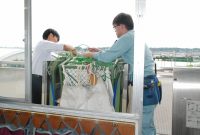
Until 2016, Mazeka’s world was largely confined to KwaZulu-Natal. A pivotal moment arrived when he participated in a research program facilitated by the South African Institute for Aquatic Biodiversity (SAIAB). This initiative was designed to expose students from historically disadvantaged universities to the broader spectrum of marine science. It was through this program that Mazeka secured a coveted spot on a two-week research cruise organized by UCT. This experience proved transformative, as it was his first encounter with UCT staff and students. He candidly admits that UCT was unknown to him and many of his peers during university applications, as their options were typically limited to institutions within KwaZulu-Natal through a centralized application system.
The research cruise fundamentally altered the course of his academic and professional life. Inspired by his newfound exposure, Mazeka reached out to Dr. Karenyi after spotting an advertisement for a PhD project that resonated deeply with his interests. Their initial meeting, planned for thirty minutes, extended much longer, a testament to their shared passion and connection. Dr. Karenyi encouraged him to achieve strong results in his master’s degree if he aspired to join UCT. Heeding her advice, Mazeka excelled, graduating cum laude – his first academic distinction at any level.
Navigating Grief and Financial Hardship During Doctoral Studies
Mazeka arrived in Cape Town in July 2021 to commence his PhD, a city entirely new to him, having never lived in an urban environment before. He drew parallels between his personal journey and his father’s stoic nature, recalling in his dissertation how his father, a man who seldom displayed emotion, managed even the most challenging circumstances with a smile. Mazeka reflected, “You made even the most challenging circumstances seem manageable, until I grew up and saw the world differently. It always amazed me how you could smile through any situation, even in your final hours, reassuring me that you were fine, even as those around you panicked. I understand now that ‘pillars must stand tall, no matter the circumstances, for if they bend or show weakness, everything will crumble.’”
Tragically, just three weeks after his arrival, his father passed away. As the sole son, Mazeka was thrust into the role of breadwinner overnight. Throughout his doctoral studies, he skillfully balanced intensive research with demonstrating, tutoring, and working at the Bolus Herbarium. These roles not only provided crucial professional development but also generated essential income to support his family back home.
The challenges did not end there. Mazeka lost two more father figures during his PhD, and the financial constraints prevented him from traveling to KwaZulu-Natal for their funerals. He shares these experiences not for sympathy, but to highlight a pervasive reality within academia. Funding often arrives significantly delayed into the academic year, leaving many students struggling with food insecurity. Mazeka, along with colleagues on the postgraduate committee, initiated efforts to establish a food drive. This endeavor eventually led to the creation of a UCT foodbank by Dr. Mohammed Kajee, an initiative that continues to operate today.
“You can’t study with an empty stomach,” Mazeka stated emphatically. “And believe it or not, there are students here who come during the day with an empty stomach and leave with an empty stomach afterwards.” This observation is not a mere anecdote; it is a stark depiction of a systemic issue that has become alarmingly normalized.
Recognizing and Overcoming Systemic Inequalities
Mazeka attributes his profound understanding of systemic inequality to a single piece of advice from a master’s supervisor, who identified his writing as a weakness and suggested extensive reading as the sole remedy. This advice prompted him to finish his first book, an act that opened his eyes to South Africa’s history of engineered disadvantage. He realized that the challenging conditions of his upbringing were not natural occurrences but the result of deliberate human planning. “Humans had a meeting one day,” he remarked, “and came up with a plan to actually disadvantage particular people who were not even born.”
He articulates the practical implications of this realization with clarity. He contrasts the experiences of a student educated in isiZulu in a public school with one from a Cambridge-curriculum private school, both arriving at university with the expectation of a level playing field. “The gap is just too much,” he asserted. “We are expected, when we come here at the university, that the ground is levelled. Compete. But I’m still learning how to communicate in English; how to write properly in English. I have not used a microscope before.”
Despite these formidable obstacles, Mazeka maintains an aspirational outlook. “When it comes to dreaming, the ceiling is not there anymore. All I can see is just the stars,” he declared.
His postdoctoral research is set to expand upon his nematode studies, involving collaborations with Professor Federica Semprucci in Italy and Professor Agnes Muthumbi at the University of Nairobi. He notes that opportunities continue to emerge, many of which he never knew existed. He humorously tells friends that if a list of Africa’s top scientists is published in 20 years and his name is absent, they should question the list’s accuracy.
While this statement carries a confident assertion of his capabilities, it is underpinned by a quieter, more profound realization: “Every milestone that you make is a victory,” he observed, “because you are not supposed to be there in the first place.”
Mazeka submitted his PhD dissertation in February 2025, a decade after arriving at the University of Zululand with an incomplete understanding of the academic possibilities. His mother, who had wisely cleared the room for his Sunday television viewing, was undoubtedly right to recognize the significance of his early passions.
Copyright 2026 University of Cape Town. All rights reserved. Distributed by AllAfrica Global Media.