Europe Moves Towards Broad PFAS Restriction Amid Health and Environmental Concerns
The European Chemicals Agency (ECHA) has taken a significant step towards implementing one of the most comprehensive chemical regulations in Europe, signalling its support for a wide-ranging restriction on per- and polyfluoroalkyl substances (PFAS), commonly referred to as “forever chemicals.” This move marks a pivotal shift from merely managing the risks associated with these persistent pollutants to actively pursuing their phase-out, while simultaneously aiming to mitigate potential disruptions to vital industries that currently depend on them.
The impetus for this ambitious ban originated from a joint proposal by Sweden, Denmark, Germany, Norway, and the Netherlands in 2022, driven by the increasingly undeniable evidence of the harmful effects of PFAS contamination on both human health and the environment.
PFAS, first synthesized in the 1940s, have found widespread application due to their exceptional stability, low friction properties, and their remarkable ability to repel water and fats. These characteristics make them indispensable in a vast array of products and industrial processes, ranging from everyday items like non-stick cookware to critical components in clean technologies and the manufacturing of semiconductors. Their designation as “forever chemicals” stems from their inherent resistance to degradation in the environment. A report released by the EU’s environment agency in 2024 confirmed the pervasive presence of these substances in European waterways, including rivers and lakes.
The widespread presence of PFAS extends to the human body. In a stark illustration of this pervasive contamination, several European Commissioners and ministers voluntarily underwent testing, with all participants returning positive results for PFAS in their blood. Furthermore, the persistent chemical has also been detected in breast milk, raising profound concerns about intergenerational exposure.
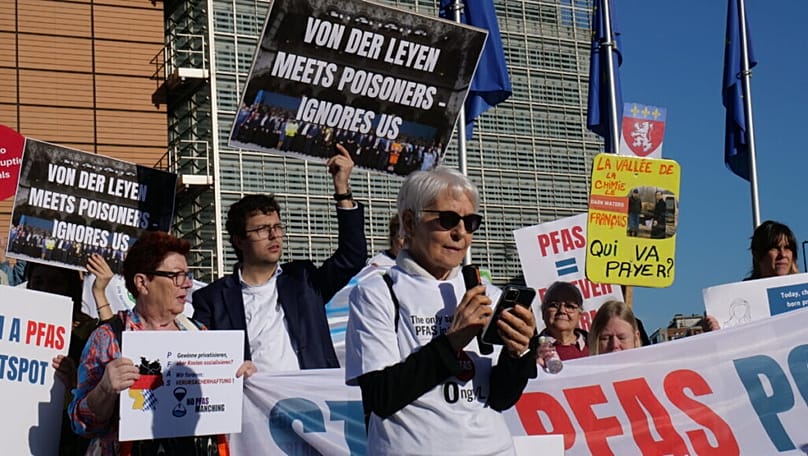
Communities bearing the brunt of PFAS pollution have recently voiced frustration at being denied a meeting with European Commission President Ursula von der Leyen. This marks the third such refusal since 2023, with her cabinet citing “scheduling conflicts.” A delegation of 26 residents from areas heavily impacted by PFAS contamination across France, Germany, Italy, Belgium, Denmark, and the Netherlands travelled to Brussels. Supported by the environmental non-governmental organisation the European Environmental Bureau (EEB), they hoped to present firsthand accounts of how these “forever chemicals” are impacting their health and daily lives. In the absence of a scheduled meeting, the group organized a demonstration outside the Commission’s headquarters, calling for more robust measures to combat PFAS pollution.
ECHA Backs Restriction, Highlights Socio-Economic Considerations
The ECHA’s risk assessment committee, based in Helsinki, has concluded that PFAS pose persistent and potentially severe risks to both human health and the environment, asserting that current regulatory frameworks are insufficient to address these threats. Roberto Scazzola, the chairperson of ECHA’s risk assessment committee, emphasized that the agency’s scientific findings are unequivocal, demonstrating the potential risks PFAS present to people and the ecosystem.
“An EU-wide restriction is, therefore, an effective measure to reduce these risks,” Scazzola stated. “If derogations are allowed, the risk assessment committee recommends measures to minimise PFAS emissions.”
However, the socio-economic analysis committee adopted a more measured approach, even while endorsing the overarching direction of the proposed restriction. This committee stressed the necessity of carefully considered exemptions for industries where viable alternative substances have not yet emerged.
The EU’s proposed PFAS restriction is primarily motivated by public health imperatives. Nevertheless, critics argue that focusing solely on health concerns risks overlooking the broader ramifications, which could include significant industrial disruption in certain sectors. PFAS are crucial for the production of clean technologies essential for the ongoing energy transition. For instance, fluoropolymers, a key category of PFAS, are vital for the manufacturing of solar panels and electric vehicle batteries, and scalable, credible substitutes are still in development.
More broadly, PFAS are fundamental to the functioning of modern industrial systems. Their applications span from ubiquitous consumer goods to highly specialized uses in defence, electronics, and advanced manufacturing, making them integral to both daily life and strategic sectors underpinning the digital and green transitions.
Commission Holds the Decisive Authority
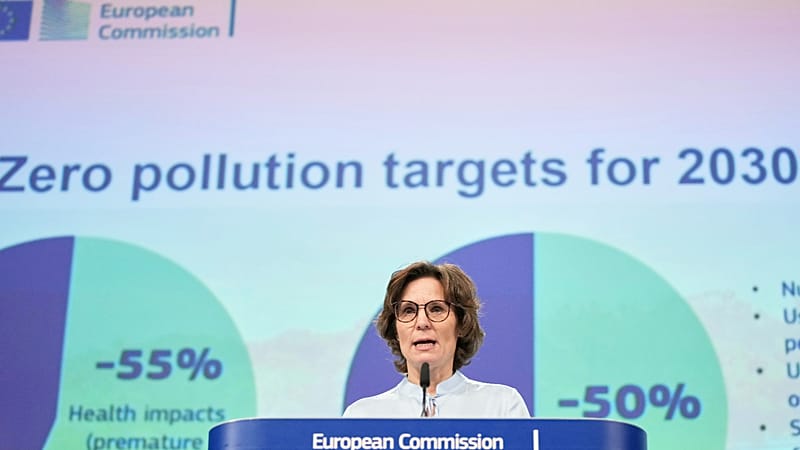
Environment Commissioner Jessika Roswall has underscored that addressing PFAS pollution is a “priority” and has welcomed the ECHA’s work. The agency has launched a public consultation to refine the final proposal before it is submitted to the European Commission by the end of the year. The EU’s executive arm will then deliberate on whether to translate these recommendations into legally binding regulations.
The EU executive is expected to propose specific exemptions, taking into account input from environmental organizations, industry stakeholders, and civil society. These potential derogations are likely to be shaped by considerations of the broader socio-economic impact on industry, according to a Commission official.
“We support the transition away from forever chemicals,” Roswall commented. “As always, any new rules need to be simple by design and give certainty, clarity, and predictability for consumers as well as businesses. We also need to ensure a Single Market approach to avoid national fragmentation.”
Christine Hermann, a policy officer for chemicals at the EEB, described the ECHA’s opinion on PFAS as “an important milestone.” She expressed her hope that this will be followed by an “ambitious proposal” from the EU executive for a “comprehensive restriction on PFAS.” The ECHA serves as an EU agency dedicated to ensuring the safe use of chemicals, overseeing the technical and administrative aspects of implementing EU legislation concerning the registration, evaluation, authorization, and restriction of chemical substances.