The Polisario Front’s New Diplomatic Strategy
After a tour of several countries in Southern Africa, the Polisario Front is once again turning its attention to South Africa. This time, the group’s foreign affairs chief made an urgent trip to Paris to deliver a message to South African President Cyril Ramaphosa. The message contained new proposals for resolving the long-standing issue of Western Sahara.
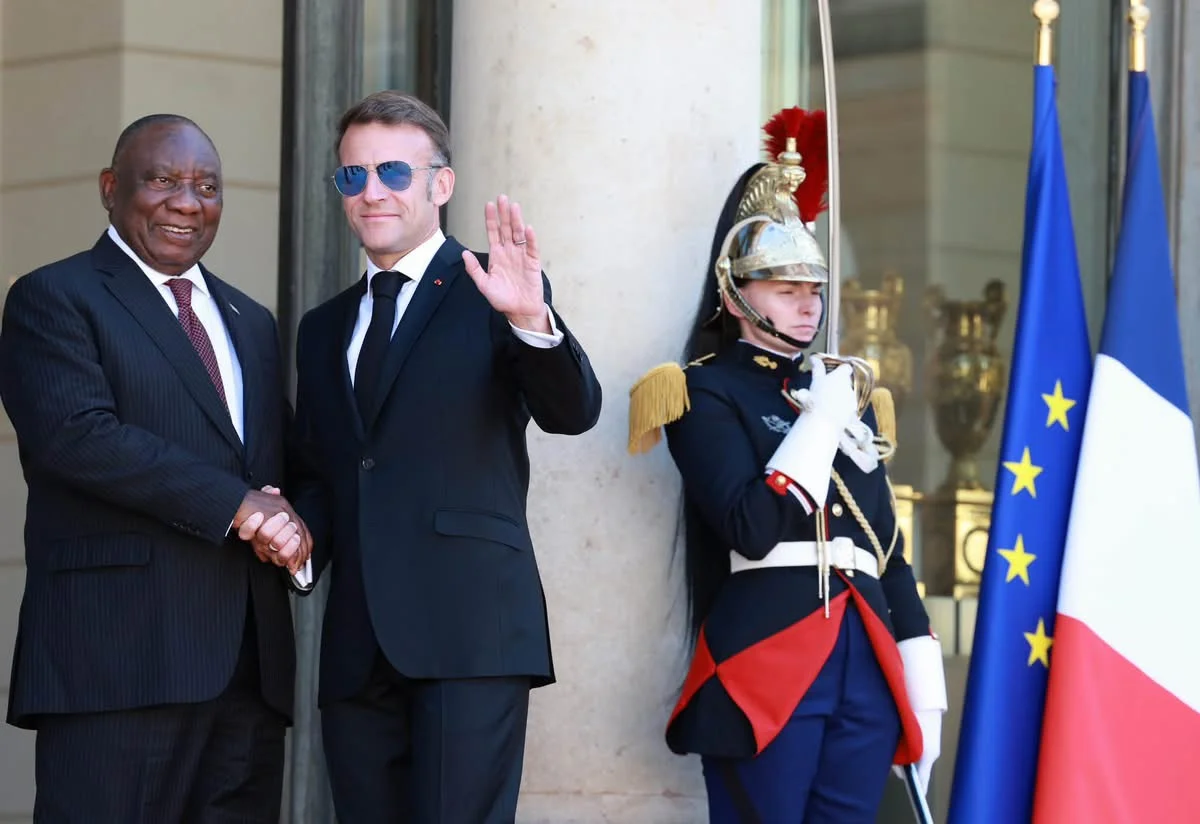
The meeting took place on Friday, July 10, when South African President Cyril Ramaphosa received Mohamed Yeslam Beissat, the Polisario Front’s representative, in Paris. The purpose of the visit was to deliver a written message from Brahim Ghali, the leader of the Polisario Front. Contrary to what was implied in the Front’s statement, the meeting did not occur in Pretoria but in the French capital, where Ramaphosa was on an official visit until July 12.
According to a source familiar with the matter, the meeting had a more specific purpose than just exchanging messages. The source revealed that Beissat’s mission was to persuade Ramaphosa to relay a Polisario initiative to French President Emmanuel Macron, who was scheduled to meet with Ramaphosa at the Élysée Palace later that day.
A Strategic Move to Engage France
The trip by Beissat had a clear objective: to convince Ramaphosa to present a Polisario-drafted initiative to Macron before promoting it more broadly on the international stage. This move suggests a shift in the Polisario Front’s approach, as it seeks to gain support from key Western partners.
The Front is reportedly considering softening certain aspects of its diplomatic rhetoric, which has long remained rigid. This shift comes as the separatist movement faces growing diplomatic challenges on the international stage. Several recent developments have contributed to this situation.
The projectile attacks on Es-Smara on May 5 revived criticism of the Polisario from the United Nations and several countries. More recently, a meeting in Washington between a delegation from the Sahrawi Movement for Peace (MSP), a rival organization to the Front, and Mike Waltz, the United States’ permanent representative to the United Nations, underscored the emergence of alternative interlocutors on the Sahara issue.
Turning to South Africa
Facing an increasingly unfavorable diplomatic environment, the Polisario is now seeking to revive its political initiative by relying on South Africa, one of its main international backers. Although Pretoria’s influence has waned among several African states and its image has been tarnished by repeated episodes of xenophobic violence targeting African nationals in recent years, it remains an influential diplomatic actor within organizations such as the African Union and BRICS, as well as in a number of foreign capitals.
The move also reflects Algeria’s growing difficulty in shaping recent developments surrounding the Sahara issue. According to several observers, while Algiers remains the Polisario’s principal supporter, it no longer has the capacity on its own to influence the course of international discussions.
A Strategic Approach with Precedent
The strategy is not without precedent. In January 2024, the UN Secretary-General’s Personal Envoy for Western Sahara, Staffan de Mistura, traveled to South Africa to explore a possible role for Pretoria in the political process, an initiative Morocco firmly rejected at the time.
The Paris meeting between Mohamed Yeslam Beissat and Cyril Ramaphosa therefore appears to be part of a broader Polisario strategy to reactivate its diplomatic networks in southern Africa and use Pretoria as a channel to reach Western partners, beginning with France. This approach highlights the group’s determination to navigate the complex geopolitical landscape and find new avenues for advancing its cause.