Government’s Oil Price Cap Compensation Plan Faces Legal Challenges
The government’s plan to compensate refiners for losses incurred under the oil price cap policy has become increasingly complex due to an ongoing prosecution investigation. The initiative involves artificially setting market prices and covering any resulting losses through public funds. However, the recent indictment of refiners on charges of collusion has made it difficult for the Ministry of Trade, Industry and Resources to accurately assess the scale of these losses.
In March, the government froze wholesale prices for refiners and promised to cover any financial losses using tax revenues. A preliminary budget of approximately 4.2 trillion Korean won was allocated for this purpose. The ministry is now preparing to establish a “settlement committee” this month to calculate the extent of the losses.
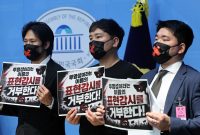
However, the Seoul Central District Prosecutors’ Office, specifically its Fair Trade Investigation Division (led by Na Hee-seok), has indicted four major domestic refiners—HD Hyundai Oilbank, SK Energy, GS Caltex, and S-Oil—as well as four employees for allegedly violating the Fair Trade Act by colluding on oil prices following the Middle East war. The prosecution stated that it would provide relevant data to the ministry to ensure that the preliminary budget is used appropriately. This move directly targets the issue of loss compensation, raising doubts about whether refiners actually suffered significant losses.
Who Is Right About Cost Calculation?
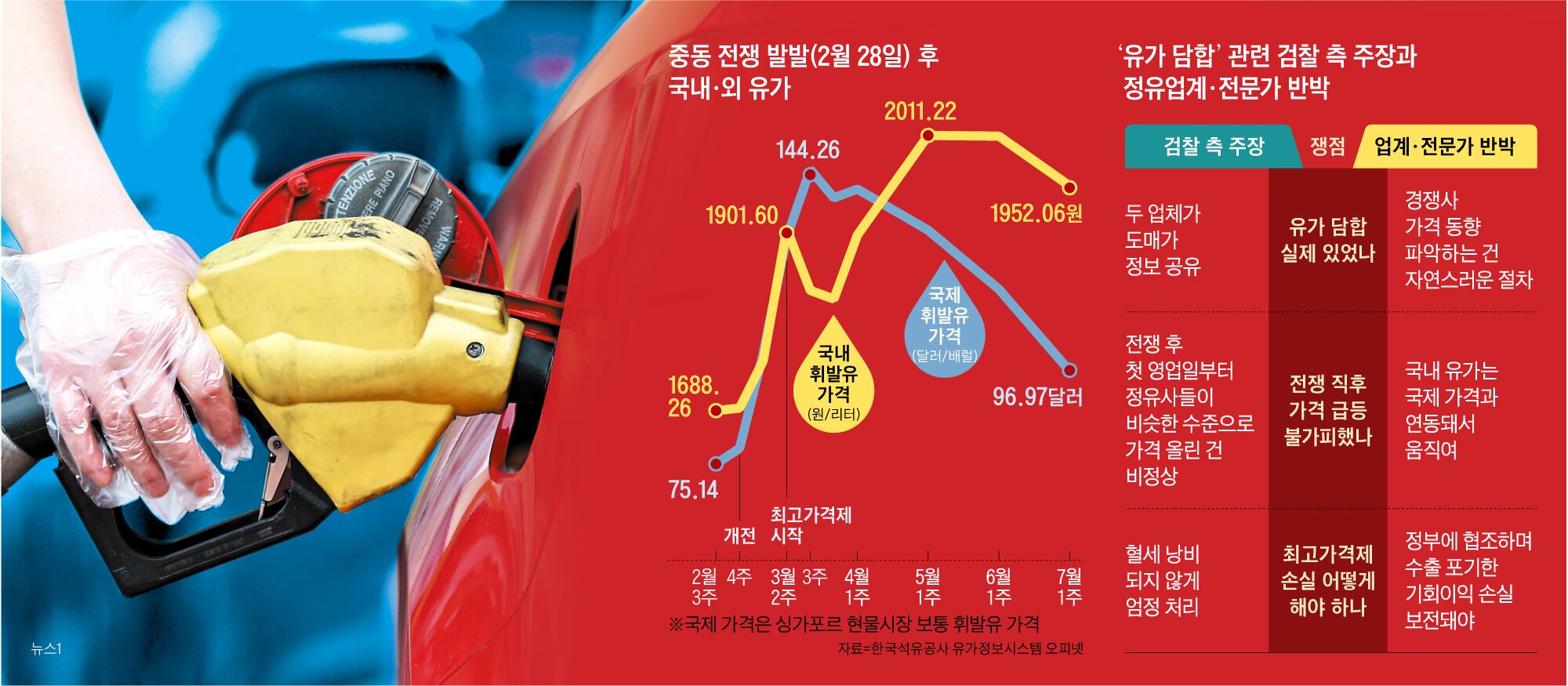
A key point of contention between the prosecution and the industry lies in how losses are calculated. The prosecution argues that refiners inflated their costs, claiming that domestic prices are not directly tied to international product prices (MOPS). It pointed out that even when MOPS fell by over 20 Korean won, refiners often kept domestic prices frozen or increased them. During the Russia-Ukraine war, international price hikes took 1–2 weeks to reflect domestically, but during the Middle East conflict, refiners raised prices immediately on the first business day—a practice cited as evidence of collusion. The prosecution also claims to have internal refiner data showing profits during the price cap period, arguing that loss calculations must be stricter if costs were not properly reflected.
The industry, however, argues that the prosecution has overlooked the unique nature of the supply chain shocks. During the Russia-Ukraine war, domestic prices and MOPS showed little immediate change, but this time, the blockade of the Hormuz Strait made price surges inevitable. An industry source explained, “In a liberalized market, companies decide when and how to reflect prices. If they hadn’t raised prices immediately after the war, a larger surge would have been unavoidable 1–2 weeks later.”
Disagreements also exist over the definition of losses. The prosecution focuses on “profits relative to manufacturing costs,” while the industry emphasizes “opportunity costs lost due to government policy.” Without the price cap, refiners could have exported or sold domestically at higher international market rates—their claimed loss.
Industry Ministry Staff: “We Might Face Audits for Overcompensating”
The prosecution’s investigation is putting pressure on the ministry. Originally, the ministry planned to form a settlement committee, calculate losses, and disburse funds accordingly. However, with the prosecution threatening to submit data questioning the losses themselves, ministry staff are worried about potential audits or investigations if excessive compensation is provided. Reducing the compensation scale is also risky, as refiners could sue for breach of fiduciary duty to shareholders.
The government, which introduced price controls while promising loss compensation, now faces self-inflicted hurdles in fulfilling its pledge. The situation highlights the challenges of balancing regulatory oversight with economic support, especially in times of crisis.
Additional Membership Offers
For those interested in accessing more content, there are several membership options available. For instance, a monthly membership offers access to news and other publications at a discounted rate for newspaper readers. Another option includes reading 8 different newspapers and magazines worth up to 55,000 won, along with receiving 7,000 points that can be used like cash for shopping. These memberships provide added value for regular readers and consumers.