A World on the Brink: The Unfolding of a New Global Conflict
The world is at a critical juncture, teetering on the edge of a conflict that could redefine the geopolitical landscape for generations. Albert Einstein’s ominous warning—“I know not with what weapons World War III will be fought, but World War IV will be fought with sticks and stones”—resonates more than ever as we witness the escalating tensions between major global powers.
The Legacy of Past Conflicts
The aftermath of World War II was marked by a collective commitment to peace and human rights. The horrors of the war, which claimed the lives of approximately 85 million people, led to the creation of the United Nations and the Genocide Convention. These institutions were designed to prevent such atrocities from recurring. However, decades later, the world finds itself facing another potential catastrophe, one that threatens to undo the progress made in international cooperation.
Escalation and Consequences
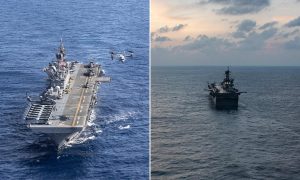
The current conflict involving Iran has brought the world dangerously close to a new global war. What began as a surgical strike has evolved into a protracted struggle, with both the U.S. and Israel finding themselves in a difficult position. The U.S. military, despite its technological superiority, has struggled to contain the threat posed by Iranian drones and missiles. This conflict has exposed the limitations of even the most advanced defense systems, highlighting the unpredictable nature of modern warfare.
Regional Players and Their Roles
Saudi Arabia, a key player in the region, has attempted to navigate the complex dynamics of this conflict. While it hoped to benefit from a regime change in Iran, it has found itself caught in the crossfire. The Gulf Cooperation Council countries, many of which are oil-rich, have been cautious in their responses, fearing further escalation. This war has disrupted their efforts to promote tourism and economic diversification, raising questions about their future trajectories.
For Israel, the conflict has been a sobering reminder of the limits of technology. The Iron Dome, once hailed as an impenetrable defense system, has been overwhelmed by Iranian attacks, leading to significant casualties. The ambitions of a “Greater Israel” remain a contentious issue, with the question of whether this war can be sustained without an off-ramp still unanswered.
The Role of Major Powers
Russia and China have emerged as pivotal players in this conflict. Russia, having weathered economic sanctions, has continued to develop its military capabilities. Its support for Iran is seen as a form of payback for past actions, reminiscent of the U.S. involvement in Afghanistan. China, on the other hand, has a vested interest in maintaining stability in the region, given its reliance on energy resources from the Middle East.
The combination of Iranian drone technology, Chinese satellite capabilities, and Russian intelligence has created a formidable challenge for the U.S. and its allies. This convergence of technologies underscores the complexity of modern warfare, where traditional military superiority may not be enough to ensure victory.
The Broader Implications
The conflict in the Middle East is not just a regional issue; it has global implications. The control of energy resources, particularly in the Strait of Hormuz, is a critical factor in the balance of power. As history has shown, control over access to energy has often been the catalyst for major conflicts.
The international institutions established after World War II, including the United Nations Security Council and the Nuclear Non-Proliferation Treaty, are being tested in unprecedented ways. With the five permanent members of the Security Council either directly involved or taking sides, the effectiveness of these institutions is in question. The very systems designed to prevent conflict are now under strain, raising concerns about their ability to maintain global stability.
The Human Cost
While the world watches and groans under the weight of rising energy costs, ordinary people bear the brunt of the conflict. From Lagos to London to Jakarta, the effects of this war are felt in everyday life. The irony is that those who suffer the most are often the farthest from the decision-making centers where these choices are made.
As we reflect on the words of Einstein, it becomes clear that the stakes are higher than ever. With over 10,000 nuclear warheads in existence, the potential for catastrophic destruction is real. The doctrine of mutually assured destruction has kept the peace for decades, but it is a fragile balance that relies on the wisdom and restraint of those in power.
Should the drums of war beat their final march, the survivors may find themselves living in a world unrecognizable from the one we know today. The legacy of this conflict will be written not by historians, but by the silence that follows. Let us hope that wisdom prevails before it is too late.