Hungarian Opposition Ignites Campaign Against Corruption and Russian Alignment
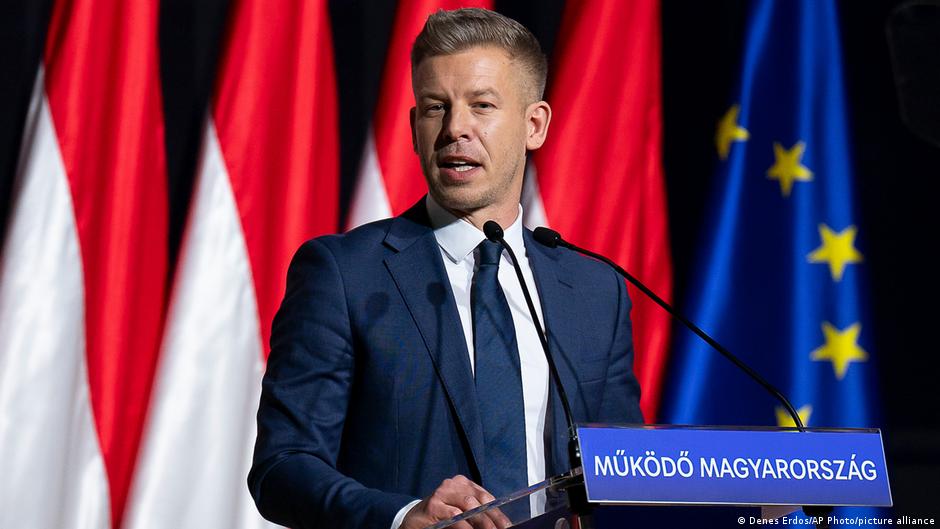
Budapest is on the cusp of a significant political shift, as Peter Magyar and his Tisza party launch their election campaign with a powerful promise to dismantle corruption and steer Hungary back towards its Western European partners. Magyar, a formidable figure who has rapidly emerged as the primary challenger to Prime Minister Viktor Orbán’s 16-year tenure, addressed a fervent crowd in the capital on Sunday, articulating a vision for a more transparent and integrated Hungary.
Magyar’s ascent has been meteoric. Once a member of Orbán’s own Fidesz party, he assumed leadership of the centrist Tisza party in 2024. The party’s name itself, an acronym for the Hungarian words for “respect” (tisztelet) and “freedom” (szabadsag), underscores its core values. Its growing influence was starkly demonstrated in the June 2024 European Parliament elections, where Tisza secured approximately 30% of the vote. Current independent polls indicate a substantial lead for Tisza heading into the April 12th election day, fueling optimism within the party. “We’re standing on the threshold of victory with 56 days left to go,” Magyar declared to his supporters, emphasizing Tisza’s readiness to govern.
A Vision for a Reformed Hungary
At 44 years old, Peter Magyar, a former lawyer, has been a vocal critic of the current government’s economic and social policies. He contends that the Orbán administration has mismanaged the nation’s economy and social services, fostering an environment where corruption has flourished, relegating Hungary to one of the European Union’s poorest member states. “Not only has the Hungarian economy not taken off; it has hit a dead end,” he stated, painting a bleak picture of the current economic landscape.
Beyond domestic concerns, Magyar has also sharply criticized Orbán’s increasingly adversarial stance towards the European Union and his continued close ties with Russian President Vladimir Putin, particularly in light of Russia’s ongoing invasion of Ukraine. Following a series of meetings with European leaders at the Munich Security Conference, Magyar articulated his commitment to ending Hungary’s “drift out of the European Union” under Orbán’s leadership. “Hungary’s place is in Europe,” he asserted, adding, “Not only because Hungary needs Europe, but also because Europe needs Hungary.”
However, Magyar’s vision for a reoriented Hungary is not without its nuances. While advocating for closer EU integration, he has reiterated Tisza’s opposition to any accelerated accession of Ukraine to the bloc. Furthermore, he has indicated that a Tisza government would maintain the border fence, erected by Orbán in 2015, as part of a continued policy of immigration control.
Combating Corruption and Reclaiming EU Funds
Despite these points of divergence with some EU stances, Magyar’s central campaign promise revolves around a resolute fight against corruption and the strengthening of Hungary’s democratic institutions, including its independent judiciary. This pledge is directly linked to the goal of regaining access to billions of euros in suspended EU funding. “It is time to call corruption what it is: theft,” Magyar declared, vowing to implement “total transparency in contracts involving public funds” and to “recover” all funds that Hungary has allegedly been deprived of over the past 16 years.
Magyar’s campaign strategy has focused on engaging with voters in Orbán’s traditional strongholds – the smaller, more conservative towns and villages outside of major urban centers like Budapest. His message resonates with concerns about everyday issues such as low wages and the escalating cost of living. He has also extended a challenge to Orbán for a televised debate, a proposition that has thus far gone unanswered. Magyar characterizes the outgoing prime minister as being adept only at “agitation” and “threats,” and has accused the government of engaging in surveillance of its opponents. “If they can search through my private life, then they can rummage through everyone’s,” Magyar stated, highlighting concerns about privacy and state overreach.
Orbán’s Defiant Stance
Opposition parties and human rights organizations have consistently accused Prime Minister Orbán of undermining democratic principles by stifling dissenting voices within the judiciary, academia, and media, as well as curtailing the rights of minority groups. Recent events, such as the local authorities’ permission for the annual neo-Nazi “Day of Honor” gathering while simultaneously suppressing small anti-fascist counter-demonstrations, underscore these criticisms.
The ruling Fidesz party has opted not to release an official election manifesto, arguing that after 16 years in power, their policies are already well-understood by the electorate. Prime Minister Orbán, in a statement made on Saturday, expressed his intent to continue his crackdown on what he termed “pseudo-civil organizations, bought journalists, judges, politicians,” asserting that his work was only “half done.” This defiant stance sets a clear contrast with Magyar’s reformist agenda, positioning the upcoming election as a critical juncture for Hungary’s political and economic future.